Oil Resistant O-Rings
4439 Products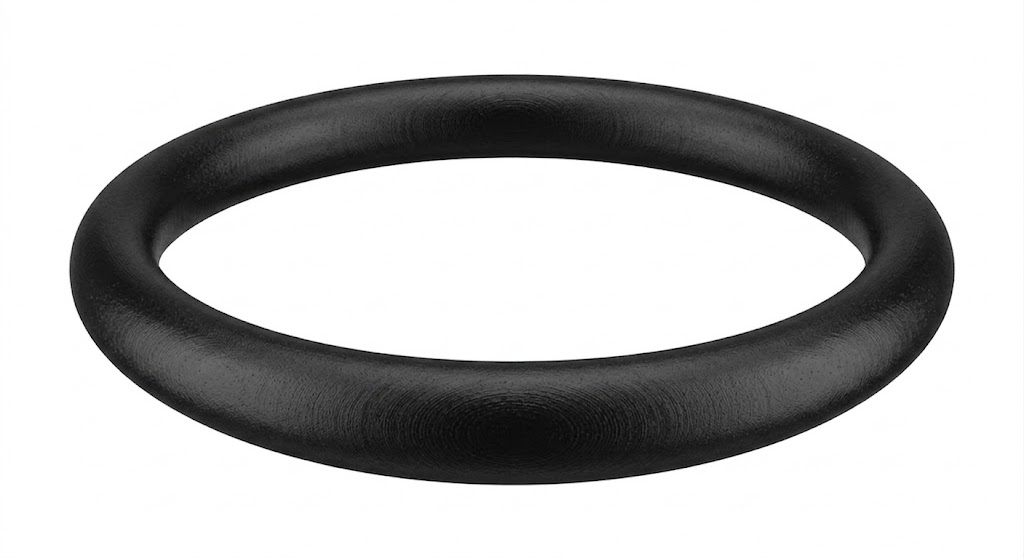
What Are Oil-Resistant O-Rings?
Oil-resistant O-rings are made from NBR (Buna-N) rubber, Durometer 70A, which resists swelling and degradation from mineral oils, hydraulic fluids, and greases. LILY Bearing stocks this compound in four cross-section shapes — round, X-profile, square, and double X — with the maximum rated temperature varying slightly by shape.
Shop by Cross Section Shape
| Shape | Temperature Range | Best Suited For | Advantage | Tradeoff |
|---|---|---|---|---|
| Round | −40°F to +250°F | General static and dynamic sealing | Widest temperature range, widest availability | None — standard baseline profile |
| X (Quad-Ring) | −30°F to +225°F | Reciprocating, dynamic seals | Four contact points reduce friction and spiral failure risk | Narrower temperature range than round |
| Square | −30°F to +212°F | Static sealing, cost-sensitive applications | Stronger static seal than round, economical to manufacture | Lowest rated temperature, weaker than round in dynamic service |
| Double X | −30°F to +225°F | High-cycle dynamic service | Additional sealing lobes vs. X-profile for extra contact points | Same temperature range as X-profile, higher cost |
All four shapes are molded from the same Buna-N compound at Durometer 70A. The cross-section shape affects contact geometry and, in this lineup, the rated temperature ceiling — not the underlying chemical resistance.
Where Are Oil-Resistant O-Rings Used?
- Engines, fuel systems, and transmissions
- Hydraulic pumps, valves, and cylinders
- Gearboxes and lubrication systems
- Compressors and industrial machinery
Frequently Asked Questions
When should I use an X-profile instead of a round O-ring?
Choose an X-profile for reciprocating or dynamic applications, such as piston seals, where its four contact points reduce running friction and lower the risk of spiral failure compared to a round O-ring. Keep in mind its rated ceiling is 225°F, 25°F lower than round.
Is a square-profile O-ring a direct substitute for a round one?
Only in static applications, and only within its lower 212°F temperature ceiling. Square profiles seal slightly better than round O-rings when the joint doesn't move, but they perform worse in dynamic service.
What's the difference between an X-profile and a double X O-ring?
Both are molded from the same Buna-N compound with the same 225°F rating. The double X adds extra sealing lobes for high-cycle dynamic applications where the standard X-profile's four contact points aren't enough, at a higher unit cost.