Combined Bearings
82 Products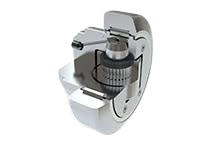

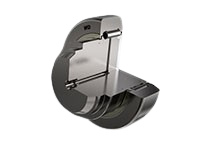

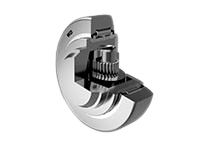
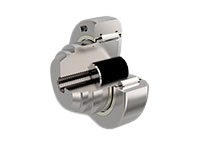
Combined bearings, also known as combined roller bearings or track rollers with combined load capacity, are a specialized type of cam follower designed to support both radial and axial loads simultaneously. This dual-load capability makes them essential components in applications where a single bearing must resist forces from multiple directions at once — such as guide rail systems, packaging machinery, sliding doors, telescopic conveyors, and automated storage and retrieval systems (ASRS).
Unlike standard cam followers, which primarily handle radial loads, combined bearings incorporate a secondary set of rolling elements (or a flanged/lipped outer race design) oriented perpendicular to the main bearing axis. This allows them to guide and support components moving along both a running surface and a side rail simultaneously, eliminating the need for separate radial and thrust bearings in many guide-track applications.
Product Line Overview
- Standard Combined Roller Bearings are the baseline design, featuring a fixed stud and combined radial/axial rolling surfaces. They are the most economical option for straightforward guide-rail applications where load direction is predictable and adjustment is not required.
- Eccentric Adjustable Combined Roller Bearings use an eccentric bushing or stud design, allowing the installer to fine-tune radial clearance or preload after mounting. This is particularly useful for compensating manufacturing tolerances in track systems or for adjusting bearing engagement as components wear over time.
- Precision Radial Roller Bearings are engineered for tighter tolerances and smoother rotation, typically used in applications demanding high positioning accuracy, such as precision linear motion systems or measurement equipment.
- Adjustable Heavy Duty Combined Roller Bearings combine the eccentric adjustment feature with reinforced construction — thicker outer rings, larger rolling elements, or upgraded raceway hardening — for high-load industrial applications like heavy conveyor systems or crane guide rollers.
- Adjustable Combined Roller Bearings with Shims achieve fine positional adjustment through the addition or removal of shim washers beneath the bearing head, offering a simpler and often more repeatable alternative to eccentric adjustment for applications requiring periodic re-calibration.
- Adjustable Combined Roller Bearings with Plastic Axial Roller replace the metal axial (side) roller with a plastic or polymer version, reducing noise, minimizing wear on the guide rail, and eliminating the need for lubrication at the axial contact point — a common choice in food processing, packaging, or noise-sensitive environments.
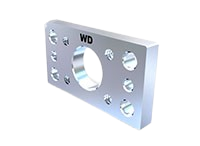
- Flange Plates are the mounting accessories used alongside combined bearings, providing a standardized base plate for attaching the bearing assembly to machine frames, extrusions, or guide rail systems.
What is the difference between a combined bearing and a standard cam follower?
A standard cam follower is designed primarily to handle radial loads as a follower running against a cam or track. A combined bearing adds axial (side) load capacity through a secondary roller or flanged raceway, allowing it to simultaneously guide a component along a rail while resisting sideways forces — something a standard cam follower cannot do effectively on its own.
When should I choose an eccentric adjustable version over a standard fixed-stud version?
Eccentric adjustable combined bearings are the better choice whenever precise clearance control is needed — for example, in track systems where manufacturing tolerances vary, or where the bearing needs to be pre-loaded against a rail to eliminate play. Standard fixed versions are sufficient when the mounting geometry is consistent and no post-installation adjustment is required.
How do I choose between eccentric adjustment and shim adjustment?
Eccentric adjustment offers continuous, infinitely variable clearance control through simple rotation of the stud, making it faster to fine-tune but requiring the bearing to be re-torqued after each adjustment. Shim-based adjustment offers discrete, repeatable steps and is often preferred where adjustments need to be documented or repeated precisely across multiple identical machines.
What load capacity can combined bearings handle?
Load capacity varies significantly by size and duty class. Standard and precision radial versions are typically rated for lighter to moderate combined loads, while heavy duty adjustable versions are rated for substantially higher radial and axial loads, often specified separately in the load rating tables (dynamic radial load Cr, dynamic axial load Ca) for each part number.
Why use a plastic axial roller instead of an all-steel design?
Plastic axial rollers reduce operating noise, run without lubrication, and are gentler on the mating guide rail surface — reducing wear over long service life. They are especially popular in food and beverage, pharmaceutical, and light-duty automation applications where noise reduction and low maintenance outweigh the slightly lower load capacity compared to steel.
Do combined bearings require lubrication, and how often?
Most steel combined bearings use grease-lubricated needle or ball rolling elements and should be re-lubricated on a scheduled interval based on operating speed, load, and environment (more frequent in dusty or washdown conditions). Versions with sealed bearings or plastic axial rollers generally require less frequent maintenance.
What industries commonly use combined bearings?
Common applications include linear guide and rail systems, packaging and labeling machinery, sliding door and window mechanisms, automated storage/retrieval systems, textile machinery, and general automation equipment where a component must move along a track while resisting both vertical and lateral loads.
How do I select the correct flange plate?
Flange plates must match the stud diameter and mounting bolt pattern of the specific combined bearing model. It's important to confirm both the bearing's stud thread size and the flange plate's compatible bearing series, since flange plates are typically not universal across all combined bearing product lines.