Linear Ball Bearings
146 Products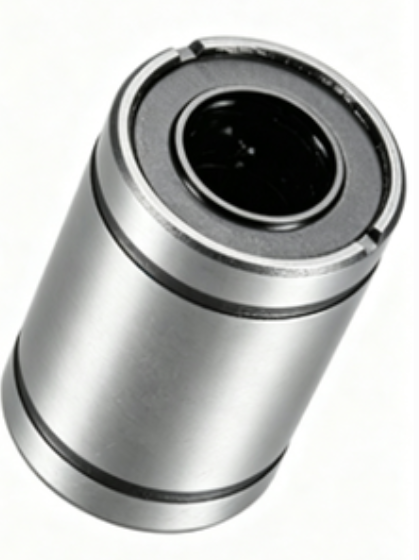
Linear ball bearings are precision motion components designed to provide smooth, low-friction linear movement along a shaft, guiding a load in a straight line rather than allowing rotational motion. They are essential elements in automation equipment, CNC machinery, 3D printers, robotics, medical devices, and any system requiring precise, repeatable linear positioning. Unlike plain bushings, linear ball bearings use recirculating ball elements that roll rather than slide against the shaft, dramatically reducing friction and extending service life.
What Is a Linear Ball Bearing and How Does It Work?
A linear ball bearing consists of an outer sleeve (steel or bronze) housing multiple rows of recirculating steel balls that contact a hardened, precision-ground shaft. As the bearing or shaft moves, the balls roll along a raceway, travel through a return path within the housing, and re-enter the load zone in a continuous circuit. This recirculating ball design allows for theoretically unlimited travel length along the shaft — a key advantage over bushings, which have limited stroke length equal to their own body length.
Core benefits include:
- Low friction coefficient — significantly less than plain sliding bushings, reducing energy consumption and heat generation
- High positioning accuracy — minimal backlash supports precise, repeatable motion
- Smooth, quiet operation — rolling contact minimizes stick-slip behavior common in sliding systems
- Long service life — rolling friction generates far less wear than sliding friction
Product Line Overview
- Common Linear Ball Bearings are the standard, general-purpose option, enabling smooth, low-friction linear motion along a shaft for precise and efficient operation across a wide range of applications. These are the most widely used type, suitable for general automation, packaging equipment, and light-to-moderate duty linear motion systems.
- High-Temperature Linear Ball Bearings are engineered with heat-resistant and corrosion-resistant materials, built to maintain reliable performance in elevated-temperature environments over extended periods. These are commonly specified for applications near furnaces, ovens, drying equipment, or other heat-generating machinery where standard bearings would suffer accelerated seal or lubricant degradation.
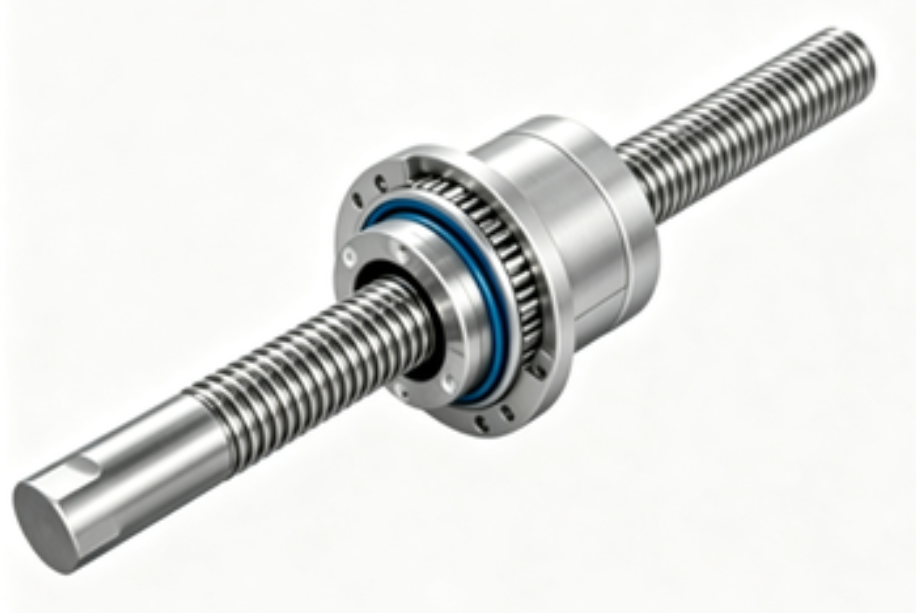
- Linear and Rotary Ball Bearings support dual-motion capability, allowing both linear travel and rotational movement in a single compact unit. Their combined-motion design makes them well suited for mechanical systems with complex motion requirements, such as robotic arms, pick-and-place mechanisms, and equipment requiring simultaneous axial and rotary positioning — eliminating the need for two separate bearing components.
- High-Load Linear Ball Bearings are designed to withstand greater radial and axial loads, offering improved wear resistance and fatigue strength for high-stress applications. These are typically specified in heavy-duty automation, industrial presses, and machinery subject to shock loading or higher-than-standard operating forces.
What is the difference between a linear ball bearing and a linear bushing?
Both terms are often used interchangeably, but technically a linear bushing (or plain bushing) uses sliding friction between the shaft and a bronze or polymer sleeve, while a true linear ball bearing uses rolling steel balls in a recirculating raceway. Ball-type units offer lower friction, higher speed capability, and longer life, while plain bushings are typically lower-cost and better suited to lighter loads or dirtier environments where debris might damage ball raceways.
How much load can a linear ball bearing handle?
Load capacity depends on bearing size, number of ball rows/circuits, and duty classification. Standard "common" units handle light-to-moderate radial loads, while high-load variants use reinforced ball circuits and raceway hardening to support significantly higher dynamic and static load ratings — always check the manufacturer's load rating table for the specific bore size and series.
What shaft tolerance and surface finish do linear ball bearings require?
Linear ball bearings require a precision-ground, hardened shaft (typically 60 HRC or higher surface hardness) with tight diameter tolerance (commonly h6 or better) and low surface roughness. Using an undersized, rough, or insufficiently hardened shaft accelerates wear and can cause premature raceway damage or increased backlash.
Can linear ball bearings be used in high-temperature environments without a special version?
Standard linear ball bearings typically use standard grease lubrication and seals rated for moderate temperatures (commonly up to around 80°C). Beyond that range, standard grease can break down and seals can degrade, so high-temperature variants with specialized heat-resistant grease and seal materials are necessary for sustained elevated-temperature operation.
What's the difference between open-type and closed (housed) linear ball bearings?
Open-type linear bearings (bare bearing sleeves) are typically pressed into a customer-designed housing block, offering design flexibility and lower cost. Closed or housed units come pre-mounted in a pillow block or flange housing, simplifying installation and providing built-in alignment and mounting features — at a higher unit cost.
How do I select between a standard and a linear-and-rotary combined bearing?
If the application only requires straight-line travel along a fixed axis, a standard linear ball bearing is more cost-effective and simpler to maintain. Linear-and-rotary combined units are the better choice specifically when a single shaft location must support both axial sliding and rotational movement simultaneously, avoiding the added complexity, length, and cost of installing two separate bearing types.
What causes premature failure in linear ball bearings, and how can it be prevented?
The most common failure causes are shaft misalignment, insufficient or contaminated lubrication, and shaft surface damage or under-hardening. Preventive measures include ensuring proper shaft-to-bearing alignment during installation, using appropriate seals or wipers to keep out contaminants, and following the recommended re-lubrication interval for the specific operating environment.
How is travel length/stroke determined for a linear ball bearing system?
Because linear ball bearings use a recirculating ball design, stroke length is limited primarily by the length of the supporting shaft or rail rather than the bearing body itself, allowing for much longer travel distances than fixed-length bushings of comparable size — an important consideration when specifying shaft length for long-stroke automation applications.