Linear Sleeve Bearings
150 Products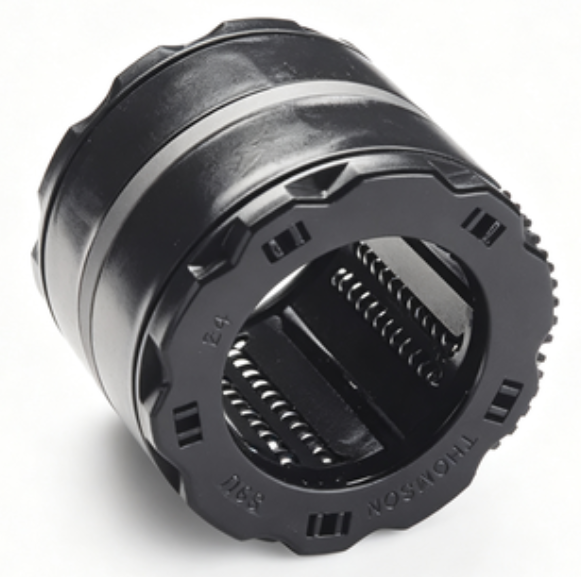
Linear sleeve bearings (also called linear bushings or plain linear bearings) are simple, low-cost motion components that enable smooth linear travel along a shaft through sliding contact rather than rolling elements. Made typically from bronze, polymer, or composite materials, they offer a compact, quiet, and maintenance-friendly alternative to ball-type linear bearings — particularly well suited to applications where moderate speed, moderate load, and cost efficiency matter more than ultra-precise positioning.
What Is a Linear Sleeve Bearing and How Does It Work?
A linear sleeve bearing consists of a cylindrical sleeve, typically made from oil-impregnated bronze, PTFE-lined composite, or engineered polymer, that fits around a shaft and slides along its length. Unlike ball-type linear bearings, which rely on recirculating rolling elements, sleeve bearings depend on a low-friction bearing surface material to minimize resistance during sliding motion.
Core characteristics include:
- Simple, compact design — fewer moving parts than ball-type bearings, reducing size and cost
- Quiet operation — sliding contact eliminates the ball-recirculation noise common in linear ball bearings
- Self-lubricating options — many sleeve materials (oil-impregnated bronze, PTFE composites) reduce or eliminate the need for external lubrication
- Tolerance to minor contamination — generally more forgiving of dust and debris than ball raceways, which can be damaged by particulate ingress
- Lower cost per unit — simpler construction typically makes sleeve bearings more economical than comparable ball-type linear bearings
Product Line Overview
- Common Linear Sleeve Bearings provide low-friction, durable, and cost-effective linear motion with a simple design. These are the standard general-purpose option, suitable for light-to-moderate duty applications where precision requirements are moderate and budget efficiency is a priority.
- Dust-Resistant Linear Sleeve Bearings are engineered to be dust-resistant and long-lasting, minimizing downtime and maintenance costs in environments with airborne particulate contamination. These are well suited to woodworking equipment, material handling systems, and general factory-floor machinery where dust ingress would otherwise shorten bearing life.
- High-Speed Linear Sleeve Bearings feature low-friction, high-precision, and high-temperature-resistant designs, offering both reliability and efficiency at elevated operating speeds. These are specified for applications with rapid reciprocating motion or continuous high-cycle operation where frictional heat buildup must be managed.
- Food Industry Linear Sleeve Bearings meet stringent hygiene and safety standards, are designed to resist corrosion, feature smooth surfaces, and are easy to clean. These are purpose-built for food and beverage processing, packaging lines, and pharmaceutical equipment subject to washdown and sanitary compliance requirements.
- Ultra-Thin Linear Sleeve Bearings are characterized by their extremely thin profile, low friction, high wear resistance, lightweight design, and corrosion resistance. These are ideal for compact equipment designs where axial space is limited, such as small automation modules or space-constrained mechanical assemblies.
- High-Speed Ultra-Thin Linear Sleeve Bearings combine an exceptionally thin profile with low friction, high wear resistance, and lightweight construction, while also supporting high-speed operation. These serve applications that demand both a compact footprint and rapid motion cycles simultaneously.
- Electrical-Insulating Linear Sleeve Bearings are made from non-conductive, wear-resistant materials that provide smooth linear motion along with electrical insulation and thermal resistance. These are essential in applications where electrical isolation between components is required, such as semiconductor equipment, electronics assembly, or systems needing protection from stray current and electrical erosion.
What is the difference between a linear sleeve bearing and a linear ball bearing?
Sleeve bearings use sliding friction between the shaft and a low-friction sleeve material, while ball bearings use rolling steel balls in a recirculating raceway. Sleeve bearings are generally quieter, more compact, less expensive, and more tolerant of contamination, while ball bearings typically offer lower friction, higher speed capability, and longer life under precision-load conditions.
Do linear sleeve bearings require lubrication?
It depends on the material. Oil-impregnated bronze sleeves are self-lubricating and release oil gradually during operation, requiring little to no external lubrication under normal conditions. PTFE-lined or dry polymer composite sleeves are designed to run completely dry, making them ideal for applications where external lubrication is undesirable, such as food processing or cleanroom environments.
What shaft surface finish and hardness do linear sleeve bearings require?
Similar to ball-type linear bearings, sleeve bearings perform best on a smooth, precision-ground shaft, though they are generally more tolerant of shaft hardness variation than ball-type bearings since they rely on sliding rather than point/line contact rolling. Excessive shaft roughness will still accelerate sleeve wear over time.
What load and speed limits apply to linear sleeve bearings?
Load and speed capacity vary by sleeve material and wall thickness. Standard bronze or composite sleeves handle light-to-moderate loads at moderate speeds, while high-speed variants use specialized low-friction coatings or reinforced sleeve materials to manage heat generation at higher operating speeds. Manufacturer PV (pressure-velocity) ratings should always be checked to avoid exceeding the material's safe operating envelope.
Can linear sleeve bearings be used in washdown or corrosive environments?
Standard bronze or steel-backed composite sleeves are susceptible to corrosion in wet or chemically aggressive environments. Food industry variants specifically address this by using corrosion-resistant materials and smooth, easy-to-clean surfaces designed to withstand repeated washdown cycles and sanitation chemicals.
Why would I choose an electrical-insulating sleeve bearing over a standard metal-backed one?
Standard metal-backed sleeve bearings can conduct electricity, which is problematic in applications with stray currents, static buildup, or nearby electrical equipment. Electrical-insulating sleeve bearings use non-conductive materials to prevent current flow through the bearing, protecting sensitive equipment and preventing electrical erosion damage to the shaft or bearing surface.
How thin can a linear sleeve bearing be, and what's the trade-off?
Ultra-thin variants significantly reduce axial installation length and weight compared to standard sleeve bearings, making them valuable in space-constrained designs. The trade-off is typically a reduced load capacity and bearing surface contact area compared to a standard or heavy-wall sleeve of the same bore size, so ultra-thin versions are best reserved for lighter-duty applications where space is the primary constraint.
How do I select the right linear sleeve bearing for my application?
Selection should start with the operating environment (dry industrial, dusty, washdown, or electrically sensitive), followed by speed and load requirements, and finally space constraints (standard vs. ultra-thin profile). Matching these three factors to the appropriate variant above ensures optimal service life and performance.