Hex Nuts
3131 ProductsMedium-Strength Steel Hex Nuts
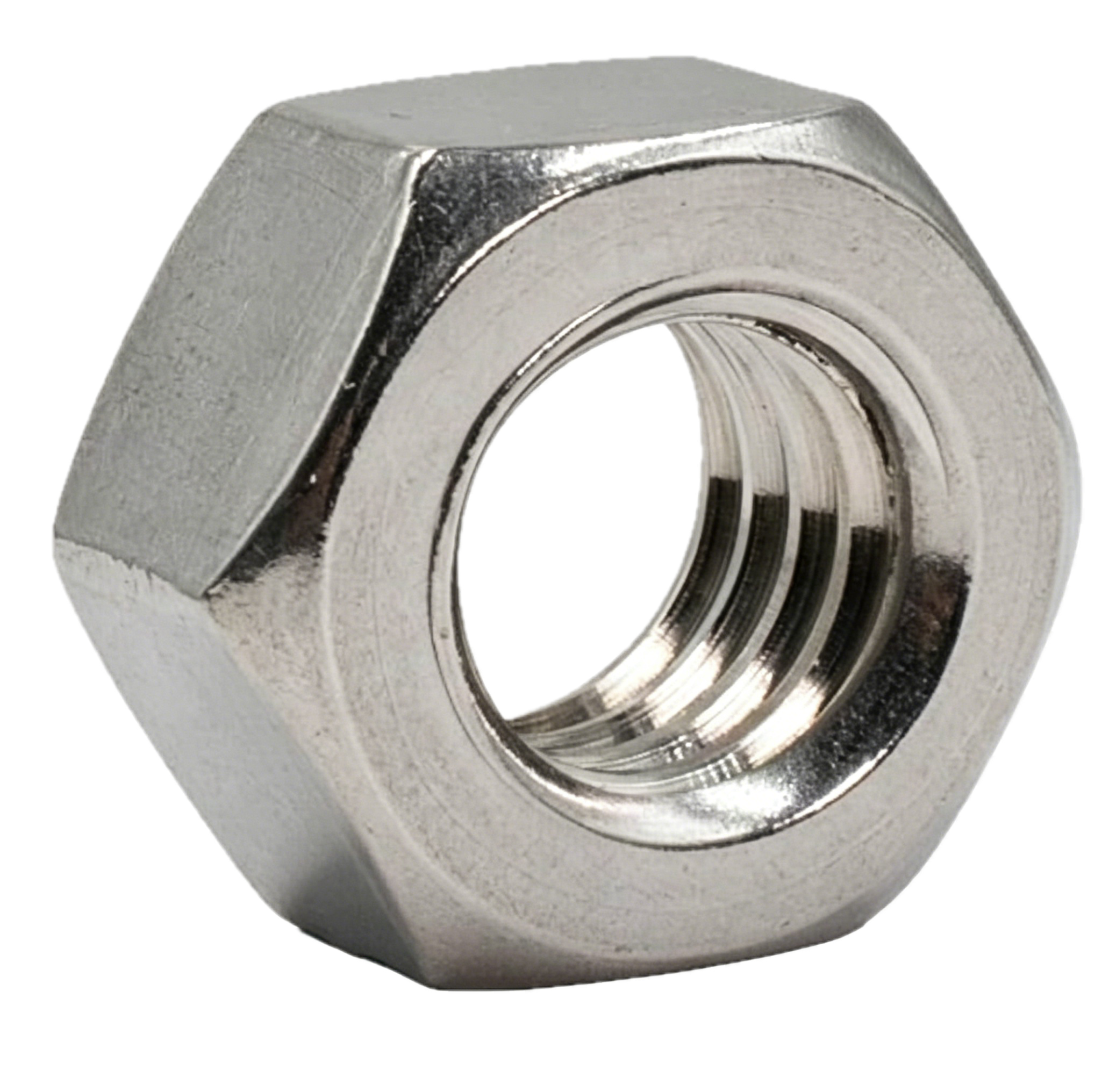
High-Strength Steel Hex Nuts
Low-Strength Steel Hex Nuts
Extreme-Strength Steel Hex Nuts
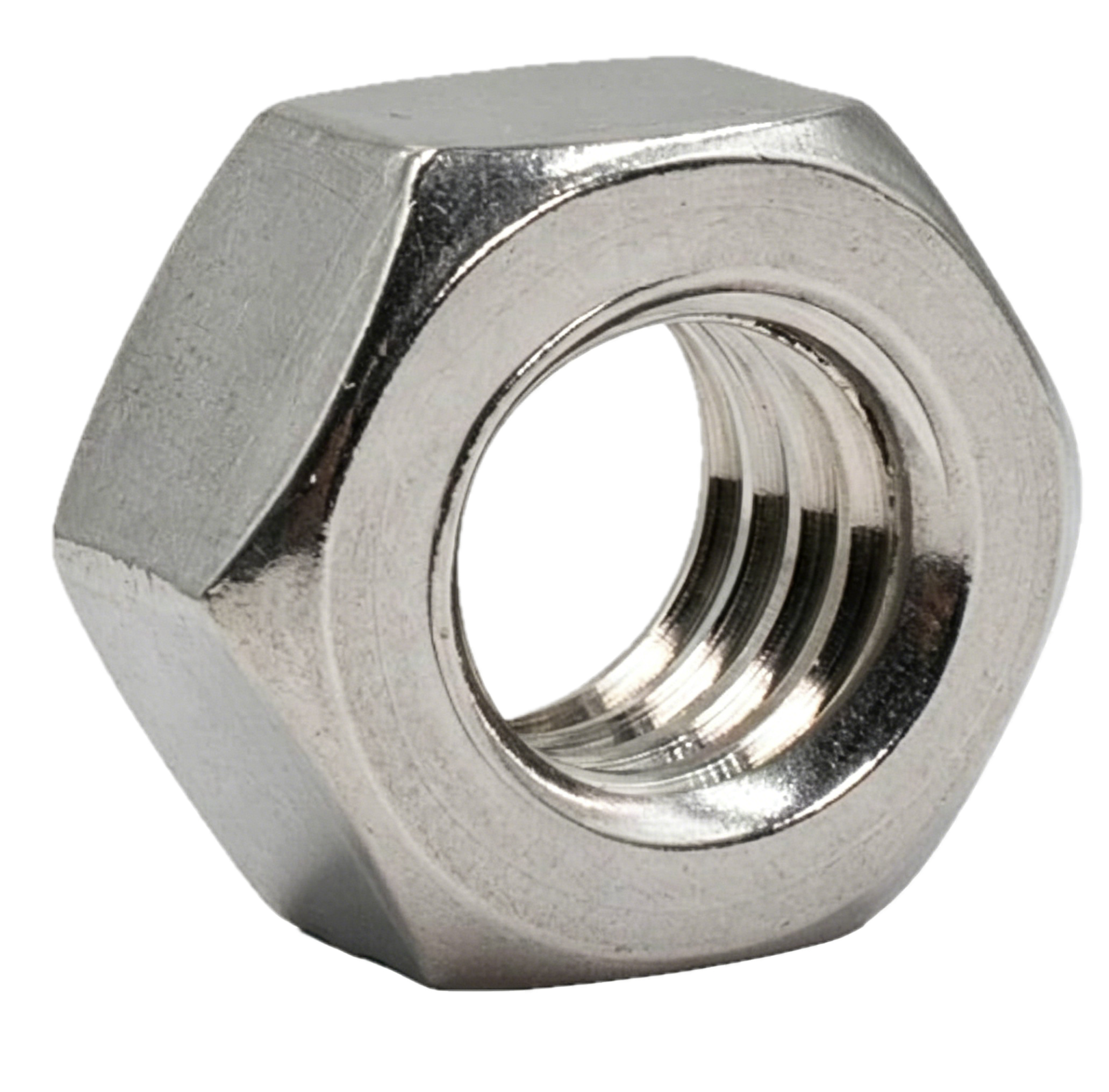
Stainless Steel Hex Nuts
High-Strength Stainless Steel Hex Nuts
Metric 18-8 Stainless Steel Sealing Hex Nuts
Plastic Hex Nuts
Brass Hex Nuts
Aluminum Hex Nuts
Bronze Hex Nuts
Titanium Hex Nuts
Nickel Alloy Hex Nuts
Thin Hex Nuts
Heavy Hex Nuts
Narrow Hex Nuts
High Hex Nuts
Thin Heavy Hex Nuts
LILY Bearing stocks 3,131 hex nuts — in Inch (2,029 SKUs) and Metric (1,102 SKUs) — across steel, stainless steel, brass, bronze, aluminum, titanium, nickel alloy, ceramic, and engineered plastics, in six profile options. Use the filters below, or the comparison table, to narrow down by profile, material, or thread size.
Compare Hex Nut Profiles
| Profile | How It's Different | Best For | Watch Out For |
|---|---|---|---|
| Standard Hex Nuts | Baseline height and width-across-flats for general-purpose use | Everyday assembly across inch and metric threads | No locking feature — pair with a lock washer or locknut for vibration |
| Thin Hex Nuts | Shorter height than a standard hex nut | Tight clearances or as a jam nut to lock another nut in place | Lower thread engagement means lower load capacity than a standard nut |
| Heavy Hex Nuts | Wider across the flats and thicker than a standard hex nut | High-pressure or structural applications needing better load distribution | Larger footprint needs more clearance than a standard hex nut |
| High Hex Nuts | Taller than a standard hex nut, with more wrenching surface | High-torque installation where more grip surface helps | Extra height needs more clearance along the bolt |
| Narrow Hex Nuts | Slimmer width across the flats than a standard hex nut | Tight spaces where a standard nut's width won't fit | Requires a smaller wrench or socket than the bolt's thread size might suggest |
| Thin Heavy Hex Nuts | Wider across the flats like a heavy hex nut, but shorter in height | Load distribution in a compact footprint where full heavy-hex height won't fit | Reduced height means less thread engagement than a full heavy hex nut |
| Jam Nuts for Turnbuckles | Sold as a matched pair — one right-hand and one left-hand threaded — to lock against the turnbuckle body | Rigging, lifting, and tensioning systems using turnbuckles | Must match your turnbuckle's thread size and hand on each end |
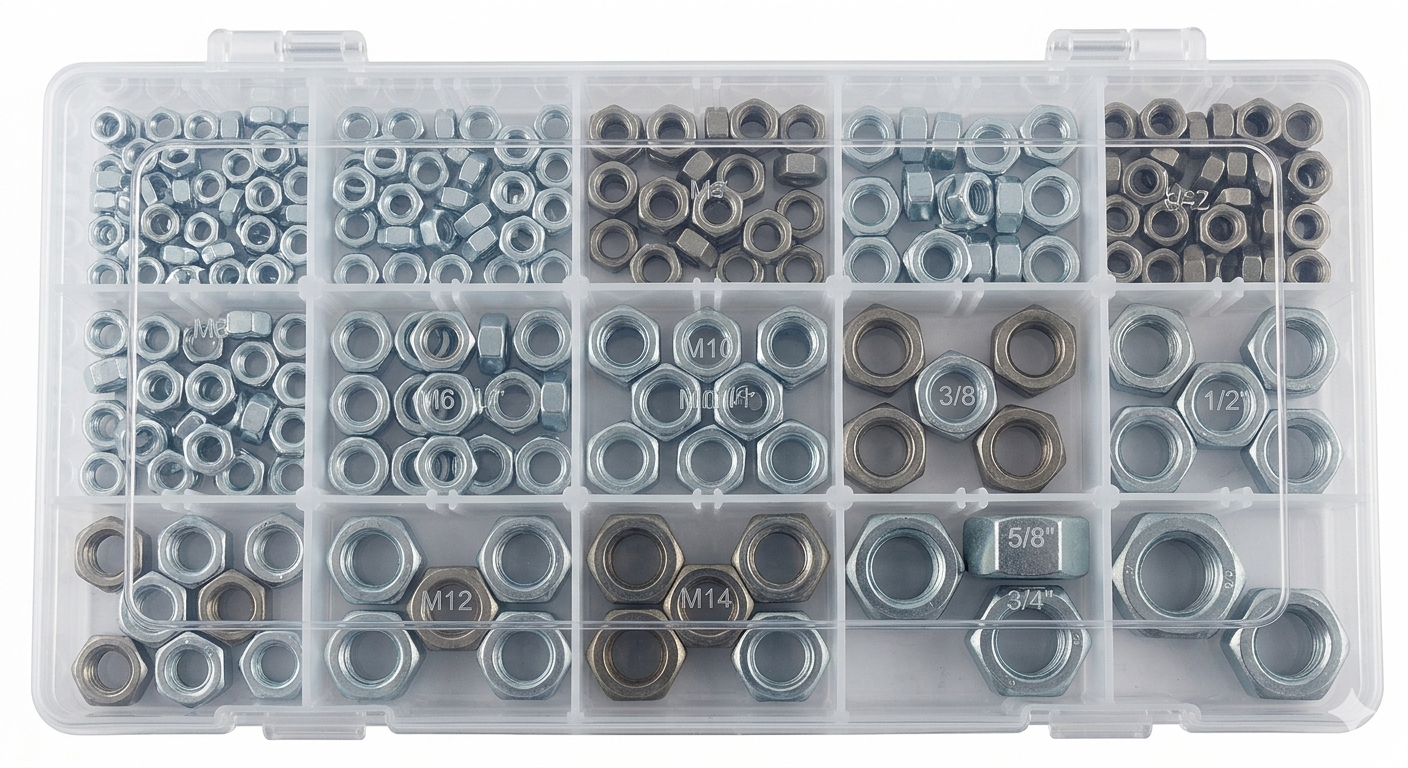
| Hex Nut Assortments | Compartmented kit with a mix of sizes and sometimes materials | Maintenance, prototyping, or stocking a range of common sizes at once | Fixed size range and piece count per kit — check it covers what you need |
Choosing a Material and Strength Grade
Our steel hex nuts run on a strength ladder from Low-Strength up through Medium-Strength (Grade 5), High-Strength (Grade 8), and Extreme-Strength (Grade 9, roughly 20% stronger than Grade 8) — match or exceed the grade of the bolt you're pairing it with. For corrosion resistance, 18-8 stainless steel covers most environments, while 316 stainless and specialty alloys like Bumax 88 or Alloy 20 add resistance to chlorides, seawater, or aggressive chemicals. Non-ferrous options serve specific needs: brass and bronze for electrical conductivity or wear resistance, aluminum and titanium for lightweight or non-magnetic applications, and nickel alloy for high-temperature or high-corrosion service. Engineered plastics — nylon, PEEK, PTFE, PVC, polypropylene, PVDF, acetal, and fiberglass — cover non-conductive, chemical-resistant, or fully non-metallic requirements.
Need a Custom Hex Nut or a Part Cross-Reference?
Working from an existing McMaster-Carr or manufacturer part number? Our team can cross-reference it to an equivalent LILY Bearing hex nut, or quote a custom material, grade, or finish. Request a Quote or Contact Us.
Frequently Asked Questions
What's the difference between a heavy hex nut and a high hex nut?
A heavy hex nut is wider across the flats than a standard nut, for better load distribution. A high hex nut is taller than a standard nut, giving a wrench more surface to grip for high-torque installation. The two describe different dimensions and can apply to the same nut.
How do I choose the right strength grade for a hex nut?
Match or exceed the strength grade of the bolt it's paired with. Using a lower-strength nut than the bolt creates a weak point in the joint, regardless of how strong the bolt itself is.
Why do jam nuts for turnbuckles come in pairs?
A turnbuckle has one end with right-hand threads and one with left-hand threads, so tightening the barrel draws both ends in at once. The matched jam nut pair follows the same pattern — one right-hand, one left-hand — so each can lock against its corresponding end.
Do you offer non-metallic hex nuts?
Yes. We stock hex nuts in nylon, PEEK, PTFE, polycarbonate, PVC, polypropylene, PVDF, acetal, fiberglass, and ceramic for non-conductive, chemical-resistant, or fully non-metallic applications.