Thrust Ball Bearings

Types of Ball Bearings



Our Process

Initial Inquiry

Technical Review

Solution & Proposal

Factory Tour & Audit

Global Delivery

Partnership & Support
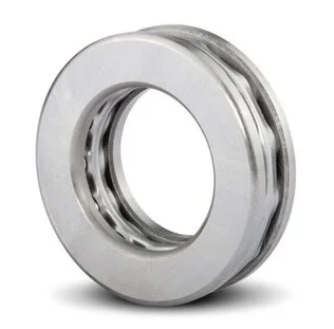
LILY Bearing stocks thrust ball bearings — also called ball thrust bearings, axial thrust bearings, axial ball thrust bearings, or ball bearing thrust bearings — in single-direction and double-direction configurations, in both metric and inch bore sizing, engineered to carry axial (thrust) load along the shaft rather than radial load across it. New to thrust bearings? See our What Is a Thrust Bearing guide for how they work, how they compare to radial bearings, and how to size one for your application. Browse our full thrust ball bearing catalog below, or use the comparison tables, to narrow down by load direction, bore style, and construction.
Thrust Ball Bearing Types
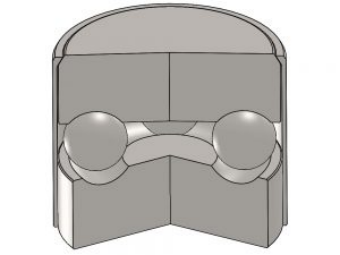
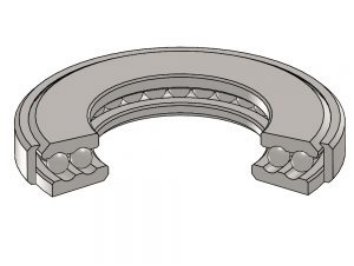
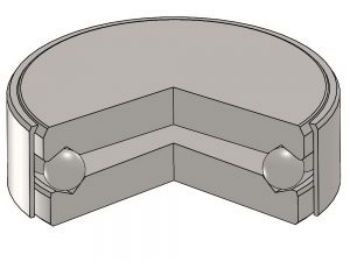
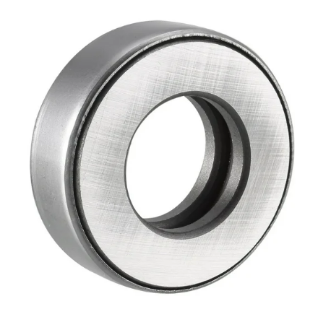
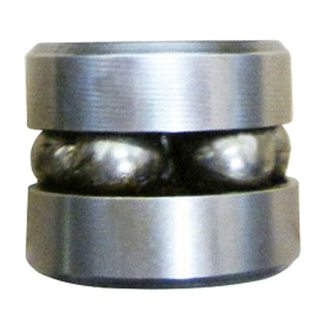
Every thrust ball bearing assembly — sometimes called a thrust bearing unit, thrust bearing kit, or thrust set bearing — is built from the same three elements: a shaft washer (also called a thrust plate, thrust bearing plate, or thrust bearing pad), a housing washer, and a set of balls held in a cage between them. The two main types differ in how many directions of axial load that assembly can take:
| Type | Axial Load Direction | Where to Look | Notes |
|---|---|---|---|
| Single-Direction Thrust Ball Bearings | One direction only | Metric Single Direction Thrust Ball Bearings; Inch Single Direction Thrust Ball Bearings | The most common configuration; cannot carry radial load, so it must not be substituted for a radial ball bearing |
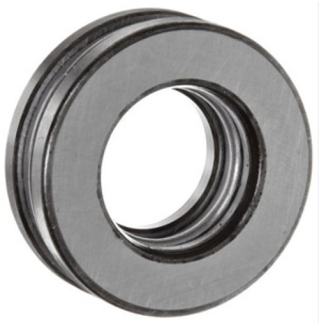
| Double-Direction Thrust Ball Bearings | Both directions | Double Direction Thrust Ball Bearings | Adds a center shaft washer and a second row of balls; suited to reversing loads such as valve actuators or reciprocating drives. The 51211 is one example in this line. |
Within both directions, we also stock several construction variants for specific mounting and sealing needs: Thrust Ball Bearing With Inside Band and With Outside Band (banded thrust bearings that locate the balls against a raised race), Thrust Ball Bearing With Full Ball Complement, Double Grooved Thrust Ball Bearing, Thrust Ball Bearing With Center Rivet, Thrust Ball Bearing With Spherical Seat, Thrust Ball Bearing With Self-Aligning, and the Enclosed Style SC-100 and SC-114RG Thrust Ball Bearings. Bore sizes run from miniature (see Miniature Thrust Ball Bearings for small-bore precision instrument sizes) up to large-diameter industrial sizes, in both metric and inch increments — including common inch bores such as 3/4″ and 5/8″.
Other Materials & Configurations
Standard thrust ball bearings on this page are chrome steel. For other materials or combined-load designs, see:
| Need | Line | Notes |
|---|---|---|
| Washdown, corrosion resistance | Stainless Steel Thrust Ball Bearings | Single- and double-direction, plus miniature stainless sizes |
| High speed, high temperature, chemical exposure | Ceramic Thrust Ball Bearings | Zirconia, silicon carbide, and silicon nitride ball options |
| Combined axial + radial load, high precision (screw drives) | Super Precision Angular Contact Thrust Ball Bearings | Single- and double-direction angular contact versions; a standard flat-washer thrust ball bearing cannot take radial load |
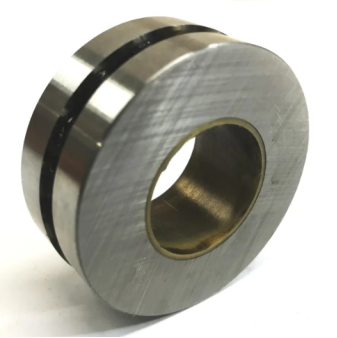
| Sliding (non-rolling) axial support, maintenance-free | Oil-Embedded & Multipurpose Thrust Bearings (Sleeve Bearings) | A different construction (bronze thrust washer, no rolling elements) — not a thrust ball bearing, but often confused with one |
How Thrust Ball Bearings Work
In short: a flat-washer thrust ball bearing carries axial load, not radial load — loading one radially will skid the balls and wear the cage prematurely. For the full mechanism and load path, see the How Thrust Bearings Work section of our guide linked above.
Ordering the Right Bearing: Thrust vs. Radial
Before you order, confirm you're on the right category — a thrust ball bearing and a radial ball bearing are not interchangeable, and ordering the wrong one for your load direction is a common, avoidable mistake:
| Radial Ball Bearing | Thrust Ball Bearing | |
|---|---|---|
| Primary load direction | Perpendicular to the shaft | Parallel to the shaft (axial) |
| Typical role | Supports shaft weight and side loads | Controls axial position, resists end-thrust |
| Combined-load option | Angular Contact Ball Bearings | Angular Contact Thrust Ball Bearings |
Sourcing both for the same shaft? We stock radial, angular contact, and thrust ball bearings, so one quote request can cover the full assembly (see Request a Quote below).
Common Thrust Ball Bearing Applications
| Industry | Typical Use |
|---|---|
| Automotive | Gearboxes, transmissions, and steering columns, where the bearing manages thrust from gear separation forces |
| Industrial Machinery | Pump shafts and gearbox thrust bearing positions, ball screws and other linear thrust bearing drives, and vertical-shaft equipment where the bearing carries the shaft's own weight |
| Aerospace | Gearboxes, engines, and flight control actuators, where precise axial load handling is critical |
| Material Handling | Crane hooks and slewing mechanisms, where the bearing supports a suspended load while allowing rotation |
| Medical Equipment | Diagnostic and surgical equipment that depends on smooth, low-friction linear and rotational motion |
Advantages of Thrust Ball Bearings
High axial load capacity in a compact, low-friction package: smooth rotation with reduced friction, a compact design suited to space-limited assemblies, single- or double-direction load handling, and reliable performance at high rotational speeds.
How to Choose the Right Thrust Ball Bearing
When selecting a thrust ball bearing for your shaft and housing, work through:
- Load direction: single-direction for one-way axial load, double-direction where thrust reverses
- Load magnitude and speed: confirm the static (C₀) and dynamic (C) load ratings — the basic thrust bearing statics every selection starts from — and limiting speed against your application
- Thrust bearing shaft and housing fit: the shaft washer typically needs a light interference or close clearance fit at its thrust bearing location on the shaft, while the housing washer sits freely in the thrust bearing housing bore — see the Installation Checklist in our guide linked above for the full fitting and alignment sequence
- Temperature and lubrication: match grease or oil lubrication to your speed and operating temperature
- Environment: choose stainless steel or ceramic where corrosion, chemical exposure, or extreme temperature rule out standard chrome steel
Maintenance & Lubrication Tips
Inspect the washers and ball cage for wear during routine service, use a lubricant compatible with your speed and temperature range, keep the housing free of contaminants, and confirm the bearing is loaded in the axial direction it was designed for. For a full troubleshooting table of failure symptoms and causes, see the Common Failure Modes and Troubleshooting section of our guide linked above.
Why Choose LILY Bearing as Your Thrust Ball Bearing Manufacturer
LILY Bearing is a China-based thrust ball bearing manufacturer and factory supplying single- and double-direction thrust ball bearings, in metric and inch bores, to distributors and OEMs worldwide. Over the last 20 years we've worked with ball bearing consultants, application engineers, and long-term supply partners to get every customer to the right part. As a thrust ball bearing supplier, we offer:
- Initial consultation with a bearing specialist
- A full review of your load, speed, and budget requirements
- Help selecting the right type, size, and material
- Bulk and custom order fulfillment
- Ongoing technical support after delivery
Beyond thrust ball bearings, we also stock angular contact ball bearings, cylindrical roller bearings, roller thrust bearings, and many other bearing types. Request a Quote or Contact Us for pricing, availability, or a custom configuration.