- Interchangeable With :
- Lee
Torsion Springs
3055 Products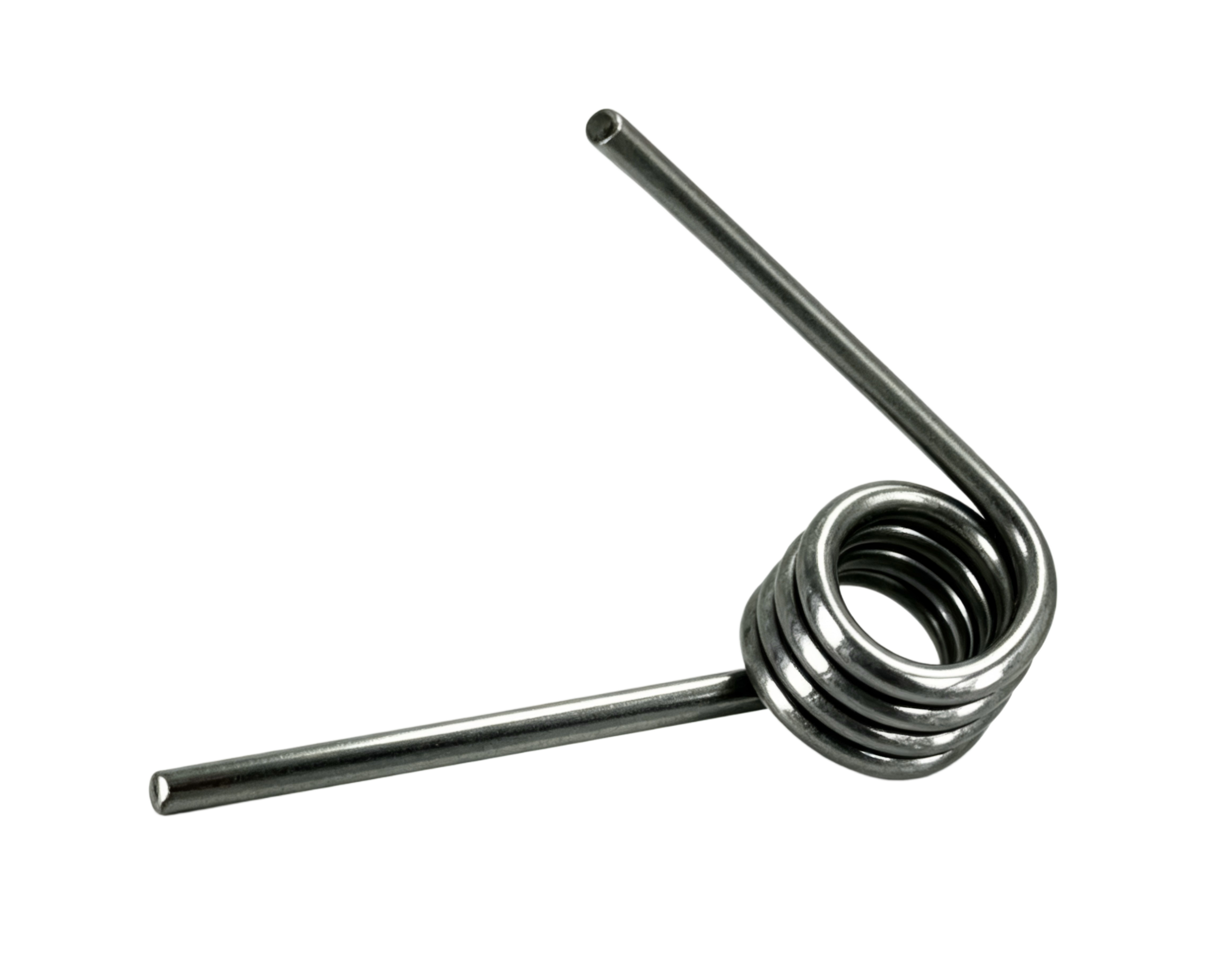
What Is a Torsion Spring?
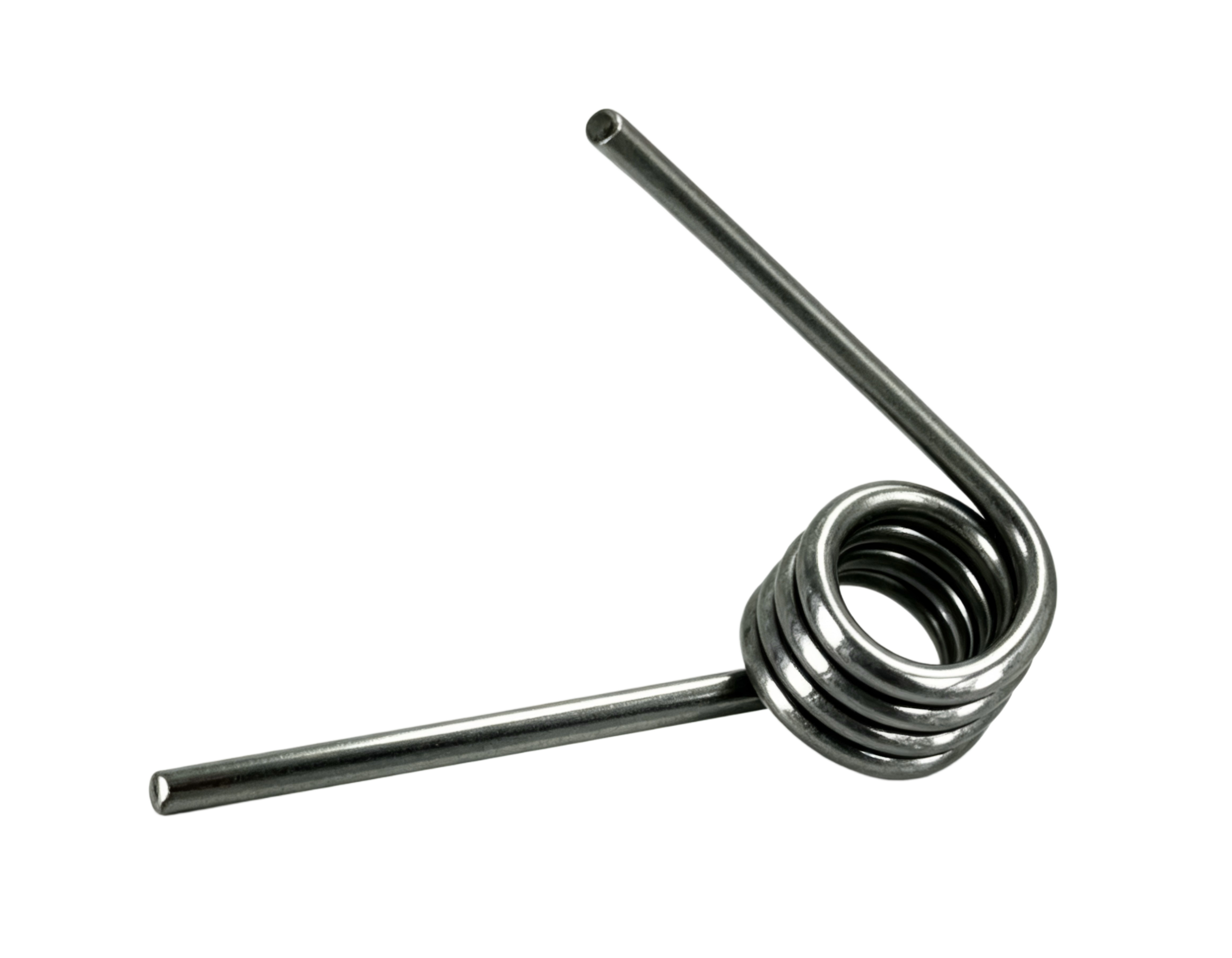
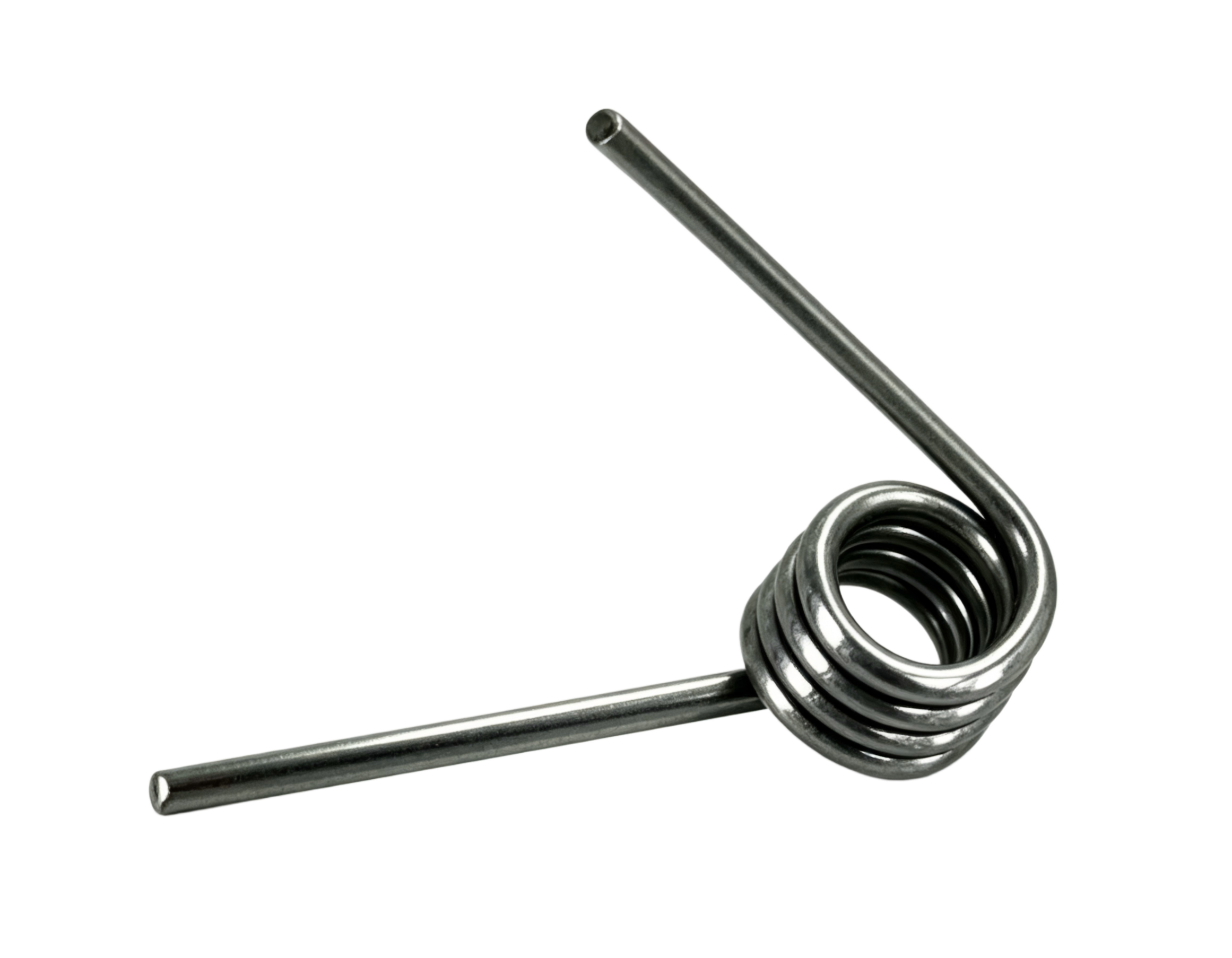
A torsion spring is a mechanical spring designed to store elastic energy and release it as torque. Unlike compression springs, which resist being pushed together, or extension springs, which resist being pulled apart, a torsion spring resists angular movement: as one leg rotates relative to the other, the coiled wire bends and stores energy, then releases that energy as the spring returns toward its free position. Torsion springs are widely used in applications requiring rotation, controlled movement, return-to-position action, or counterbalancing.
In short: a torsion spring converts angular movement into stored elastic energy and then releases that energy as controlled torque.
Key Features and Advantages
- Rotational Force Output: Delivers torque in a compact radial footprint, rather than linear force.
- Wide Range of Configurations: Single torsion, double torsion, close-wound, and open-wound designs.
- Highly Customizable: Leg length, leg angle, coil diameter, number of coils, wire size, and material can all be tailored to your torque and space requirements.
- Directional Loading: Specified as right-hand (RH) or left-hand (LH) wound, and loaded in the direction that winds the coil tighter for maximum service life.
- Versatile Mounting: Legs can be formed (axial, tangential, radial, or over-centre) to fit a wide range of installation requirements.
- Proven Across Industries: Used at scale in automotive, industrial, aerospace, medical, and consumer applications.
How Torsion Springs Work
When a load rotates one leg relative to the other, the wire in the coil bends and stores elastic energy — despite the name, a conventional helical torsion spring works primarily through bending stress, not true torsional shear. Removing the load releases that energy as torque, rotating the mechanism back toward its free position. In simple terms: rotation → bending stress in the coil → elastic energy stored → torque generated → return rotation.
A torsion spring should always be loaded in the direction that winds the coil tighter, not looser — this is why winding direction (RH or LH) must be specified when ordering. For the full step-by-step mechanism and underlying physics, see What Is a Torsion Spring? on our blog.
Installation and Use Notes
A torsion spring is typically installed with its coil around a shaft, pin, or mandrel, with one leg fixed and the other attached to the moving component. Leave clearance around the shaft, since the coil's inside diameter decreases slightly as the spring deflects. Large, highly loaded torsion springs store substantial energy, so installation or tension adjustment should be performed with proper tools and procedures.
What Is a Helical Torsion Spring?
A helical torsion spring is a torsion spring wound into a helix (coil) — the standard, most common form, and in everyday use the two terms are interchangeable. The distinction that matters is torsion spring vs. torsion bar: a torsion spring generates torque through bending in its coiled wire, while a torsion bar is a straight rod that twists in true torsional shear. LILY does not list "helical torsion springs" as a separate catalog line — our standard, corrosion-resistant, and made-to-order torsion springs above are all helical torsion springs.
Torsion Spring vs. Compression Spring vs. Extension Spring
| Spring Type | Primary Output | Typical Movement |
|---|---|---|
| Torsion Spring | Torque (rotational force) | Rotation / angular return |
| Compression Spring | Axial (compressive) force | Pushing |
| Extension Spring | Axial (tensile) force | Pulling |
Common Materials of Torsion Springs
- Music Wire (High-Carbon Steel): Most common choice for precision and high-strength applications.
- Stainless Steel 302/304: Corrosion resistance for general outdoor or food-contact environments.
- Stainless Steel 316: Superior corrosion resistance for marine or chemical environments.
- Alloy Steel (Chrome Silicon, Chrome Vanadium): High-stress, high-cycle, or high-temperature applications.
- Phosphor Bronze / Beryllium Copper: Electrically conductive, non-magnetic, for electronics and instrumentation.
- Nickel-Based Alloys (Inconel, Hastelloy) / Titanium: High-temperature, extreme-corrosion, or weight-sensitive applications.
How to Measure or Specify a Torsion Spring
Whether replacing an existing spring or specifying a new one, have these parameters ready:
| Parameter | What to Provide |
|---|---|
| Wire diameter | Thickness of the spring wire |
| Outside / inside diameter (OD/ID) | Outer and inner edge measurements of the coil |
| Body length / number of coils | Length of the coiled section, or total active coils |
| Leg length and configuration | Length of each leg and how it's formed (axial, tangential, radial) |
| Free angle | Angle between the legs when unloaded |
| Winding direction | Right-hand (RH) or left-hand (LH) wound |
| Required torque and cycle life | Torque at the working angle, and expected load cycles |
| Operating environment and material | Temperature/chemical exposure, and preferred material |
Note: the spring's inside diameter decreases slightly as it's deflected, so allow adequate clearance around a supporting shaft. Send us these specifications and our engineers will confirm the correct spring — request a quote.
Applications of Torsion Springs
- Automotive: Throttle controls, trunk and hood mechanisms, gear shifters, and door/liftgate systems.
- Industrial Machinery: Levers, hinges, actuators, ratchets, and mechanical assemblies.
- Consumer Products: Clothespins, clips, toys, window shades, and retracting devices.
- Electrical & Electronic Devices: Return springs inside switches, latches, and electromechanical relays.
- Aerospace & Defense: Controlled rotation in actuators, instruments, and safety systems.
- Medical Devices: Precision mechanisms, surgical tools, and small rotary components.
- Hardware & Home Equipment: Hinges, hatches, lift gates, garage doors, window mechanisms, and appliances.
How Long Do Torsion Springs Last?
Service life is measured in load cycles, not years, and depends on material, number of cycles and frequency of use, applied load and angular deflection, operating environment, and surface treatment working together. Because these factors interact, cycle life is application-specific — share your load, deflection, and duty cycle and our engineers will help you select a spring matched to your required service life.
Sourcing Torsion Springs from LILY
LILY supplies torsion springs across three lines: Standard Torsion Springs (stock, general-purpose), Corrosion-Resistant Torsion Springs (stainless steel, for outdoor or chemical environments), and Made-to-Order Torsion Springs (custom dimensions). For OEM, industrial equipment, or non-standard dimensions, our engineers design a torsion spring to your exact wire diameter, coil geometry, leg configuration, material, and torque requirements, from prototype quantities through production volumes.
Provide your wire diameter, ID/OD, body length, leg lengths, winding direction, and required torque, and our engineers will confirm the correct spring for your application. Request a quote for pricing and lead time based on your specifications and order quantity.