


Choosing the Right Ceramic Balls for Your Needs
Ceramic balls are key parts in many high-performance applications because of their unique properties. Choosing the right ceramic balls is crucial...
7 min read
William
:
Apr 1, 2026 3:46:08 AM
If your garage door spring breaks, the first question you'll face is: torsion or extension?
The answer matters more than most people realize.
Get it wrong and you're looking at an imbalanced door, premature wear, or a safety hazard.
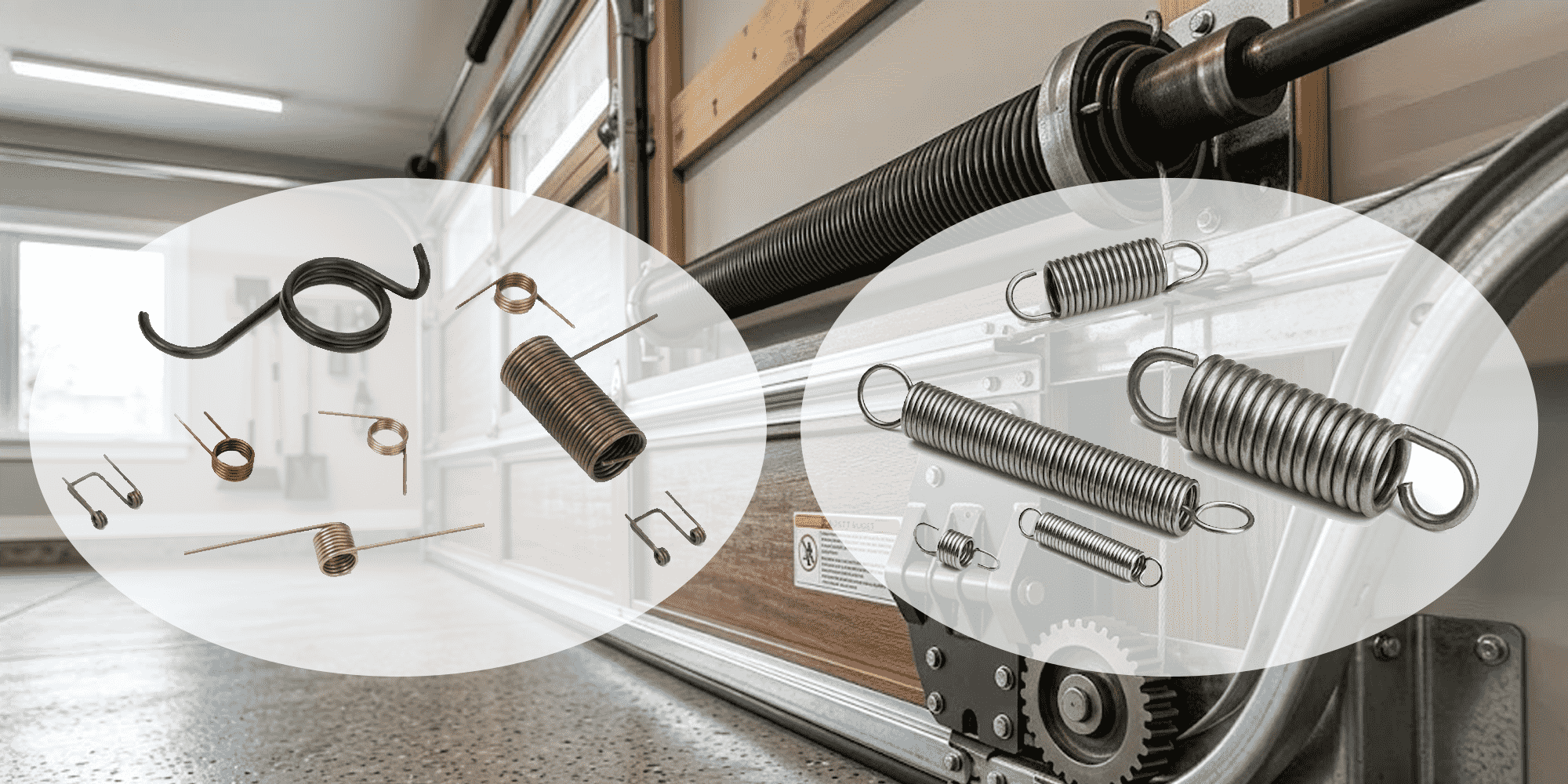
Both spring types do the same fundamental job — counterbalancing the weight of the door so it can be opened and closed with minimal effort.
But they do it in completely different ways, and the right choice depends on your door's size, your garage's headroom, and how long you want the system to last.
Here's everything you need to know to make the right call.
Torsion springs are the better choice for most situations. They last longer (15,000–20,000 cycles vs. 7,000–10,000), operate more smoothly, and are safer when they fail. Extension springs cost less upfront and work fine for lighter doors or garages with limited headroom — but they come with trade-offs worth understanding.
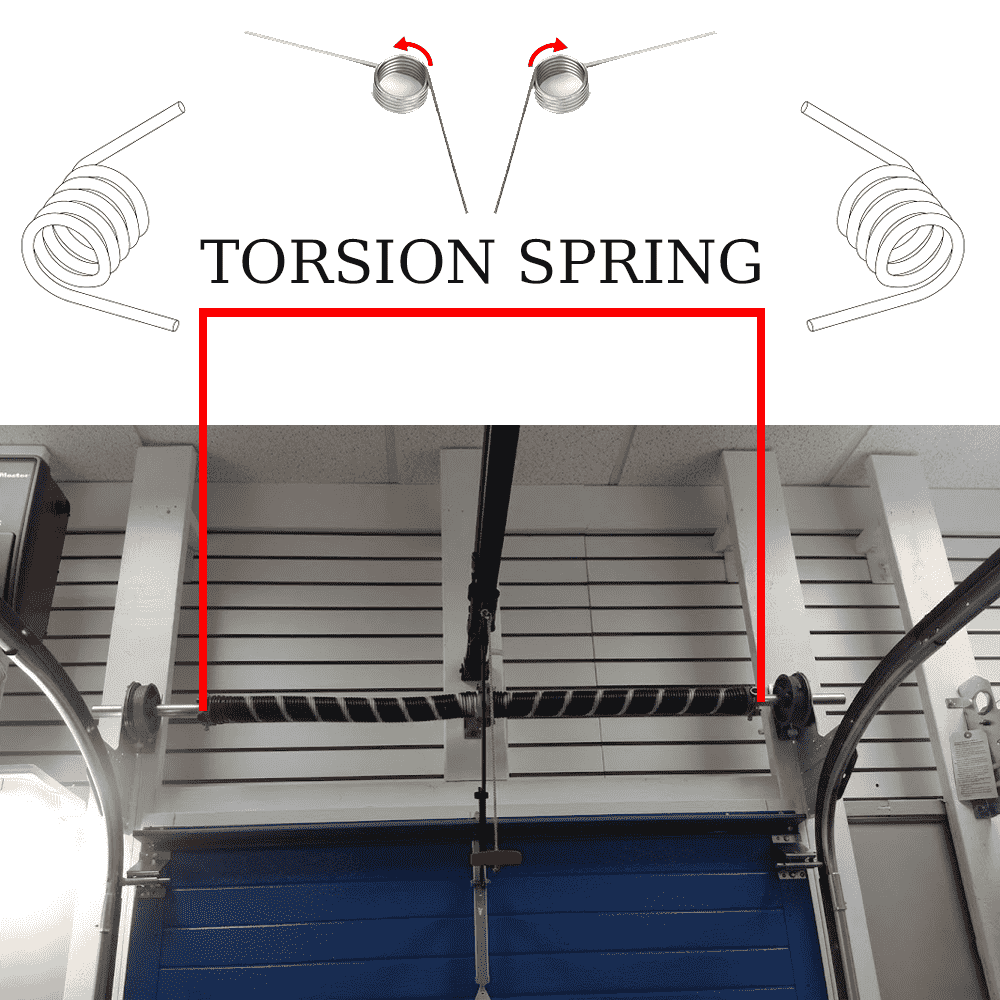
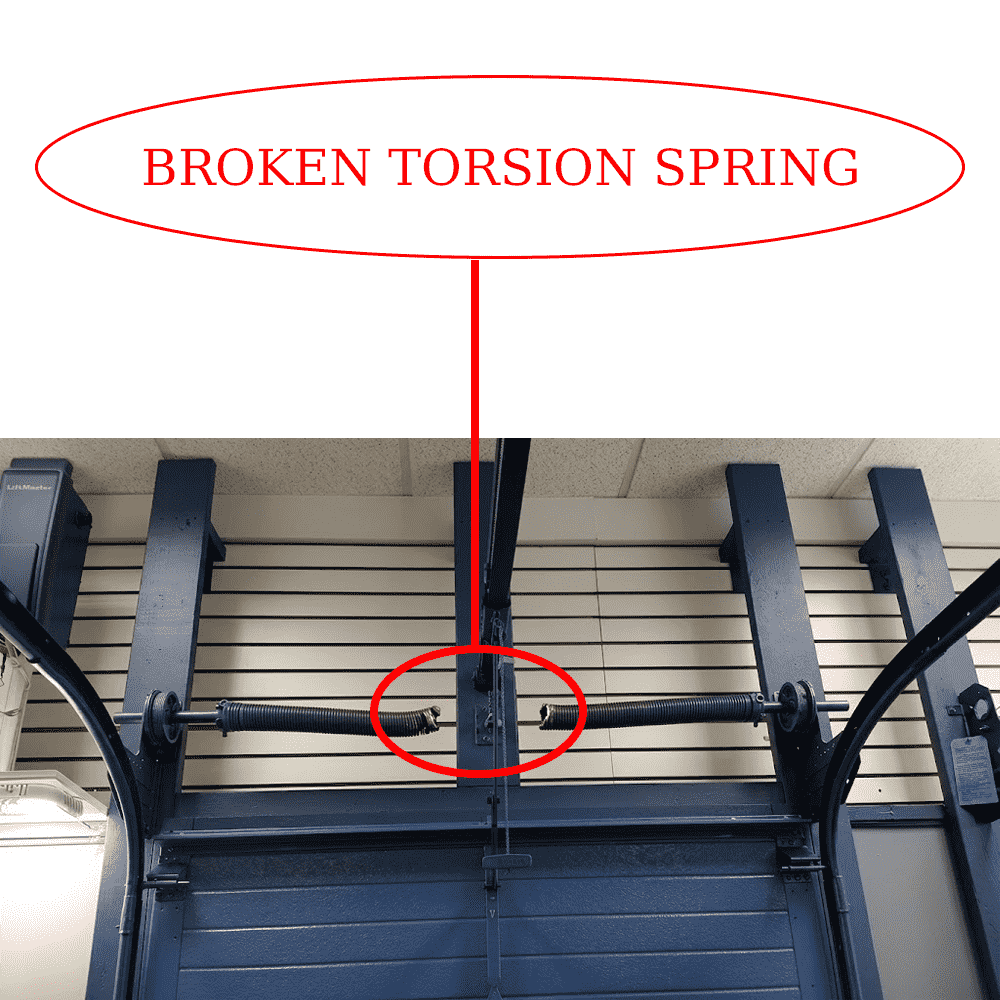
A torsion spring mounts horizontally on a metal shaft above the garage door opening.
Cable drums sit at each end of the shaft, with lift cables running down to the bottom corners of the door.
When the door closes, the spring winds tighter, storing energy through torque.
When the door opens, the spring unwinds and transfers that rotational force through the shaft and cables into a smooth, linear lifting motion.
The energy release is gradual and controlled throughout the full travel of the door.

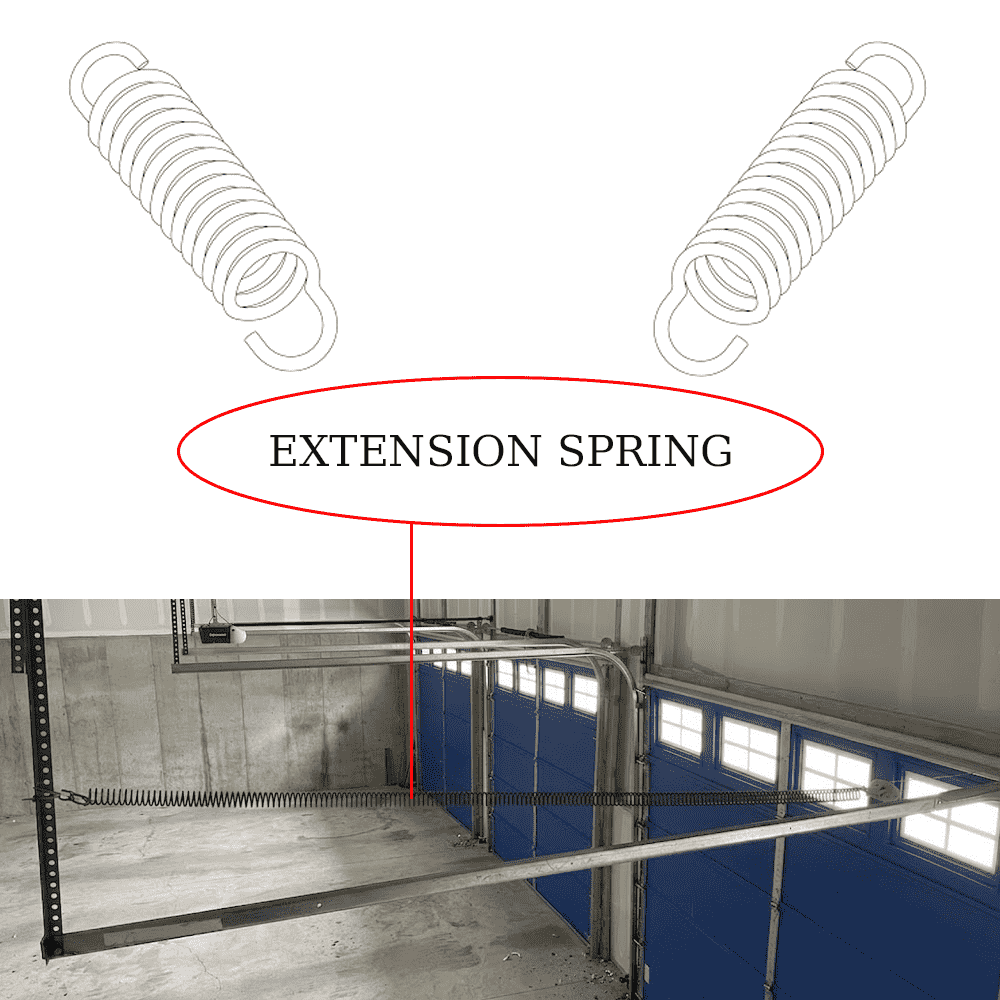
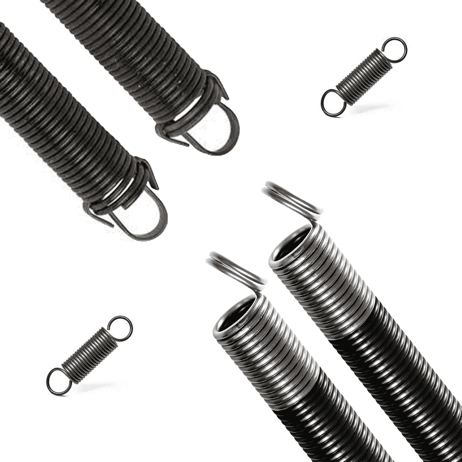
Extension springs mount on each side of the door, running parallel to the horizontal tracks.
They work through a pulley and cable system attached to the bottom of the door.
As the door closes, the cables pull the springs outward and they stretch, storing potential energy.
When the door opens, the springs contract and pull the cables, which lift the door.
The force is strongest when the springs are most stretched — meaning the counterbalancing effect isn't perfectly even throughout the door's travel.

| Feature | Torsion Springs | Extension Springs |
|---|---|---|
| Location | Above the door on a central shaft | On each side, along horizontal tracks |
| Mechanism | Twisting force (torque) | Stretching and contracting |
| Lifespan | 15,000–20,000 cycles | 7,000–10,000 cycles |
| Operation | Smooth and balanced throughout | Can be uneven; more jerky |
| Safety on failure | Stays on shaft; contained | Can snap free as a projectile |
| Headroom required | Standard (typically 2–10 inches) | Less headroom needed in some setups |
| Upfront cost | Higher | Lower |
| Long-term cost | Lower (fewer replacements) | Higher (more frequent replacement) |
| Maintenance | Less frequent | More frequent |
| Number of springs | Usually one (sometimes two) | One on each side (always two) |
This is where torsion springs have the clearest advantage.
A standard residential torsion spring is rated for 15,000 to 20,000 cycles.
Extension springs typically reach 7,000 to 10,000 cycles before needing replacement.
What does that mean in practice?
If you open your garage door four times a day, a torsion spring rated at 15,000 cycles will last about 10 years.
An extension spring at 10,000 cycles lasts roughly 6–7 years under the same usage.
Over a 20-year period, you're likely replacing extension springs at least twice for every one torsion spring replacement.
This is the most important difference for most homeowners.
A torsion spring sits on a metal shaft.
If it breaks — and all springs eventually break — the shaft contains the pieces.
The spring may crack in two, but it stays in place.
The door might drop suddenly, but the spring itself isn't going anywhere dangerous.
An extension spring is under significant tension and not contained by a shaft.
When one fails, it can snap free with considerable force.
Without safety cables running through the center of each spring, a broken extension spring can fly across the garage.
Safety cables are required on all properly installed extension spring systems, but they're often missing on older setups or DIY installations.
Torsion springs deliver consistent torque throughout the full arc of the door's travel.
The counterbalancing force remains relatively even whether the door is one foot off the ground or fully open.
Extension springs work differently.
The force they exert is proportional to how much they're stretched — which changes as the door moves.
This means the counterbalancing effect is strongest when the door is nearly closed and weakest when it's nearly open.
The result can be slightly uneven movement, particularly noticeable in doors with worn springs.
Torsion springs need enough headroom above the door for the shaft and spring assembly — typically 2 to 10 inches depending on the spring size and door height.
Most standard garages have no issue with this.
Extension springs run parallel to the horizontal tracks, so they don't need the same vertical clearance above the door.
For garages with unusually low ceilings or minimal headroom, extension springs may be the only practical option.
Extension springs cost less upfront.
A pair of standard residential extension springs typically runs $15–40, while a torsion spring assembly costs $50–100 or more depending on the spring rating and door weight.
Add professional installation — which is strongly recommended for both types — and the gap narrows, but extension springs still come in cheaper initially.
Over time, the math flips.
Replacing extension springs twice in the same period you'd replace one torsion spring, plus the additional labor costs, makes torsion springs the more economical choice across a 10–20 year window.
Torsion springs require precise winding to the correct tension for the door's weight.
This is not a DIY job.
A spring wound incorrectly can cause the door to slam shut or become impossible to balance.
Professional installation is essential.
Extension springs involve a more complex cable and pulley system with more individual components, which creates more potential failure points.
They also require safety cables as standard.
Neither system should be serviced without proper training — both types store significant mechanical energy and can cause serious injury if handled incorrectly.
For both types, lubrication every 6 months extends service life considerably.
Use a silicone-based or lithium-grease lubricant on the coils and moving parts.
Avoid WD-40. It's a solvent, not a lubricant, and regular use will accelerate wear.


The honest answer: torsion springs are the right choice for most residential garages.
But there are situations where extension springs make sense.
One situation that comes up often: older homes frequently have extension spring systems already installed.
If one spring breaks, replacing both at the same time is the right move — the surviving spring has the same wear history and is likely to fail soon anyway.
At that point, it's also worth considering whether to upgrade to torsion springs, especially if the door is heavy or well-used.
Regardless of which type you have, these are the warning signs that something is wrong:

A quick DIY test for spring health: disconnect the automatic opener and manually lift the door to about waist height, then let go.
A properly balanced door should stay in place.
If it drops immediately or flies up, the springs are out of balance and need professional attention.
Both torsion and extension springs store a large amount of mechanical energy.
A fully wound residential torsion spring holds enough stored torque to cause serious injury if released suddenly.
Extension springs on the same door carry significant tension throughout their length.
Replacing either type without proper training and tools is dangerous.
Winding bars, not screwdrivers or makeshift tools, are required for torsion springs.
Extension springs need careful cable management to prevent sudden release.
Every year, homeowners are injured attempting spring replacements that go wrong.
The cost of professional installation — typically $75–200 for labor depending on the job — is worth it.
A professional will also calibrate the spring tension to your door's exact weight, which matters for both performance and longevity.
Yes, and it's a common upgrade. The conversion requires installing a torsion spring shaft, cable drums, and new cables above the door.
A professional can assess whether your garage has sufficient headroom and complete the conversion in a single visit.
Most homeowners who make this switch don't go back.
Torsion springs are typically rated for 15,000–20,000 cycles. At four uses per day, that's roughly 10–13 years. Extension springs last 7,000–10,000 cycles — about 5–7 years at the same usage rate.
Higher-cycle springs (rated at 25,000–30,000 cycles) are available for both types at a premium, and are worth considering for heavily used doors.
Yes. If one spring breaks, replace both. They've been through the same number of cycles and have the same amount of wear.
Replacing only the broken one leaves you with a mismatched system — the new spring will work harder to compensate for the weakened one, and the other spring will likely fail within months.
Most spring failures are simply the result of reaching the end of the rated cycle life — metal fatigue after thousands of load cycles.
Rust and corrosion accelerate this process, which is why lubricating springs twice a year extends their life.
Springs can also fail prematurely if the door is out of balance and one spring is carrying more load than the other.
Torsion springs are generally quieter.
The twisting mechanism produces less noise than the stretching and contracting of extension springs.
If noise is a concern — particularly for an attached garage near a bedroom — torsion springs have a clear edge here.
Torsion springs and extension springs both do the job.
The difference is in how well, for how long, and how safely.
For the majority of residential garages, torsion springs are the right investment: longer lifespan, smoother operation, and a much safer outcome if something goes wrong.
Extension springs remain a reasonable option for low-headroom garages, lighter doors, or budget-constrained replacements.
Just make sure safety cables are installed, and go in knowing the service life is shorter.
When in doubt, have a professional assess your door.
Spring selection isn't just about preference — the spring has to be matched to the door's exact weight and geometry to work correctly and safely.
Ceramic balls are key parts in many high-performance applications because of their unique properties. Choosing the right ceramic balls is crucial...
A conveyor drive shaft in a copper mine. A 200 kW electric motor in a packaging line. A paper mill press roll running 24/7. Each of these machines...
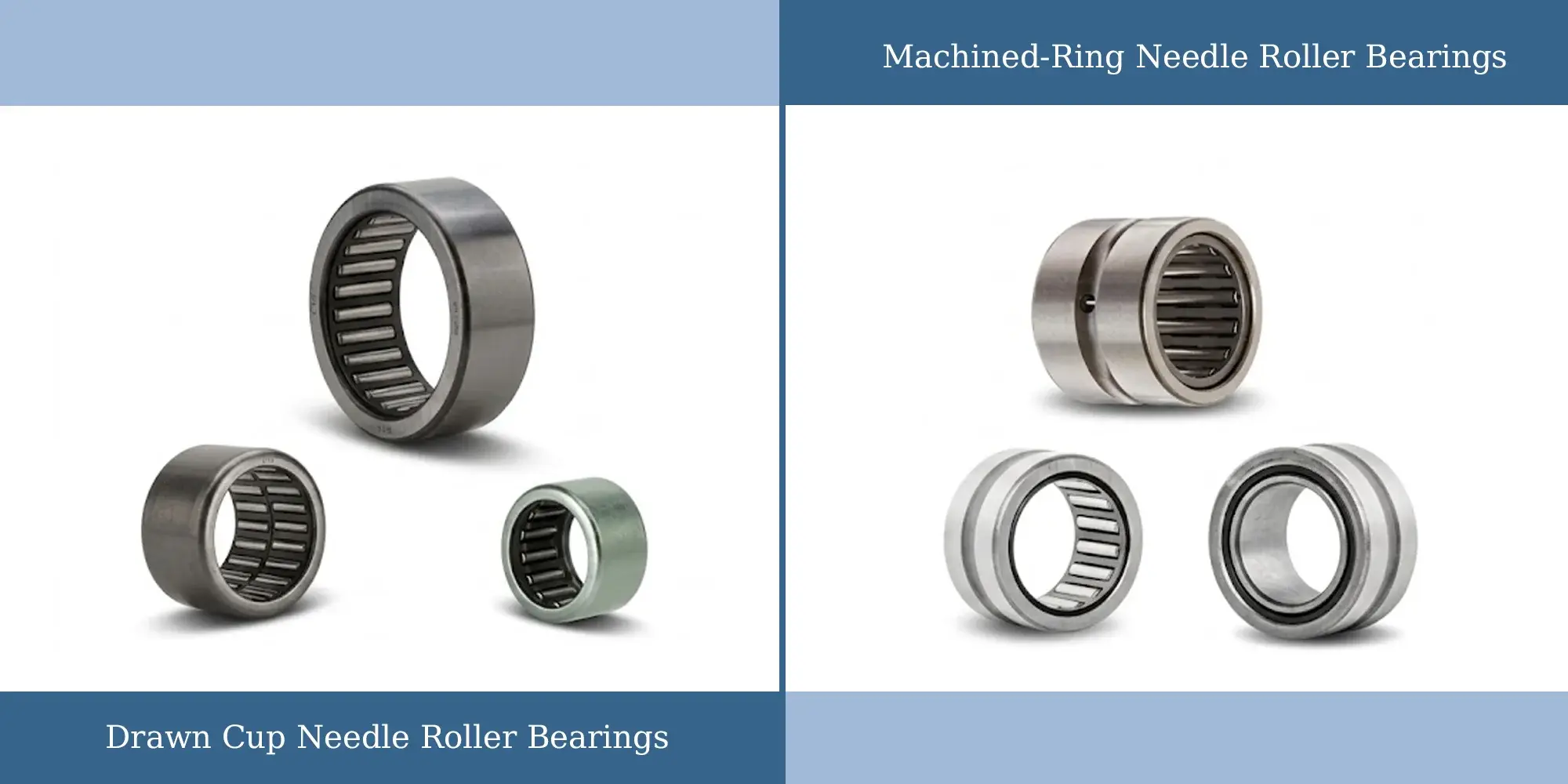
The choice between a drawn cup needle roller bearing and a machined-ring design rarely gets the attention it deserves. Engineers often default to...