

Home/
Blog/
Linear Guides: Main Types Explained

5 min read

Linear Guides: Main Types Explained

Linear Guides: Main Types Explained
9:53

The Foundation of Controlled Motion

The success of modern technology, from the delicate layering of a 3D printer to the continuous, heavy-duty operation of massive factory automation systems, fundamentally depends on precise, repeatable motion.

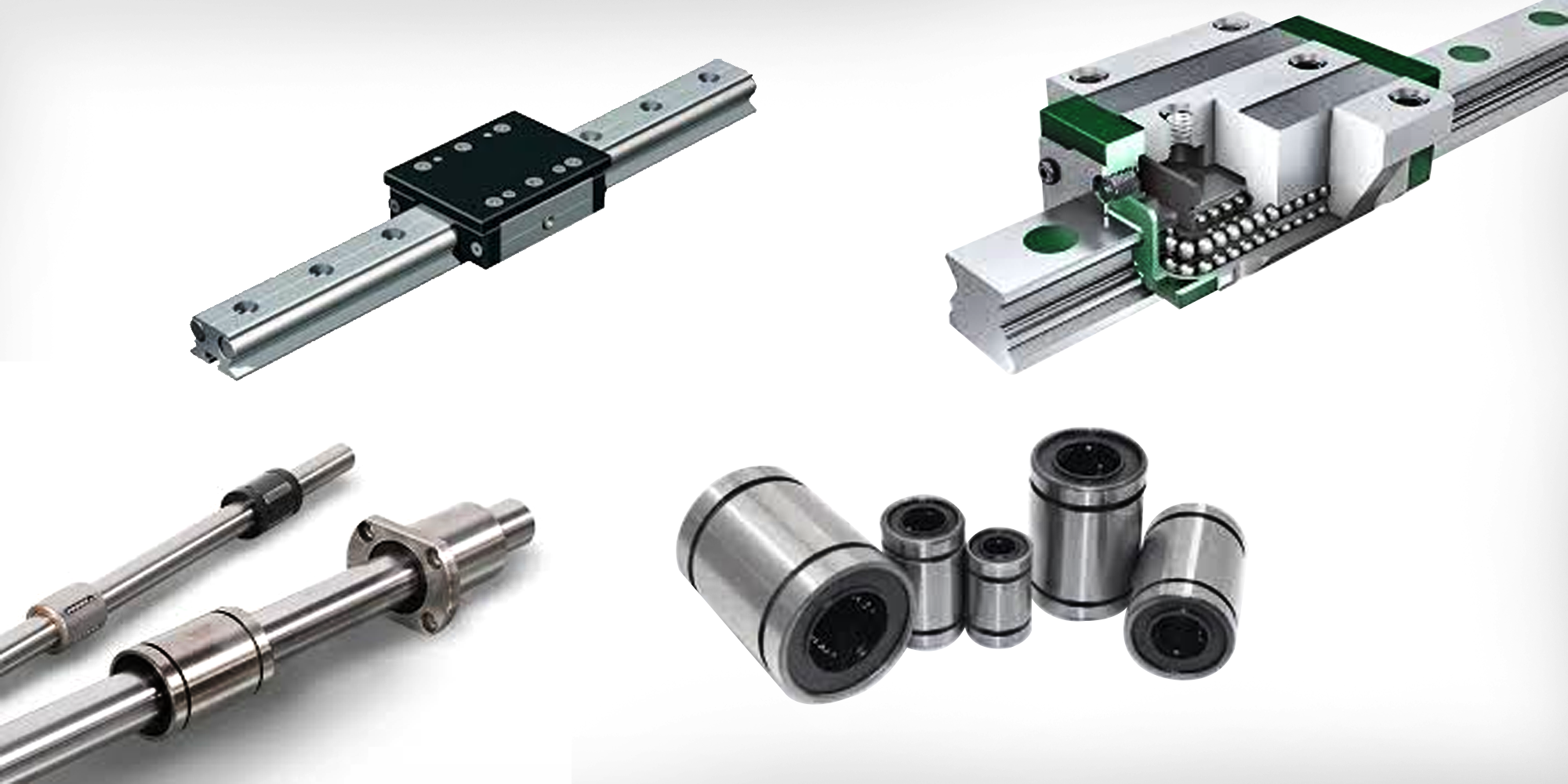
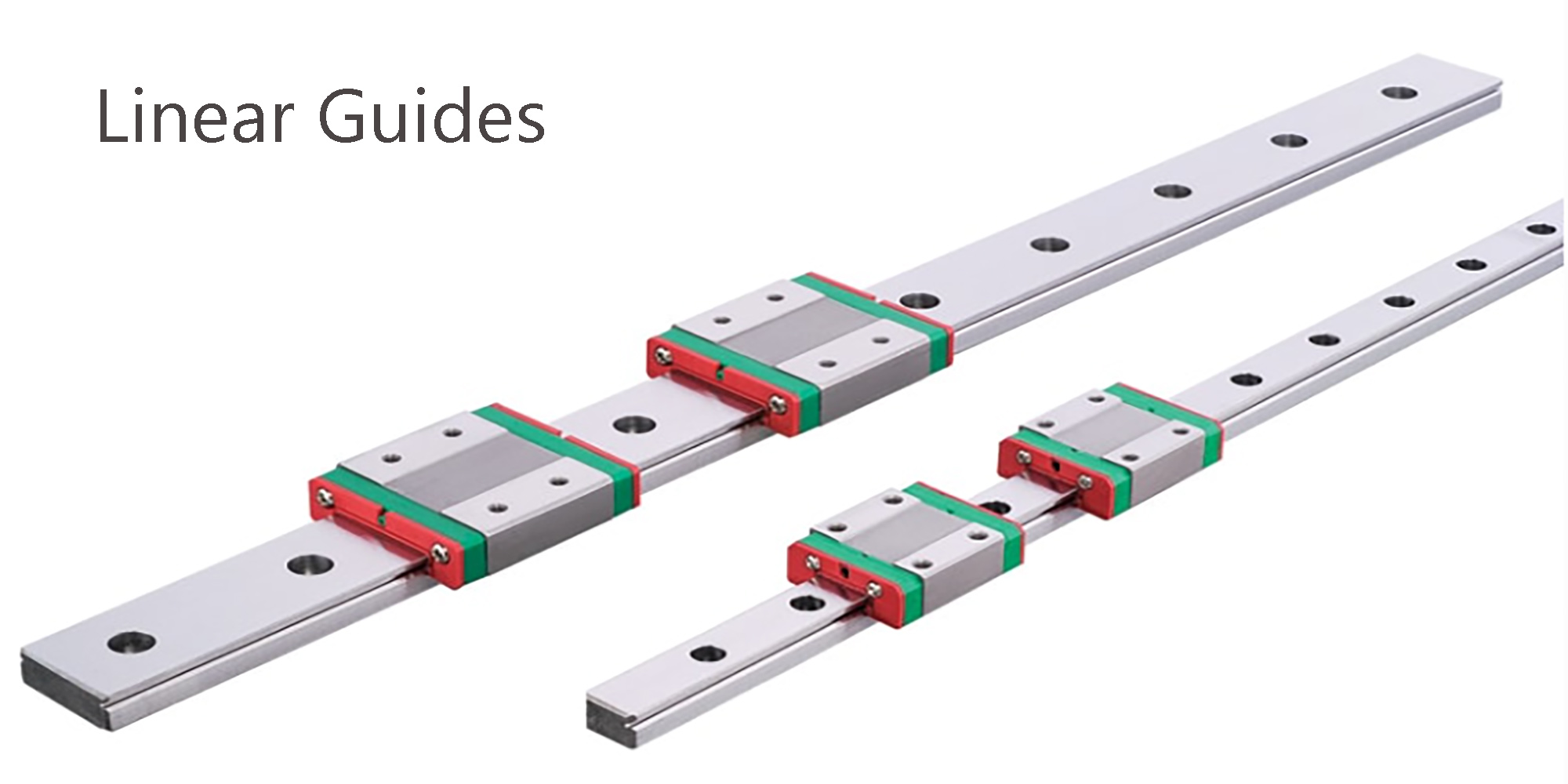
Linear Guides are a block and rail system that helps support the motion of an application. The linear guide blocks move down the length of the linear rail along the plane it was positioned for.

In this guide, we'll strip away the complexity to reveal the ABCs of linear guides, introducing the main types of linear guides, including HG, EG, QH, QE, RG, MG series, and so on.


HG Series

The HIWIN HG series linear guideways are optimized for strength, utilizing a circular-arc groove design that provides superior rigidity and load capacity compared to similar products. Because the design allows for equal load ratings in all radial and lateral directions, and includes a self-aligning feature to absorb installation error, the HG series ensures guaranteed high accuracy, smooth operation, and extended service life, even at high speeds.


Features of HG Series

Self-aligning capability

The HG series is designed for hassle-free mounting. Its unique circular-arc groove, featuring 45-degree contact points, gives the guide an inherent self-aligning capability. This means the system can automatically absorb most surface irregularities and installation errors through the elastic shifting of the rolling elements. The result is an easy installation process that still delivers guaranteed high accuracy and incredibly smooth linear motion.


Interchangeability

Due to precision dimensional control during manufacturing, the HG series maintains a tight tolerance range that enables total interchangeability. This critical feature means any block can be freely paired with any rail of the same series while retaining dimensional accuracy, greatly simplifying inventory and replacement needs. Additionally, a ball retainer is integrated into the block to ensure the steel balls remain securely in place when the carriage is removed from the rail for maintenance.


High rigidity in all four directions

The HG series is engineered with a robust four-row design, allowing it to offer equal load ratings in all directions—radial, reverse radial, and lateral. Furthermore, the specialized circular-arc groove maximizes the contact width between the rolling elements and the raceway. This design choice is what directly enables the system to handle large permissible loads while maintaining exceptionally high rigidity.


Construction of HG Series

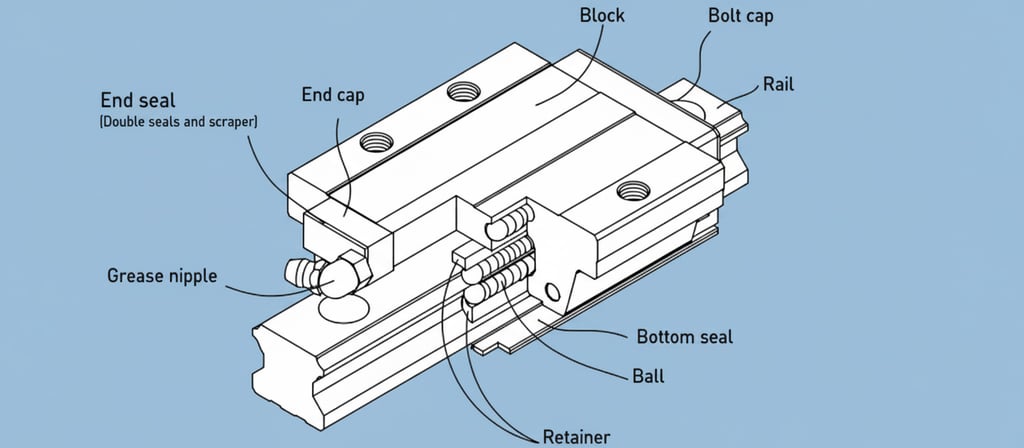
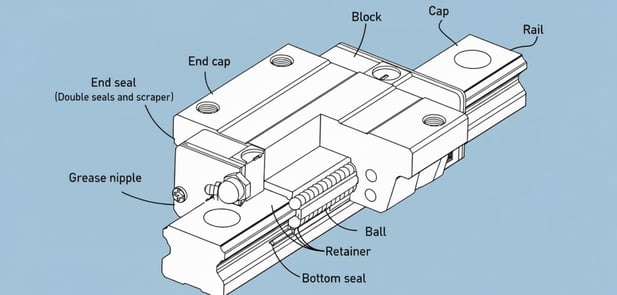
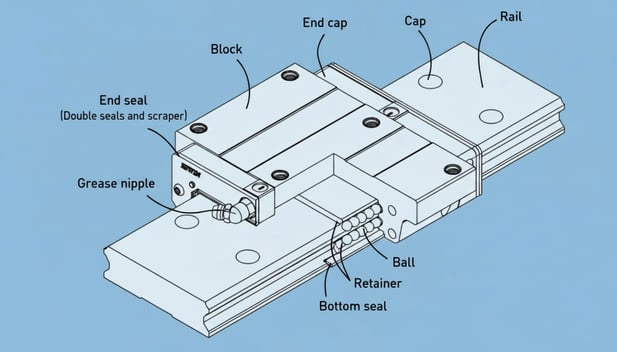
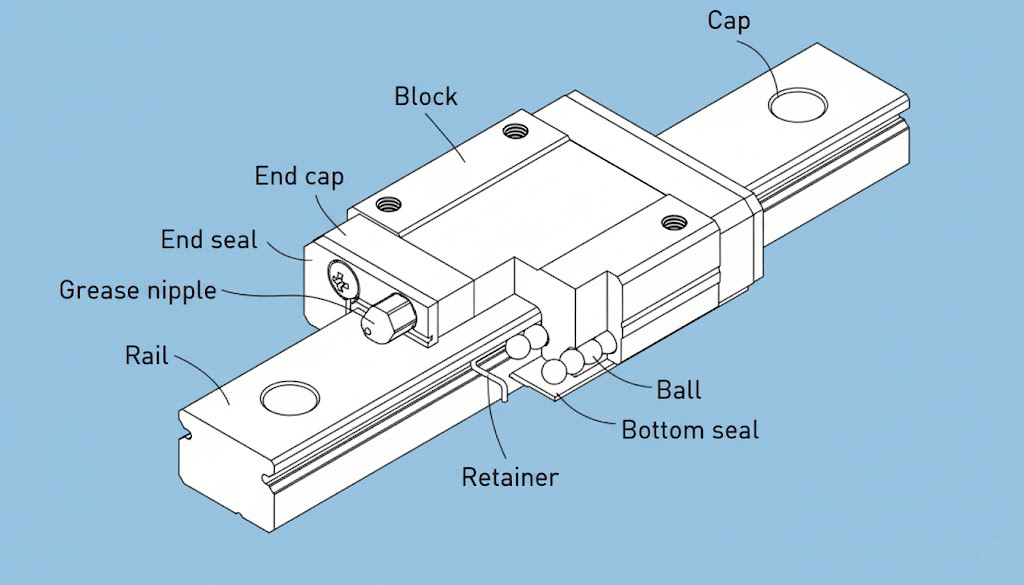
  • Rolling circulation system: Block, Rail, End Cap and Retainer
  • Lubrication system: Grease Nipple and Piping Joint
  • Dust protection system: End seal, Bottom Seal, Bolt Cap, Double Seals and Scraper


C2


Types of HG Series

Block Types

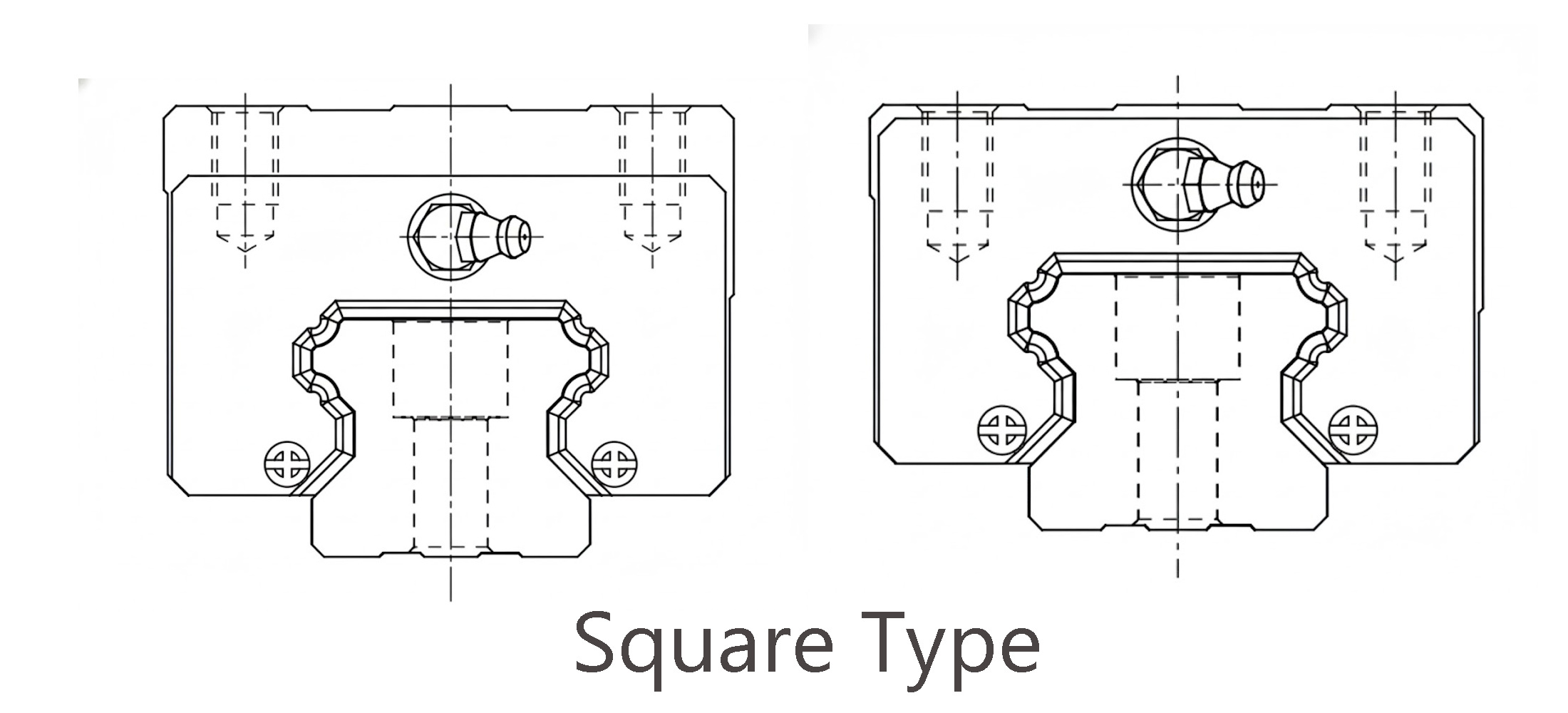
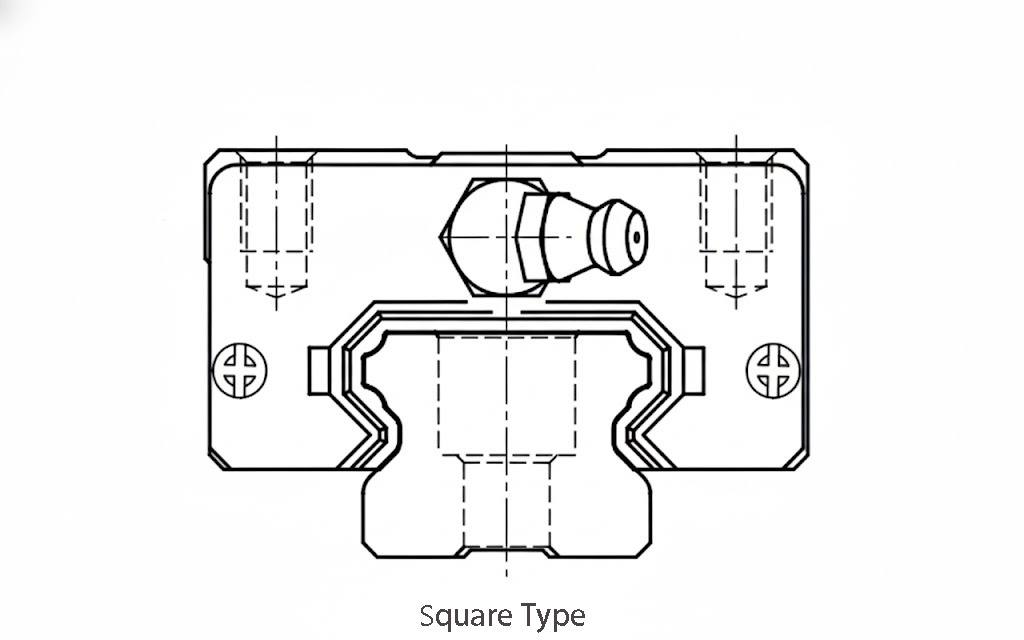
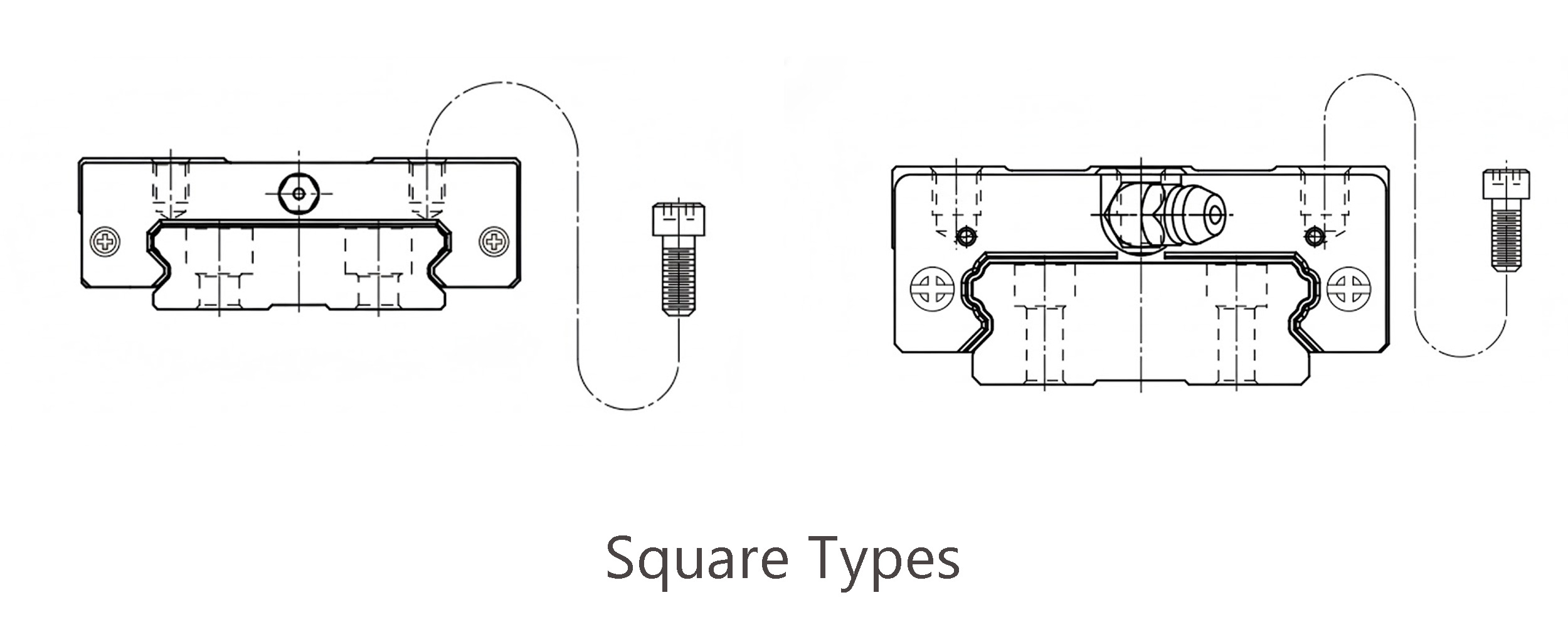
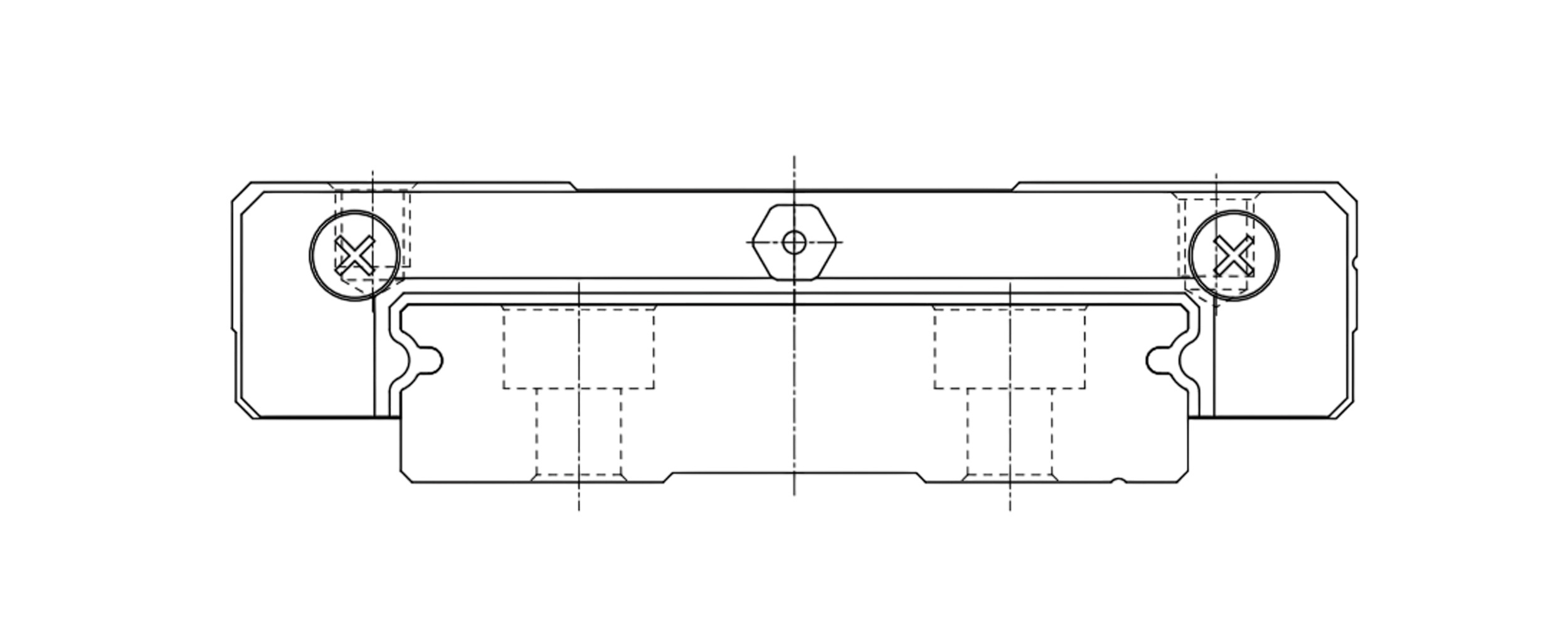
Square Types


未标题-2-Oct-29-2025-06-29-49-7966-AM


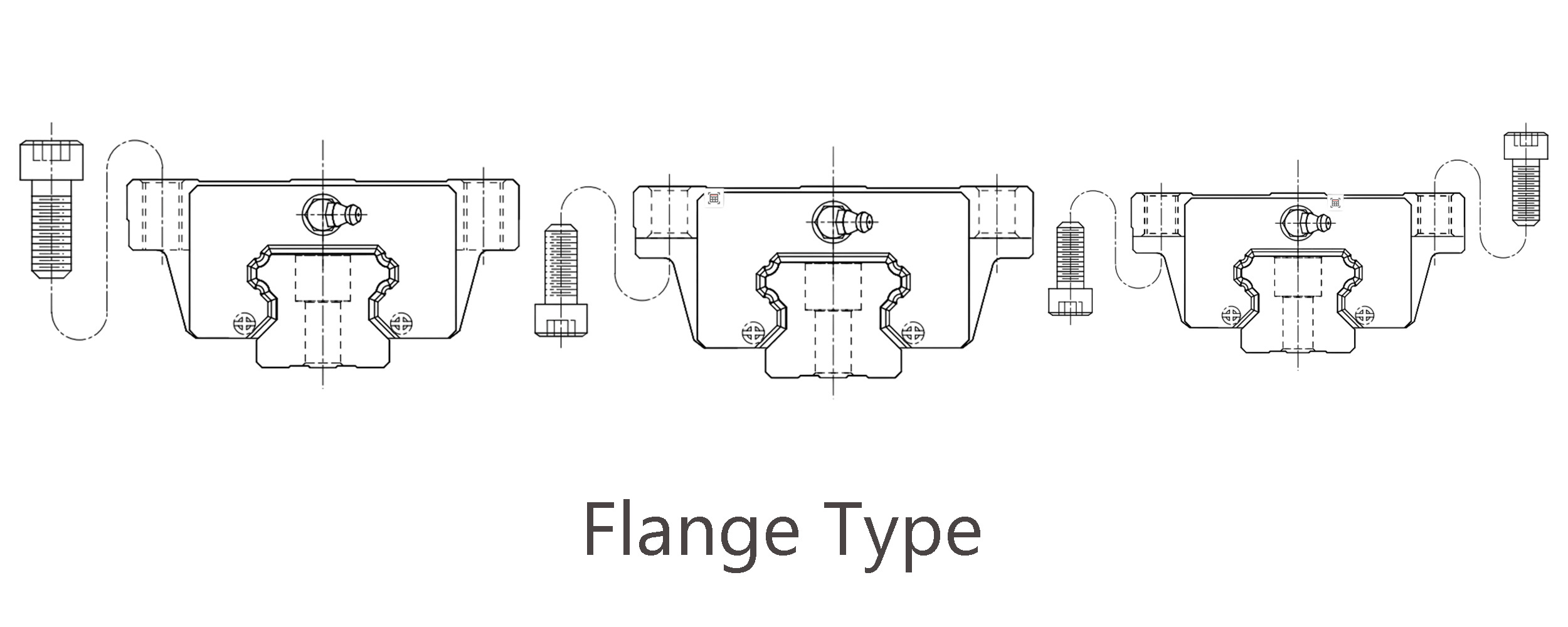
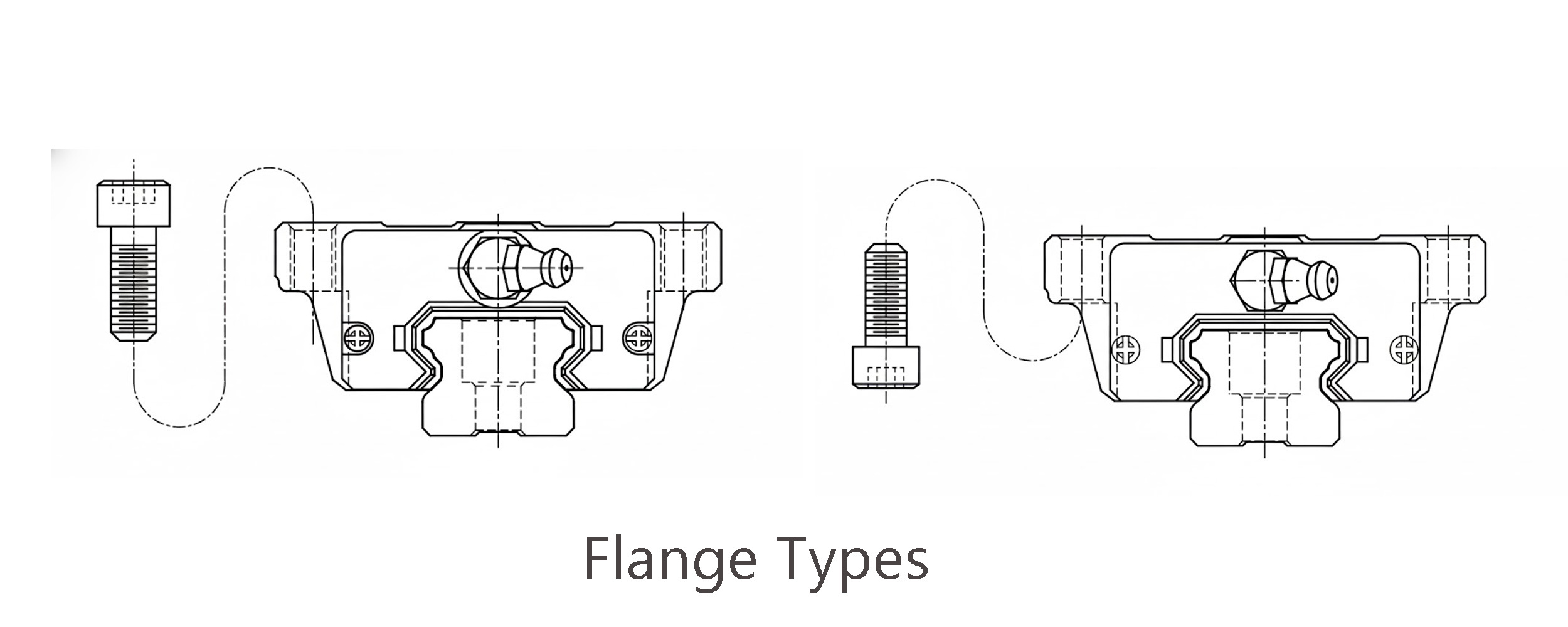
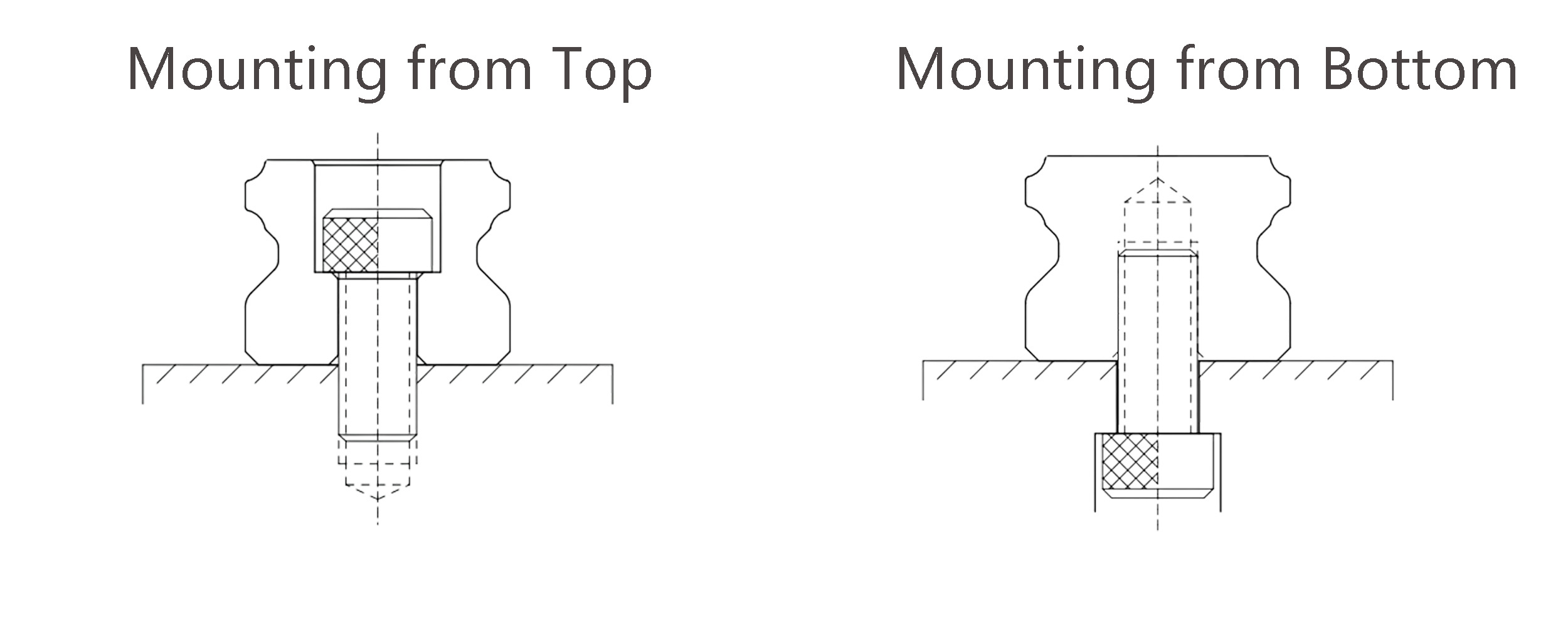
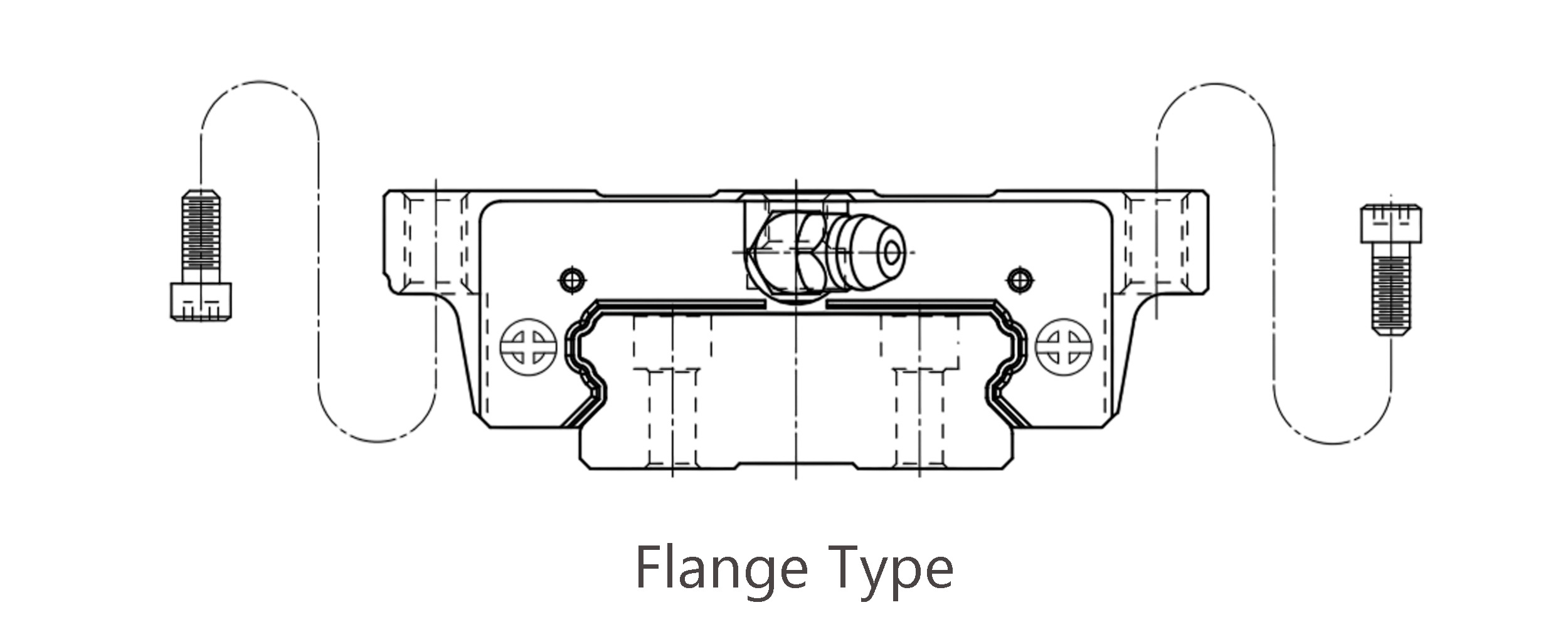
Flange Types

 Flange Type


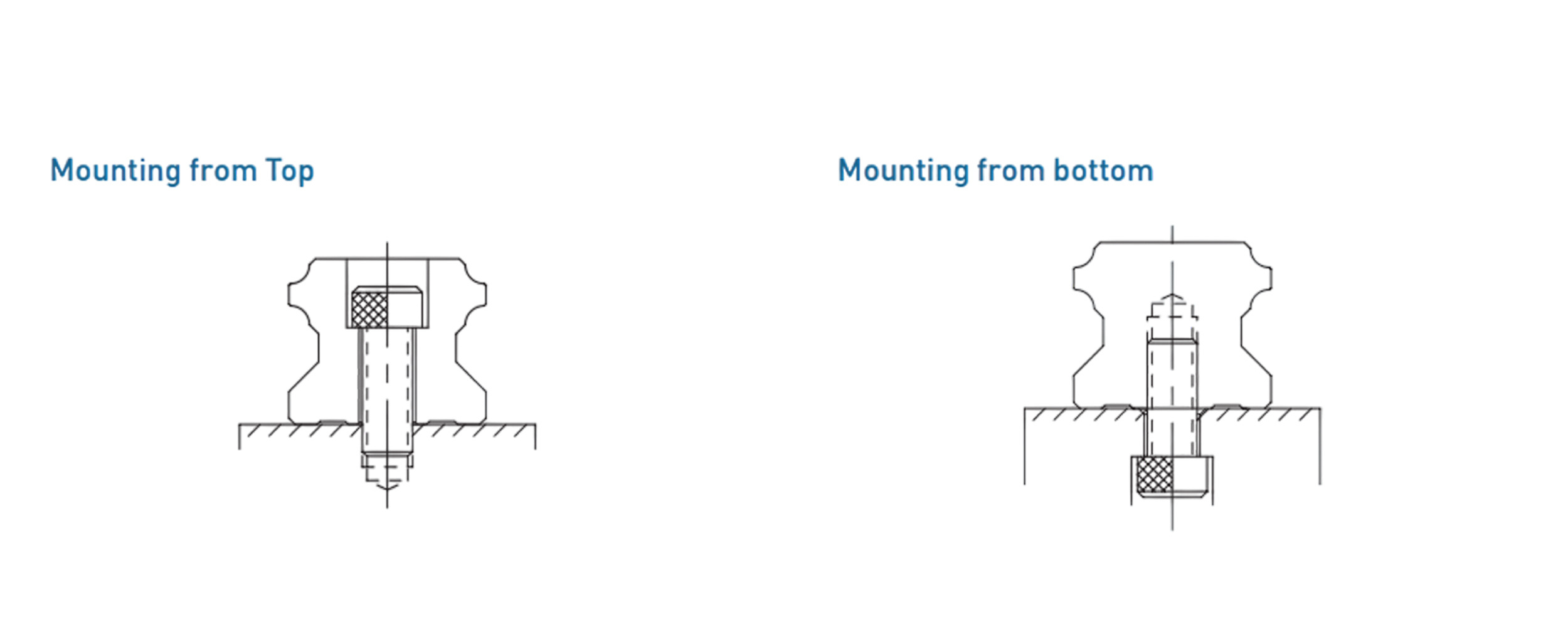
Rail Types

 Rail Type


Accuracy Classes

The HG series offers five accuracy classes: Normal (C), High (H), Precision (P), Super Precision (SP), and Ultra Precision (UP). Select the appropriate class based on the accuracy requirements of your equipment.


Preload Classes

Each guideway can be preloaded using oversized balls. Typically, a linear motion guideway features a slight negative clearance between the grooves and balls to enhance stiffness and maintain high precision. As shown in the figure, applying preload increases the load capacity, doubles rigidity, and cuts deflection in half. For models smaller than HG20, it is recommended to keep the preload no greater than ZA to prevent excessive preload that could shorten the guideway’s service life.


Class

Code

Preload

Condition

Examples of Application

Light Preload

Z0

0-0.02C

Certain load direction, low impact, low precision required

Transportation devices, auto-packing machines, X-Y axis for general industrial machines, welding machines, welders

Medium Preload

ZA

0.05C-0.07C

High precision required

Machining centers, Z axis for general industrial, machines, EDM, NC lathes, Precision X-Y tables, measuring equipment

Heavy Preload

ZB

0.10C-0.12C

High rigidity required, with vibration and impact

Machining centers, grinding machines, NC lathes, horizontal and vertical milling machines, Z axis of machine tools, Heavy cutting machines


Note: The “C” in the preload column denotes basic dynamic load rating.


EG Series

The EG series is designed with a low profile while providing high load capacity and rigidity. It delivers equal load ratings in all four directions and features a self-aligning capability that compensates for installation errors, ensuring greater accuracy. Its reduced assembly height and compact length make it ideal for high-speed automated machinery and applications with limited space. The ball retainer is engineered to keep the balls securely in place even when the block is removed from the rail.


Construction of EG Series

  • Rolling circulation system: Block, Rail, End Cap and Retainer
  • Lubrication system: Grease Nipple and Piping Joint
  • Dust protection system: End seal, Bottom Seal, Cap, and Scraper


C3


Types of EG Series

Block Types

Square Types


Square Type


Flange Types


Flange Type


Rail Types


Rail Type


Accuracy Classes

The accuracy of the EG series can be classified into normal (C), high (H), precision (P), super precision (SP), ultra precision (UP), five classes. Please choose the class by referring the accuracy of applied equipment.


Preload Classes

A preload can be applied to each guideway. Generally, a linear motion guideway has a negative clearance between the groove and balls in order to improve stiffness and maintain high precision. The figure shows that adding a preload can improve stiffness of the linear guideway. A preload no greater than ZA would be recommended for model sizes smaller than EG20. This will avoid an over-loaded condition that would affect guideway life.


Class

Code

Preload

Condition

Very Light Preload

Z0

0-0.02C

Certain load direction, low impact, low precision requirement

Light Preload

ZA

0.03C-0.05C

low load and high precision requirement

Medium Preload

ZB

0.06C-0.08C

High rigidity required, with vibration and impact


Note: The “C” in the preload column denotes basic dynamic load rating.


WE Series

The WE series provides equal load ratings in the radial, reverse radial, and lateral directions, with 45-degree contact points. Its wide rail design enables the guideway to support high loads, moments, and rigidity. The self-aligning structure compensates for most installation errors, ensuring high accuracy. With its low profile, low center of gravity, and the option to use a single rail, the WE series is ideal for applications with limited space or where high moment capacity is needed.


Construction of WE Series

  • Rolling circulation system: Block, Rail, End Cap and Retainer
  • Lubrication system: Grease Nipple and Piping Joint
  • Dust protection system: End seal, Bottom Seal, Cap, and Scraper


C1


Types of WE Series

Block Types

Square Types


Square Type


Flange Types


WEF


Rail Types


Rail Type


Accuracy Classes

The accuracy of the WE series can be classified into normal (C), high (H), precision (P), super precision (SP), ultra precision (UP), five classes. Please choose the class by referring the accuracy of applied equipment.


Preload Classes

Each guideway can be preloaded to enhance performance. Typically, a linear motion guideway features a slight negative clearance between the groove and the balls to increase stiffness and maintain high precision. As illustrated, applying preload further enhances the rigidity of the linear guideway.


Class

Code

Preload

Condition

Very Light Preload

Z0

0-0.02C

Certain load direction, low impact, low precision requirement

Light Preload

ZA

0.03C-0.05C

low load and high precision requirement

Medium Preload

ZB

0.06C-0.08C

High rigidity requirement, with vibration and impact


Note: The “C” in the preload column denotes basic dynamic load rating.


MG Series


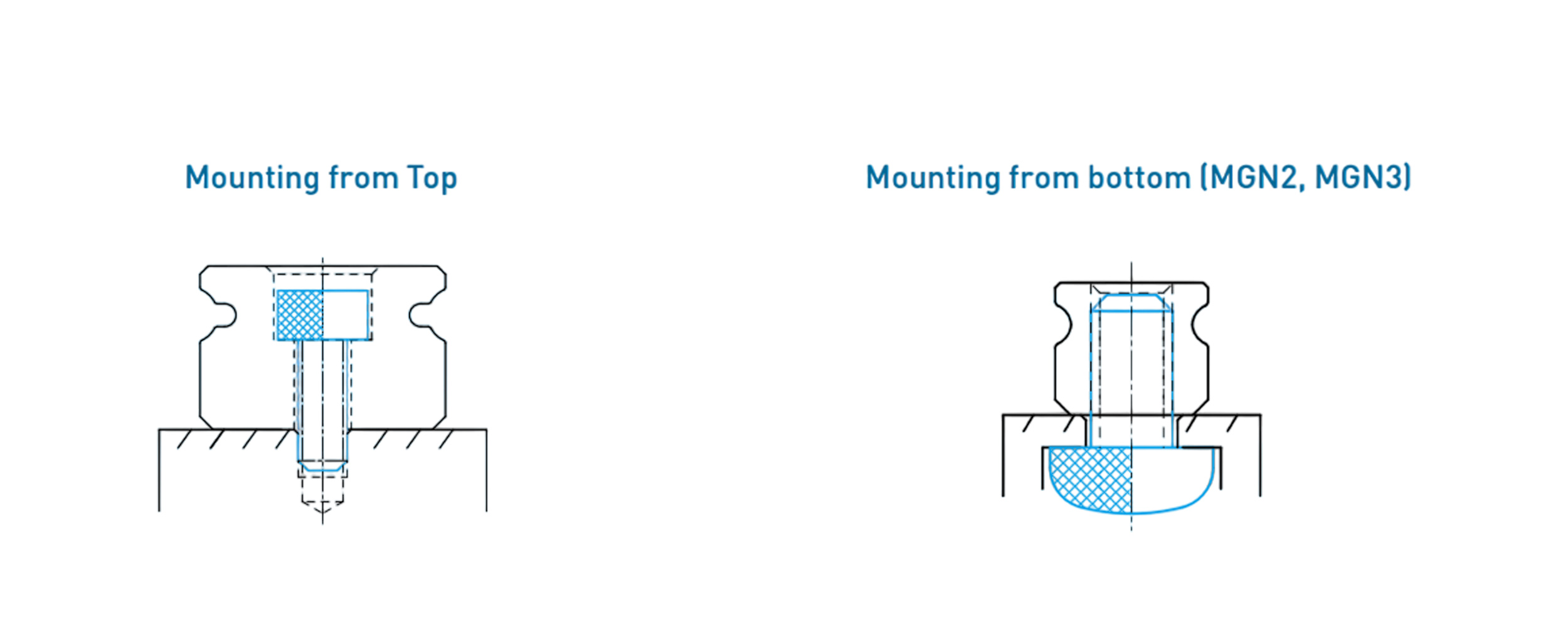
Features of MGN Series

  • Compact and lightweight, ideal for use in miniature equipment.
  • The Gothic arch contact design allows the guide to withstand loads from all directions while maintaining high rigidity and accuracy.
  • Models with ball retainers prevent balls from falling out when the block is detached from the rail.
  • Interchangeable versions are available in selected sizes and precision grades.


Construction of MGN Series

  • Rolling circulation system: Block, rail, ball, end cap and retainer (except size 2, 3)
  • Lubrication system: Grease nipple is available for MGN15, lubricated by grease gun. MGN7, 9, 12 are lubricated by the hole at the side of the end cap.
  • Dust protection system: End seal (except size 2), bottom seal (optional size 9, 12, 15), cap (size 12, 15)


u


Types of MG Series

Block Types

Square Types


Square Type


Wide Types


Flange Type


Rail Types


Rail Type


Accuracy Classes

The accuracy of the MG series can be classified into normal (C), high (H), precision (P). Please choose the class by referring the accuracy of applied equipment.


Preload Classes


Class

Code

Preload

Accuracy

Light Clearance

ZF

Clearance 4-10μm

C

Very Light Preload

Z0

Clearance 0-3μm

C-P

Light Preload

Z1

0.02C

C-P


Note: The “C” in the preload column denotes basic dynamic load rating.


Summary


This guide introduces linear guides used in modern automation systems to achieve precise and repeatable motion, focusing on comparing the main series—HG, EG, WE, and MG. Explore the full range of linear guides at lily bearing and find the perfect solution for your automation needs today.

Linear Guides vs. Linear Bushings vs. Dovetail Slides

Linear Guides vs. Linear Bushings vs. Dovetail Slides

Introduction: Why Linear Motion Choice Matters Every machine that moves in a straight line relies on a linear motion system — from the most delicate...
Read More
Linear Guides: How They Work and Why They Matter

Linear Guides: How They Work and Why They Matter

Every time a CNC router cuts a perfect slot, a 3D printer lays down a precise bead of filament, or a laser etches a microchip — a linear guide...

Read More
Linear Bearing Design Guide

Linear Bearing Design Guide

In the realm of modern machinery, linear bearings stand out as pivotal elements. Their role is monumental, but it's the meticulous design behind them...

Read More