

Home/
Blog/
Compression vs Extension Springs: Key Differences

4 min read

Compression vs Extension Springs: Key Differences

Compression vs Extension Springs: Key Differences
7:42

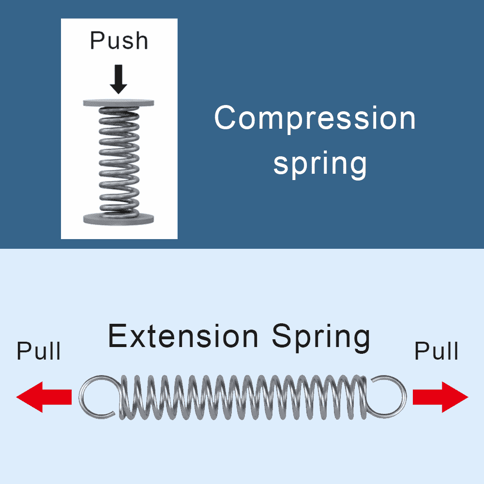
Compression vs. extension springs? One pushes, one pulls.

Both store and release mechanical energy—just in different directions.

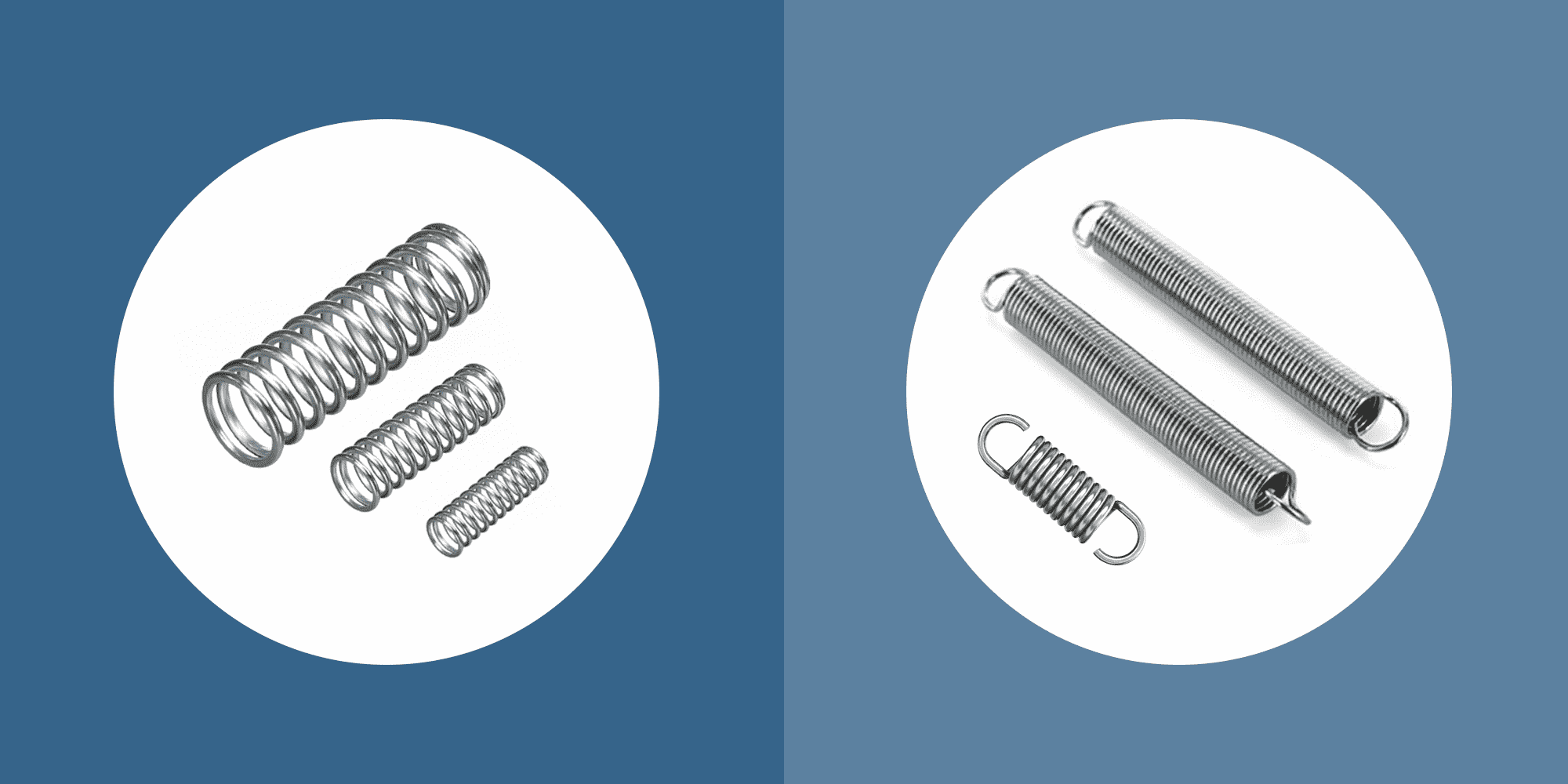
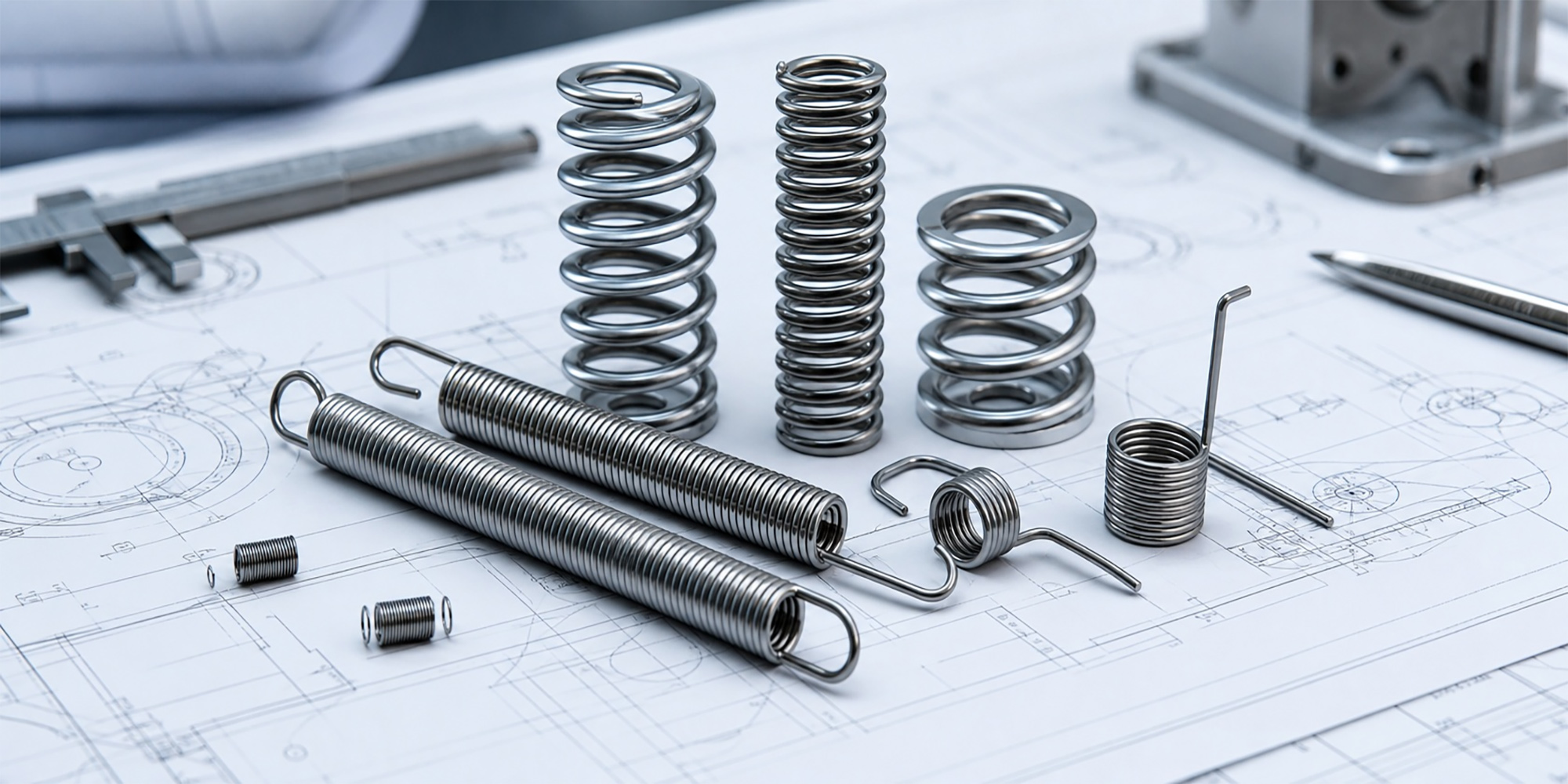
a compression spring under compressive load and an extension spring under tensile load

Selecting the wrong spring type causes premature fatigue, system failure, and costly downtime—not a minor oversight.

You might be sourcing for automotive production or designing an aerospace valve.

Either way, understanding how these springs work is critical.


Compression Springs: The Power of the Push

Compression springs are the most common components in industrial mechanical systems.

Their function is straightforward: they are open-coil helical springs designed to resist axial compressive forces.

Apply a load and the spring stores mechanical energy by shortening.

Release that load and the spring pushes back to its original length.

Compression Springs

The Mechanics of "The Gap"

Unlike other types, compression springs are never tightly wound.

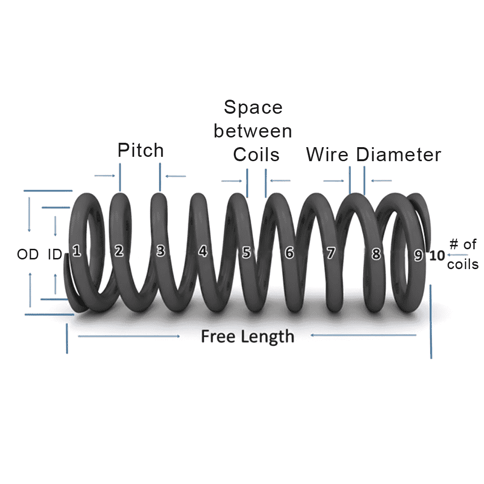
You will always see visible gaps (pitch) between the coils in their original position.

The "open" design allows compression.

Remove your pushing force and the spring rebounds.

key dimensional parameters of a compression spring

Why They Are Popular in Procurement

Beyond the simple "pushing" function, compression springs dominate industrial catalogs for four key reasons:


Predictable Performance & Precision

They offer a linear increase in force, which makes them incredibly easy to specify for precision instruments.

Whether it's a load of 0.5 lbs or 5,000 lbs, we maintain ±5% load tolerances on precision and custom springs.

Your assembly gets exactly the resistance it requires.


Optimal Spring Index Range

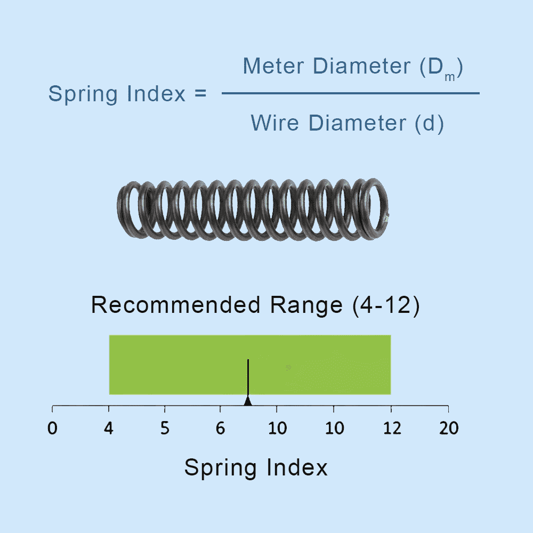
Industry standards recommend a spring index between 4 and 12 (that's mean diameter divided by wire diameter).

Indexes below 4 are difficult to form without material damage.

Those above 12 are prone to buckling and tangling. 

This optimal range ensures manufacturability, cost-effectiveness, and reliable performance.

Spring Index Range

Space Efficiency

These springs are incredibly versatile in tight assemblies.

Install them in a bore or slide them over a rod. Both options minimize space.


Superior Safety Profile

From a maintenance perspective, compression springs are inherently "failsafe."

Even if the wire suffers fatigue and breaks, the fragments typically remain "caged" within the assembly.

This keeps the machine in a safe state and prevents the catastrophic 'projectile' failures you sometimes see with high-tension springs.


Cost-Effectiveness (The Pro Buyer’s Insight)

Compression springs use relatively simple and highly repeatable end finishing operations, such as standard closed or ground ends.

Unlike extension springs, they avoid complex, labor-intensive hook forming.

That means lower per-unit costs and faster lead times in high-volume production.


Extension Springs: The Power of the Pull

Often referred to as tension springs, these components are the functional opposites of their compression cousins.

Compression springs have gaps between coils.

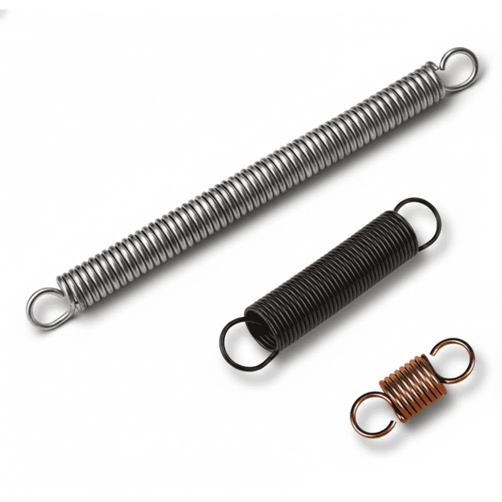
Extension springs don't—their coils press tightly together at rest.

Extension Springs-1

The Challenge of "Initial Tension"

One of the most critical factors in spring design for extension types is initial tension.

This is the internal force that holds the coils together.

You must overcome this "gatekeeper" force before the spring even begins to extend.


Buyer’s Tip

If you are sourcing for a delicate mechanism (like a precision medical device), specify a low initial tension.

However, for heavy-duty counterweights like garage doors, you need high initial tension.

This keeps the door taut so it doesn't sag under its own weight.


The Role of the Hook or Loop

An extension spring is useless without a way to attach it.

This is where the hook or loop comes in.

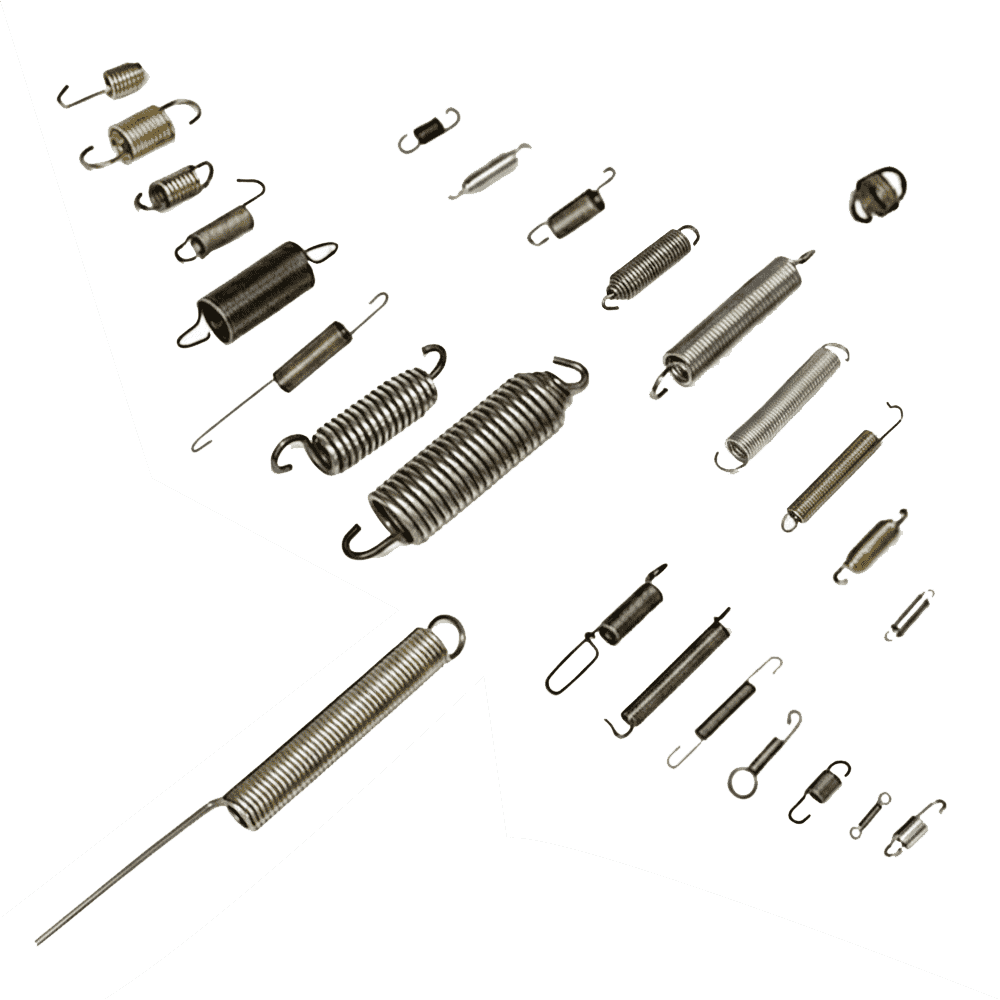
These ends come in various styles—English, German, and extended hooks.

They're the spring's most critical interface point.

Hooks and Loops of Extension Springs

When sourcing, always check the radius of the hook.

A sharp, tight bend here is a major "red flag" for premature fatigue.


Understanding Failure Points

We recently helped a Tier-1 automotive supplier solve a recurring fatigue issue.

Most extension spring failures happen where the hook meets the coil body.

Our lab testing at Lily Bearing confirmed what the industry already knows—this junction is the weakest point.

Why?

Because the stress concentration at the bend of the hook is significantly higher than in the rest of the spring.

For high-frequency cycling (thousands of reps daily), we recommend "over-specifying" the wire diameter by 10-15%. 

This extra material compensates for the inherent weak points at the attachment ends, dramatically extending the component's service life.


Pro Tip for High-Cycle Applications:

Consider specifying shot peening for extension springs in demanding environments.

This cold-working process creates compressive stresses in the surface layer.

That stress counteracts the tension that starts cracks at the hook-to-coil junction.

Result: better fatigue resistance.


Head-to-Head Comparison: Which One Do You Need?

When comparing compression and extension springs, the choice usually comes down to your assembly's physical requirements and safety needs.

Feature

Compression Springs

Extension (Tension) Springs

Typical Standards

DIN 2095

Application-dependent

Primary Force

Resistance to pushing (Compression)

Resistance to pulling (Tension)

Force Response

Immediate linear resistance

Must overcome initial tension first, then linear

End Configuration

Usually flat or ground ends

Attached via a hook or loop

Fatigue Risk

Low (Stress distributed evenly)

High (90% of failures occur at hook-to-coil junction)

Failure Mode

Failsafe (Broken coils stay contained)

Projectile risk (Hooks can snap and fly off)

Manufacturing Cost

Lower (simple end finishing)

15-25% Higher (because of hook forming labor)

Spring Index Range

4-12

4-12

Common Use

Valves, Suspension, Systems, Industrial Assemblies

Garage doors, Trampolines, Balances


Procurement Checklist: Before You Request a Quote

When contacting an engineering team for a consultation, don't just ask for "a spring."

Have these four specs ready to avoid sizing errors and ensure long-term reliability:


Space Constraints (The Envelope)

What is the maximum length and diameter allowed in the machine's housing?


The Force Profile

How many pounds of pulling force or pushing force do you need at a specific distance?


The Environment

Does it require corrosion resistance (Stainless Steel) or high-temperature stability (Inconel)?


The Cycle Life

Is this for a disposable consumer product, or an industrial machine required to hit 5 million cycles? Understanding this is critical.

When cycles climb, we calculate fatigue limits using industry standards to define safety margins and ensure long-term reliability.


Conclusion: Making the Right Move

Choosing between compression vs. extension springs is not just push vs. pull direction. It's about how you want your machine to handle energy. 

Compression springs offer stability and safety, while extension springs provide essential tension in compact spaces.

So how do you apply this in practice?

Here's the thing—picking the right spring isn't just about catalog numbers.

You need to think about your system's requirements first.

For detailed technical specs, material standards, and selection frameworks, see our Master Guide to Industrial Springs.

Not sure about your specs?

Get a free load analysis from our engineering team—it's faster than prototyping and eliminates guesswork. Contact us today!


A Comprehensive Guide to Factors Affecting Spring Performance

A Comprehensive Guide to Factors Affecting Spring Performance

Springs are ubiquitous mechanical components, essential to the function of countless devices and systems, from intricate medical instruments to heavy...
Read More
Who Invented Springs? A Complete History from Ancient Bows to Modern Coils

Who Invented Springs? A Complete History from Ancient Bows to Modern Coils

The short answer: no single person invented the spring. But if you want the name most associated with turning springs from a crude mechanical trick...

Read More
Top 10 Spring Manufacturers and Suppliers (2026)

Top 10 Spring Manufacturers and Suppliers (2026)

In my years as a mechanical engineer, I've learned that a spring is often the most deceptive component in a bill of materials. On a CAD model, it is...

Read More