


Home/
Blog/
What Are Worm Gears? How They Work, Types & Applications

6 min read

What Are Worm Gears? Types, Ratio, Mechanism & Applications

What Are Worm Gears? Types, Ratio, Mechanism & Applications
What Are Worm Gears? How They Work, Types & Applications
10:45

Worm gears are everywhere in daily life. You'll find them in car steering systems, conveyor belts, and stand mixers—often working invisibly behind the scenes.

These compact gears trade speed for power, delivering smooth, controlled motion with high reduction ratios. If you're new to gear mechanics, see how gears work before diving in.

They represent one of the key technologies in our comprehensive line of gear products. If you're comparing options, our complete guide to types of gears covers the full range.


How Do Worm Gears Work?

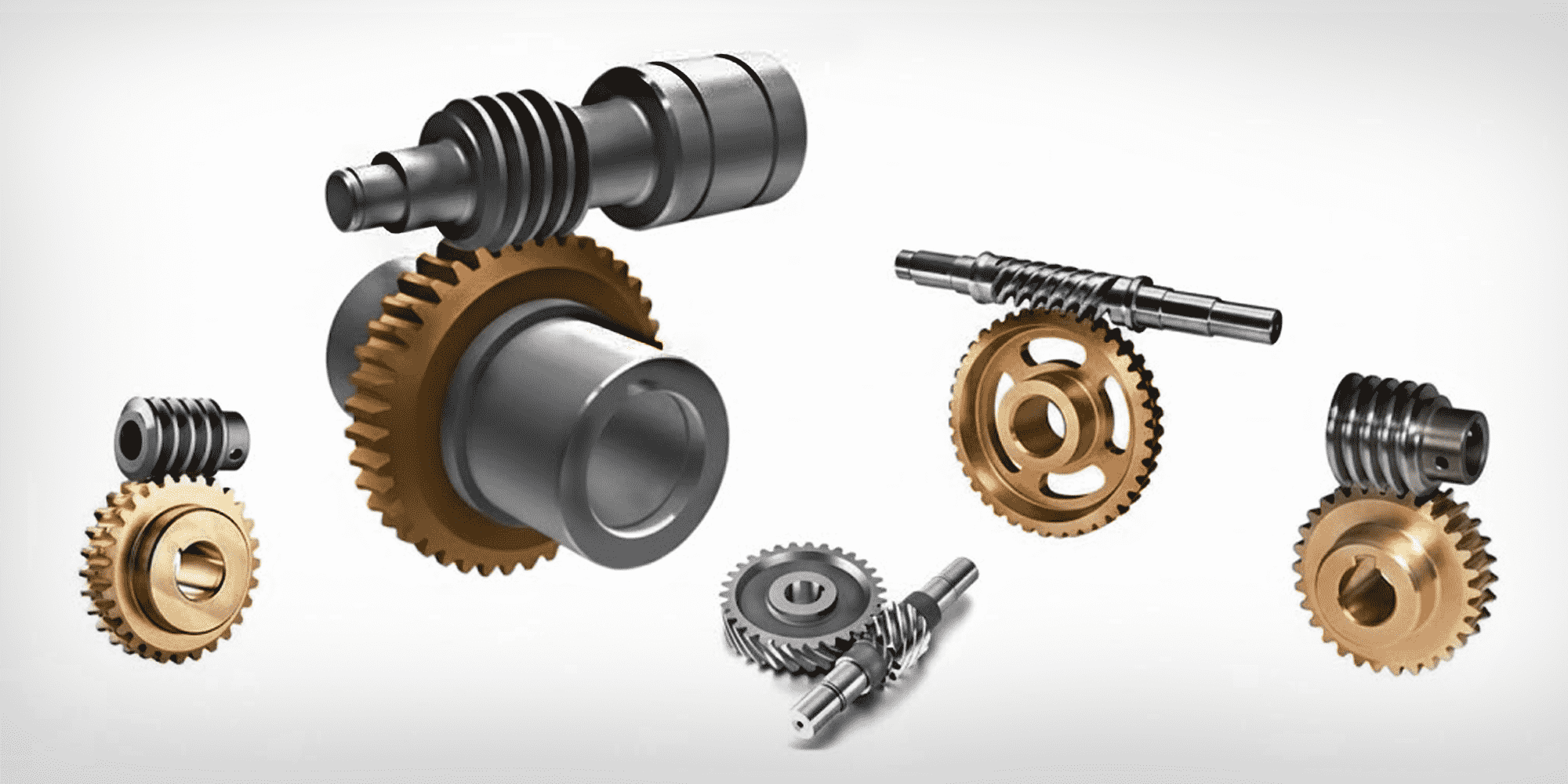
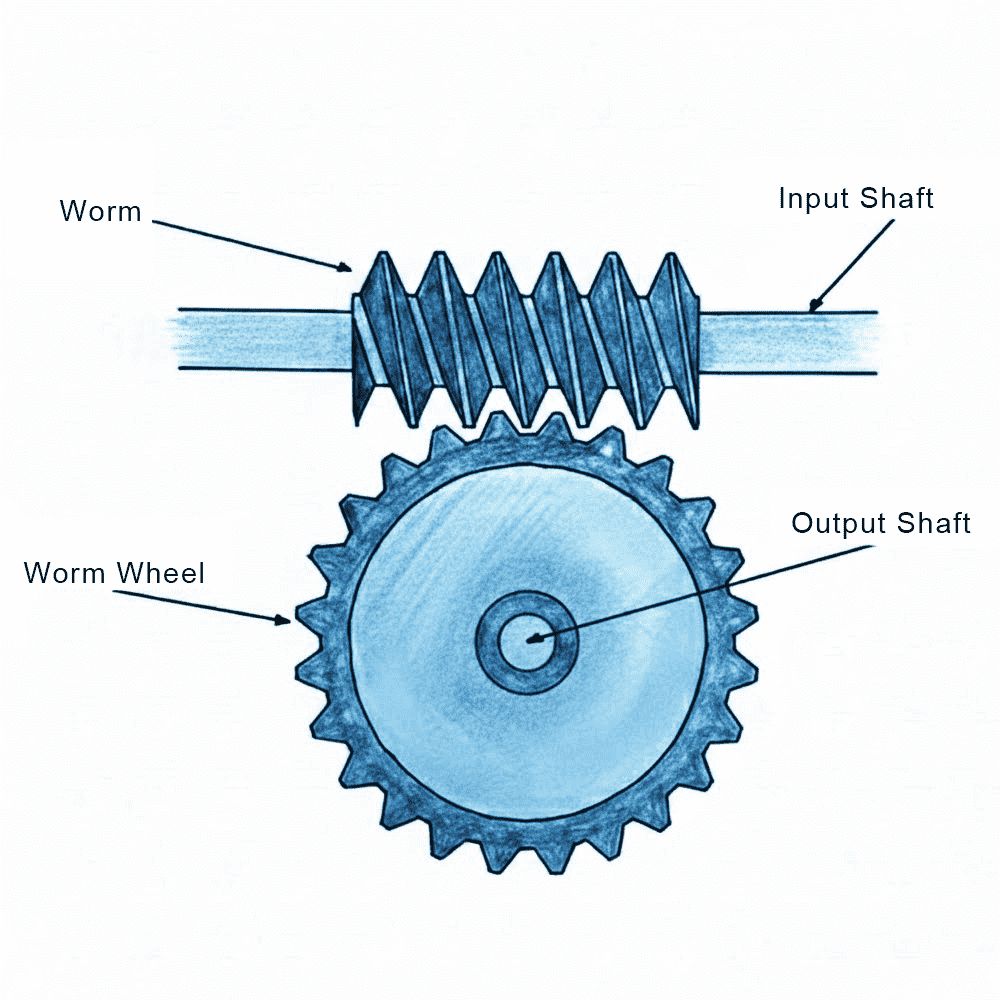
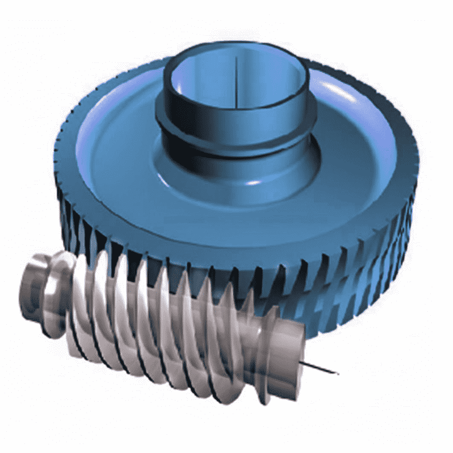
At its core, a worm gear system consists of two main components: the worm (which resembles a screw) and the worm wheel.

As the worm shaft rotates, its worm thread gradually pushes against and meshes with a worm wheel, causing it to turn.

Unlike helical gears, worm gears use sliding action rather than rolling contact.

This arrangement creates what engineers call a "self-locking" feature.

In most cases, force applied to the worm wheel cannot drive the worm in reverse.

This unique sliding contact creates smooth, quiet operation.

However, it also generates more heat and isn't suitable for high speed applications.

How Do Worm Gears Work


Main Components of a Worm Gear System


The Worm (Worm Shaft)

The worm essentially functions as the driver in the system. Typically made from hardened steel, it features one or more helical threads.

A single thread (or start) worm will produce a much higher ratio speed reduction than a multi-start design.

The thread spirals at a specific angle called the lead angle. This angle affects the gear's efficiency and self-locking capability.


The Worm Wheel

The worm wheel, usually constructed from softer materials like bronze, meshes with the worm.

The number of teeth on the worm wheel is a key factor in determining the final gear ratio.

This material combination allows the system to better absorb shock loads and reduces the risk of catastrophic failure. For a deeper look at materials and processes, see how gears are made.

Main Components of a Worm Gear System


Types of Worm Gears

Understanding the different types of worm gears is key to selecting the right one for your application.

Different geometries and engagement styles create different worm gear types.

Each type has distinct load limits, costs, and use cases.


Non-Throated Worm Gears

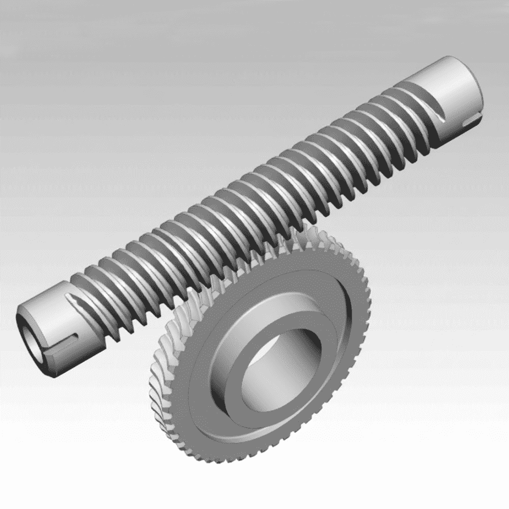
This is the simplest type of worm gear. The worm is a straight cylindrical worm, and the worm wheel has straight teeth, resulting in minimal point contact.

  • When to Use It: Choose this type for light loads, low speeds, or budget applications. Common uses include toys, simple electronics, and non-critical mechanisms.
  • The Trade-off: low cost and simplicity, but also lower capacity, efficiency, and lifespan.

Non-Throated Worm Gears


Single-Throated Worm Gears (Single-Enveloping)

This is the most common type found in industry. The wheel has a concave throat that wraps around the cylindrical worm. This creates a larger line contact area.

  • When to Use It: This is your go-to choice for most general industrial applications. It balances performance, durability, and cost well for industrial applications like conveyors and material handling.
  • The Trade-off: It offers moderate load capacity—higher than non-throated versions but lower than double-throated models.

Single-Throated Worm Gears


Double-Throated Worm Gears (Double-Enveloping)

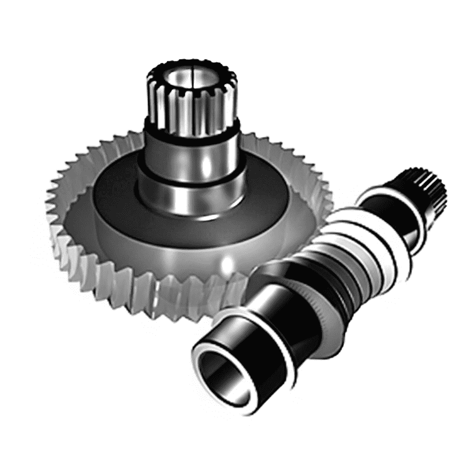
This design offers the highest performance. It uses double-throated geometry.

The worm has an hourglass profile, and the wheel throat wraps around it on both sides.

This creates the largest possible contact area.

  • When to Use It: Best for extreme-duty applications like mining equipment, rolling mills, and heavy hoists. Use when maximum strength and shock resistance are essential.
  • The Trade-off: Maximum strength and performance, but higher cost and complex installation.
Double-Throated Worm Gears


Worm Gear Ratio and Calculation

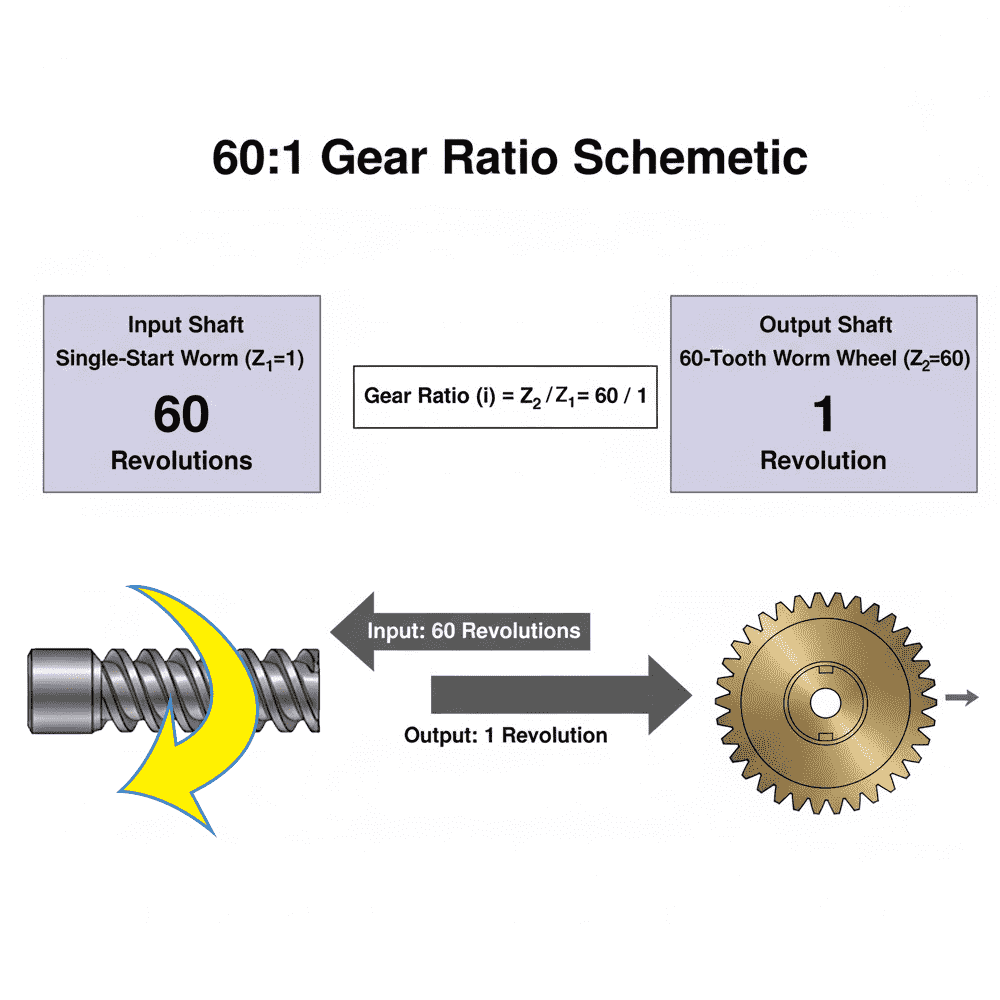
The gear ratio in a worm drive is calculated using a straightforward formula:

Gear Ratio (i) = Z₂ / Z₁

  • Z₁ (Number of Starts): The number of helical threads on the worm. A single-start worm (Z₁=1) advances the wheel by one tooth per revolution.
  • Z₂ (Number of Teeth): The total teeth on the worm wheel.

Example:
single-start worm (Z₁=1) driving a 60-tooth wheel (Z₂=60) yields a 60:1 ratio.

This means the input shaft must rotate 60 times for every single rotation of the output shaft. As a result, this achieves massive speed reduction and proportional torque increase—all in just one stage.

This single-stage efficiency is a key advantage.

In contrast, achieving 60:1 with spur gears is possible, but it requires multiple stages. Each additional stage adds size and weight. The result is a much bulkier system.

For this reason, worm gears are the superior choice when you need high-ratio reduction in a compact space.

Worm Gear Radio Schemetic


Advantages of Worm Gears

The unique design of worm gears provides several compelling benefits:

  • High reduction ratios in a single compact stage
  • Smooth and quiet operation
  • Self-locking capability
  • Compact design
  • Shock load resistance


Limitations of Worm Gears

Despite their strengths, worm gears aren't perfect for every situation:

  • Lower efficiency (typically 50-90%) due to significant sliding friction, which also generates substantial heat.
  • Demanding lubrication requirements (See 'Worm Gear Lubrication' section), which add to maintenance complexity and cost.
  • Limited suitability for high-speed applications.
  • Potential for rapid wear if the specialized lubrication is not maintained.


Common Applications of Worm Gears

Worm gears are the best choice when you need compact size, high reduction ratio, self-locking safety, and quiet operation.


Safety-Critical Lifting and Positioning

The irreversible self-locking feature is paramount here, providing inherent safety.

  • Elevators & Hoists: Prevent free-fall by mechanically locking the load if power fails.
  • Gate Openers: Hold heavy gates securely in place when stationary.


High-Torque Industrial Power Transmission

These applications benefit from the unit's role as a robust speed reducer, which allows it to achieve large speed reductions and amplify torque in a single stage.

  • Conveyors & Mixers: Provide the slow, powerful drive needed to move heavy materials or knead viscous substances.
  • Packaging Machinery: Operate smoothly and quietly in demanding production environments.


Precision Control and Adjustment

The high reduction ratio enables fine control and stable positioning.

  • Machine Tool Indexing: Enable precise angular positioning in milling machines and rotary tables.
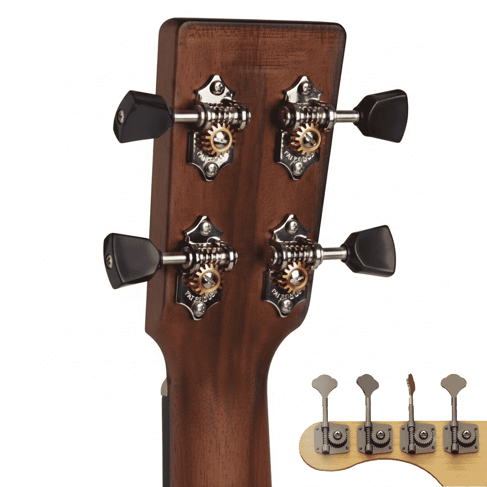
  • Instrument Tuning: Allow for the minute adjustments and stable locking required for tuning stringed instruments.

Worm Gears for Instrument Tuning


Compact and Right-Angle Drives

The geometry is ideal for transmitting power at 90 degrees in a minimal space.

  • Vehicle Differentials: Used in Torsen® differentials for superior torque distribution.
  • Actuators & Small Drives: Provide high reduction in a small package for devices from car seats to toys.


Materials Used in Worm Gears

Material selection is a critical balance between strength, wear resistance, and cost.

The standard practice pairs a hard worm with a softer worm wheel, creating a sacrificial component that protects the more critical worm from damage.


Worm Materials: Built for Strength

  • Hardened Steel: The standard choice for its durability and wear resistance.
  • Stainless Steel: Used in stainless steel worm gears for corrosive environments.


Worm Wheel Materials: The Sacrificial Element

  • Bronze: The industry standard for high-load applications. Bronze worm gears offer superior strength and wear characteristics.
  • Brass: A cost-effective option for brass worm wheels in light-to-moderate duty cycles.
  • Plastics & Nylon: Ideal for plastic worm drives and nylon worm gears where quiet operation, light weight, and corrosion resistance are key. Entire plastic worm gear sets are common in consumer goods.


Specialized Combinations

  • All-Metal Sets: Steel worm gears (both components) handle extreme loads but require precise lubrication.
  • High-Performance: Double enveloping worm gears typically use high-strength bronze wheels to manage their extensive contact area. Lightweight housings, like an aluminum worm gearbox, are used where weight is a concern.


Worm Gear Lubrication

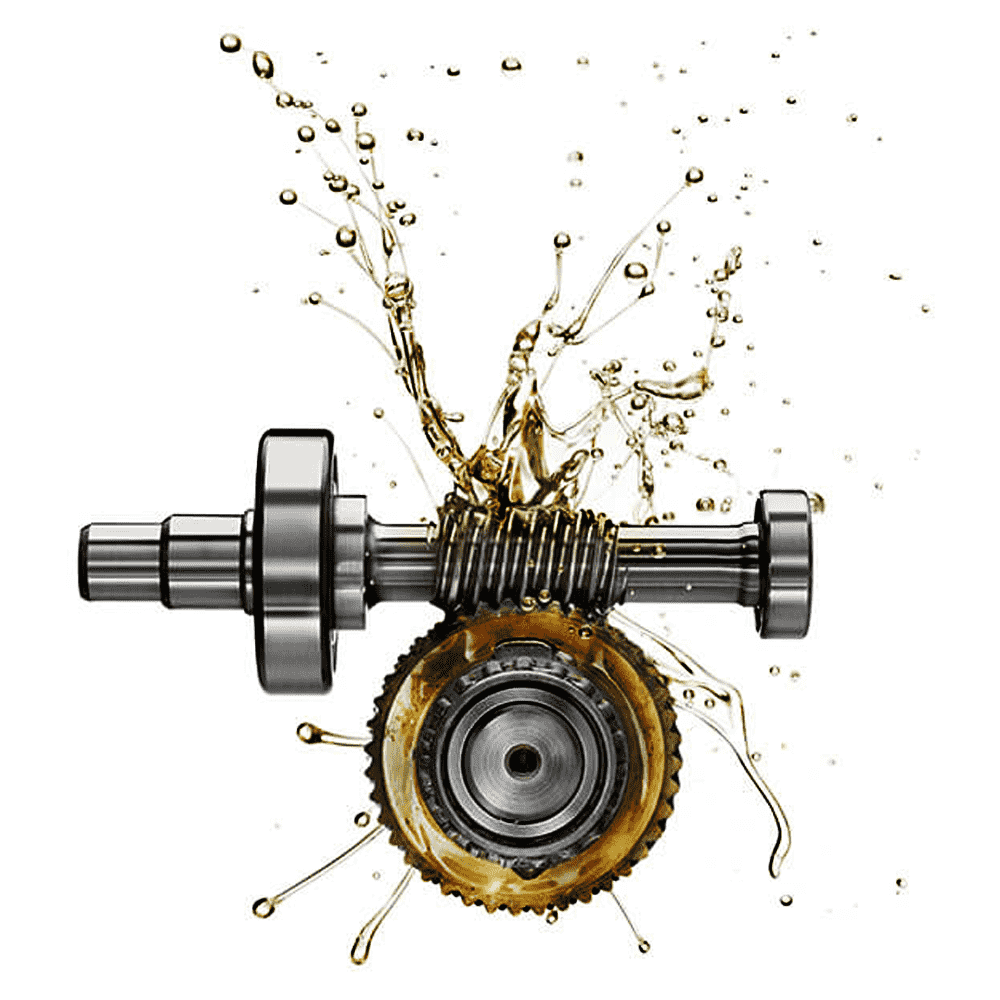
Due to the predominant sliding motion between the worm and wheel, effective lubrication is not just beneficial—it is critical for performance and longevity.

The high sliding friction generates substantial heat and poses a constant risk of wear.

Worm Gear Lubrication

This unique action necessitates specialized lubricants, typically of high viscosity and often containing extreme pressure (EP) additives. As noted in the ASME Press guide on worm gear lubrication, the sliding action in worm gears makes effective oil film formation more complex than in other gear types.

These dedicated oils or greases form a robust film to separate the metal surfaces but can be difficult to filter and often require a dedicated lubrication system on-site.

Proper lubrication serves three key functions:

  • Minimizes wear and prevents scuffing on the worm wheel teeth.
  • Reduces friction to improve efficiency and reduce energy losses.
  • Helps dissipate heat to maintain stable operating temperatures and protect component integrity.


How to Select the Right Worm Gear

Selecting a worm gear set involves evaluating your application against these key criteria:

  • Load: Calculate torque and identify shock loads.
  • Speed: Define input RPM and required output speed.
  • Duty Cycle: Choose a rating suitable for continuous or intermittent operation.
  • Environment: Specify temperatures, contaminants, and corrosion risks to guide material and seal selection.
  • Space: Confirm the gearbox fits your available envelope.
  • Efficiency: Accept inherent energy losses or consider alternative gear types if efficiency is critical.

Consult an application engineer for demanding projects to finalize your selection.


Conclusion

Worm gears occupy a unique position in the world of power transmission. Their ability to provide high ratio reduction in compact spaces, combined with self-locking capability, makes them indispensable.

Worm gears are not the most efficient gear type. However, they excel in specific situations. Choose them when safety, compactness, and controlled motion are your top priorities.

As a leading gear supplier, we offer worm gears and many other gear types. These include helical gears, spur gears, bevel gears, and more. You may also want to explore the leading gear manufacturers to understand who's behind the industry. We can help you find the right solution for your project.


Frequently Asked Questions (FAQ)


Can a worm gear be back-driven?

Almost never. Their self-locking design prevents reverse operation, making them essential for elevators and hoists where safety is critical.


What is worm gear ratio?

Simple: divide the worm wheel teeth (Z₂) by the worm starts (Z₁). A single-start worm with a 60-tooth wheel gives you 60:1—the input spins 60 times for every one output rotation.


What are some real-world worm gear examples?

More than you'd think. Guitar tuning pegs, car window regulators, stand mixers, elevator drives, conveyor belts, gate openers—if a device moves slowly, quietly, and stays put when power is off, there's likely a worm gear inside.


Worm gear vs. helical gear: which to choose?

Choose worm gears for high reduction ratios, self-locking safety, and compact right-angle drives. Choose helical gears when efficiency, high speed, and reversible motion are the priority. For a detailed breakdown, read our helical vs. spur gears comparison.


Do worm gears require special cooling?

Frequently, yes. Lower efficiency means heat buildup—continuous duty applications often need cooling fins or a fan to stay within safe operating temperatures.


How long do worm gears last?

Lubrication is the deciding factor. Keep the EP oil fresh and the load within spec, and a good set can run for tens of thousands of hours. Most failures come down to one thing: neglected lubrication.


How Do Gears Work? A Guide to Speed, Torque, and Gear Ratios

How Do Gears Work? A Guide to Speed, Torque, and Gear Ratios

Why do some mechanical systems prioritize raw power while others focus on high-speed rotation? At LILY Bearing, I’ve seen how a tiny adjustment in...
Read More
What Are Spur Gears? Types, Design, Uses & How to Choose the Right One

What Are Spur Gears? Types, Design, Uses & How to Choose the Right One

Walk into any factory, open up a household appliance, or look inside a medical device, and you'll almost certainly find a spur gear doing quiet,...

Read More
Gear Ratio Calculator: How to Calculate & Apply Gear Ratios

Gear Ratio Calculator: How to Calculate & Apply Gear Ratios

Quick answer: Gear ratio = driven gear teeth ÷ drive gear teeth. A 60-tooth driven gear meshed with a 20-tooth drive gear gives a 3:1 ratio — one...

Read More