

Home/
Blog/
Tips for Installing Needle Bearings

8 min read

Tips for Installing Needle Bearings

Tips for Installing Needle Bearings
9:55

Needle bearings play a crucial role in applications where space, load capacity, and reduced friction are essential.

Proper installation is critical for ensuring that needle bearings function as intended.

The objective of this blog is to provide practical tips for successfully installing needle bearings.


What Are Needle Bearings?

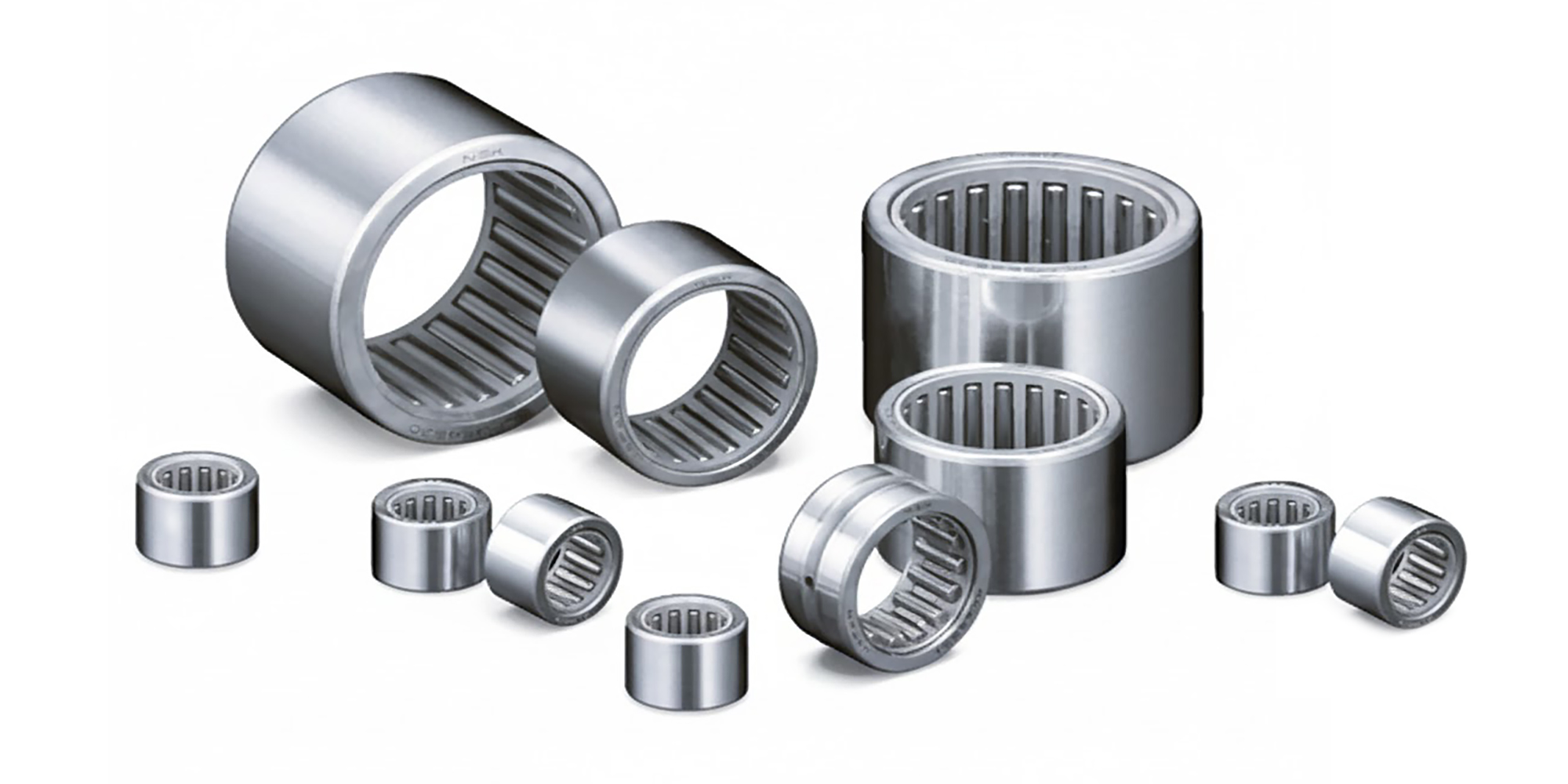
Needle bearings — also called needle roller bearings — are a specialized subtype of roller bearings that use long, thin cylindrical rollers to carry radial loads.

Their defining characteristic is an exceptionally high length-to-diameter ratio, typically between 3:1 and 10:1, allowing them to handle very high radial loads in confined spaces.

They are widely used in automotive transmissions, two-stroke engines, aerospace actuators, and precision machine tools.

Over 80% of premature bearing failures are attributable to installation error, incorrect lubrication, or contamination — all entirely preventable.


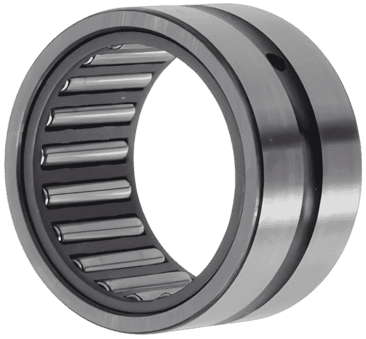
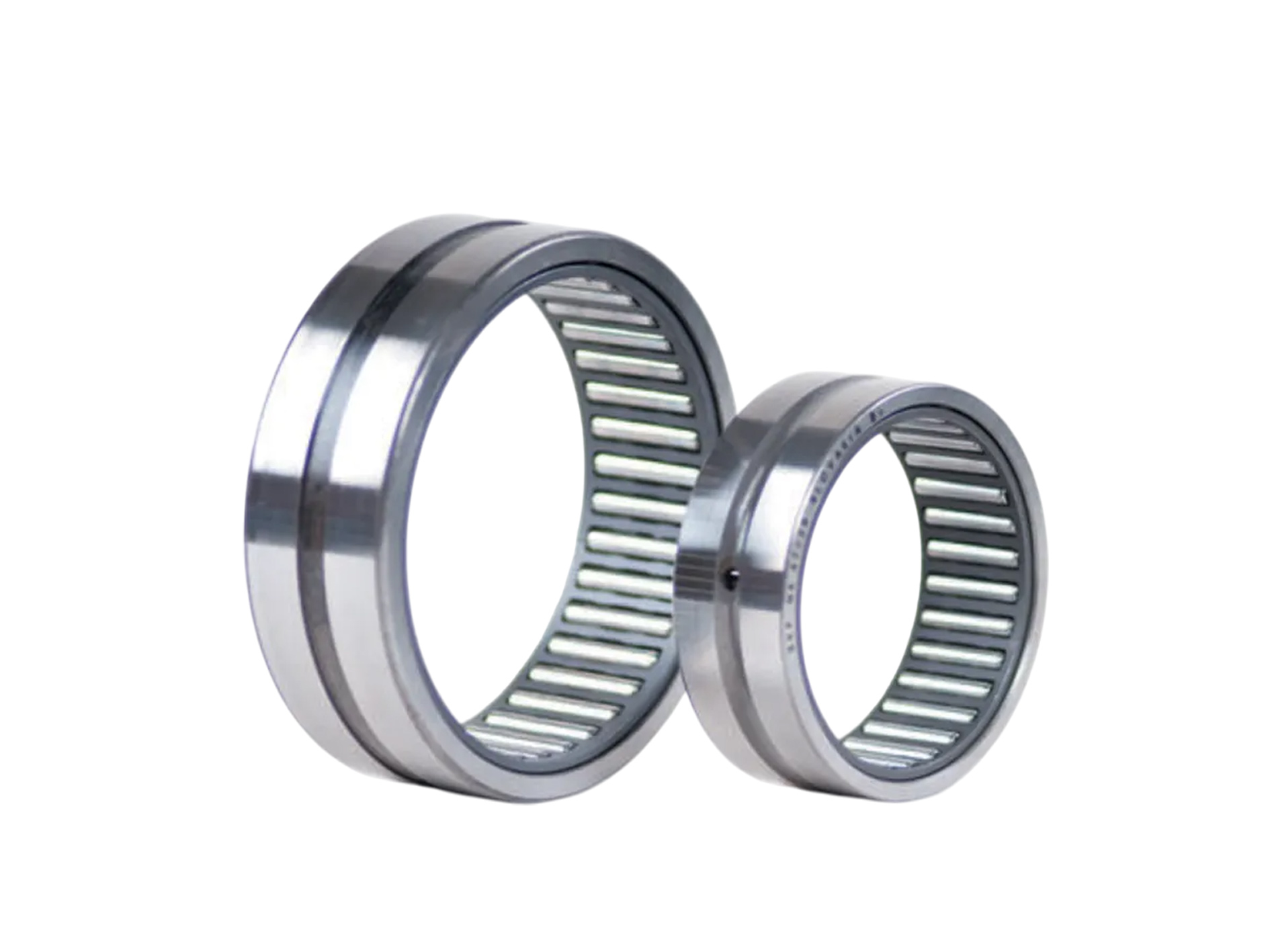
Fig 10 SKF Needle Roller Bearing


Needle bearings are used in

  • Automotive Transmissions: They help with smooth operation in gearboxes and transmissions, handling heavy loads in a compact space.
  • Industrial Machinery: They are found in machines like pumps and conveyors, reducing friction and supporting heavy loads.
  • Aerospace Equipment: They are used in parts like engines and landing gear, where high load capacity and small size are needed.


Types of Needle Bearings

Type

Configuration

Best Application

Complexity

Drawn Cup (Shell)

Thin outer shell, no inner ring

Automotive con-rods, small motors

Moderate

Solid Race

Machined inner & outer rings

Heavy-duty gearboxes, machine tools

High

Caged Roller Assembly

Rollers in cage, no rings

Planetary gear sets, transmissions

Moderate

Thrust Needle

Axial load configuration

Clutch packs, steering columns

Specialized

Combined Needle/Angular

Radial + axial capacity

Robotics, servo actuators

Expert


Preparing for Installation

Make sure the work area is clean, free of dust and clutter before starting installation. Check the dimensions and geometry of the shaft and housing to ensure they meet the bearing requirements.


Tools and Equenments Needed

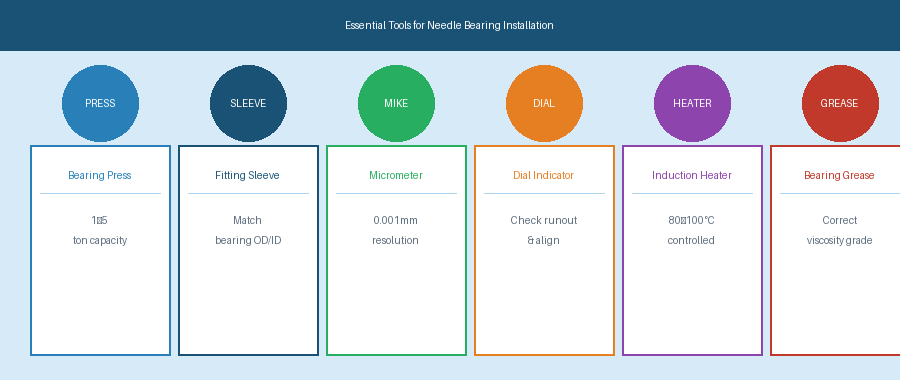
Here are the essential tools required for properly installing needle bearings

Tool

Purpose

Status

Bearing Press / Arbor Press

Apply controlled, even force for press-fit installation

Required

Fitting Sleeve Set

Transmit press force to correct ring face only

Required

Digital Micrometer (0.001mm)

Verify shaft and housing bore diameter

Required

Dial Indicator + Magnetic Base

Check runout and alignment after installation

Recommended

Induction Heater

Thermal expansion for interference-fit installation

Recommended

Bearing Grease / Oil

Lubrication during and after installation

Required

Lint-Free Cleaning Cloths

Clean mating surfaces before assembly

Required

Snap Ring Pliers

Install retaining rings to secure bearing axially

If applicable


⚠ WARNING: Never strike a bearing directly with a hammer. Always use a properly sized fitting sleeve to distribute force evenly across the ring face to prevent brinelling damage.


Tools and Equenments Needed


Pre-Installation Preparation

Pre-installation preparation has the single greatest impact on bearing longevity. Investing time in thorough preparation can extend bearing service life by years.


Dimensional Tolerance Guide

Fit Type

Deviation

Typical Application

Installation Method

Interference (Press) Fit

Shaft OD > Bearing ID by 0.005–0.025mm

Rotating inner ring

Press or thermal expansion

Transition Fit

±0.005mm nominal

Moderate loads, removable

Light press or hand push

Clearance Fit

Shaft OD < Bearing ID by up to 0.010mm

Stationary inner ring

Hand installation


Always clean all mating surfaces with a lint-free cloth and solvent before assembly. Inspect the new bearing for corrosion, roller skew, cage deformation, or pitting. Surface roughness of mating surfaces should typically be Ra 0.8 µm or better.


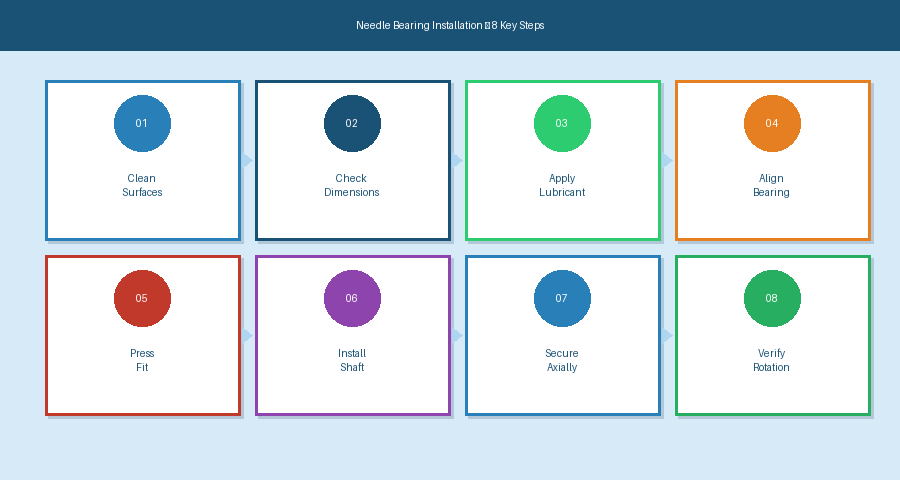
Step-by-Step Installation Process

Follow this procedure for drawn-cup and solid-race needle bearings installed using a mechanical press:

  • Step 1 — Prepare Work Area: Establish a clean, well-lit assembly zone free of contamination.

  • Step 2 — Apply Lubricant to Housing Bore: Apply a thin, even film of assembly lubricant to the bore and bearing outer surface.

  • Step 3 — Align the Bearing Square: Confirm bearing face is parallel to housing face within 0.05mm before pressing.

  • Step 4 — Press Using a Fitting Sleeve: Apply steady, controlled press force via a sleeve bearing only on the outer ring face.

  • Step 5 — Confirm Full Seating Depth: Verify bearing is flush or at specified depth using a depth micrometer.

  • Step 6 — Install Shaft: Apply light lubricant to shaft journal and rotate slightly as it enters to align needle rollers.

  • Step 7 — Secure Axial Position: Install retaining rings, circlips, or end caps to prevent axial migration.

  • Step 8 — Verify and Final Lubricate: Manually rotate to check for smooth, consistent rotation with no rough spots.


✓ TIP — Thermal Method: For interference fits >0.02mm, heat the bearing to 80–100°C using an induction heater for easier, safer installation without risk of roller or cage damage.


Step-by-Step Installation Process


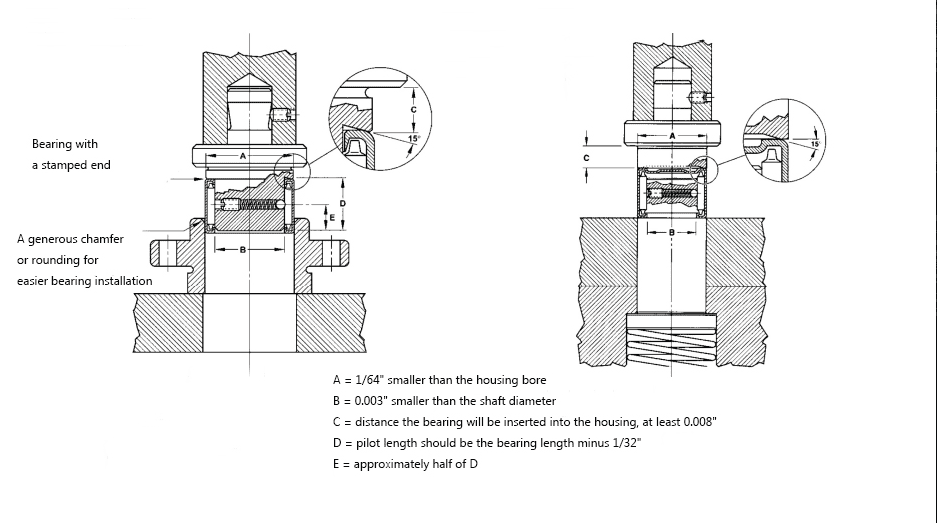
Drawn Cup Needle Bearings Installation Guidelines

  • The shoulder used to apply press force to the bearing outer ring should have a back angle of about 15 degrees.
  • Include a pilot to center and guide the bearing during installation.
  • For full complement bearings, the pilot should have a ball detent.
  • Ensure the tool is aligned with the axis of the housing bore.
  • The tool should be made to precise dimensions according to the equipment manufacturer’s specifications.
  • Apply pressure to the stamped (usually thicker) end of the bearing.
  • Never hammer the bearing into the housing, even when using the correct installation tool.
  • Do not press the bearing tightly against a housing shoulder. If a shouldered housing is used, the bore depth must be sufficient so the shoulder fillet and face do not interfere with the bearing.


Inspect the Bearing and Housing


Full Complement Needle Roller Bearings Installation Guidelines

  • Greasing the Seat: Apply a thin layer of grease to the bearing housing bore.
  • Positioning the Bearing: Carefully tilt the bearing and align the needles with the shaft.
  • Pressing into Place: Gently press the bearing onto the shaft, making sure all the needles engage properly.
  • After Installation: Ensuring Proper Operation
  • Final Inspection: Rotate the shaft by hand and listen for unusual noises or check for signs of binding. Everything should move smoothly and quietly.
  • Remove Excess Grease: Wipe away any extra grease that may have squeezed out during installation.
  • Follow Manufacturer Guidelines: Always refer to the bearing manufacturer’s instructions for specific installation steps and lubrication recommendations.


Needle Roller Bearing


Tips for Installing Needle Bearings


Align the Bearing Properly

Proper alignment of the needle bearing during installation is crucial to avoid damage and ensure smooth operation.

Misalignment can cause uneven wear, increased friction, and even bearing failure.

By aligning the bearing correctly with the shaft and housing, you help it function efficiently and extend its lifespan.


Use the Right Lubrication

Lubrication plays a key role in the performance and longevity of needle bearings.

It reduces friction between the rollers and raceways, preventing excessive heat buildup and wear.

Proper lubrication also helps protect the bearing from contaminants, reducing the risk of corrosion and damage.


Here’s a simple comparison between grease and oil lubrication


Lubricant

Grease

Oil

Composition

Thickened oil (semi-solid)

Liquid lubricant

Advantages

- Stays in place longer
- Reduces need for frequent re-lubrication
- Good at protecting against contaminants

- Excellent cooling properties
- Reduces friction in high-speed applications
- Requires less maintenance

Disadvantages

- Less effective at cooling
- Can cause higher friction at high speeds

- Can leak or evaporate if not sealed properly
- Requires a system for circulation and replenishment

Best For

- Lower-speed applications
- Sealed systems
- Environments where leakage is a concern

- High-speed applications
- Applications requiring cooling and efficient lubrication

Environment

- Better for preventing pollution 
- Suitable for dirty or dusty environments

- Better for cooling in high-temperature environments


Choosing the Right Lubricant

Correct lubricant selection and quantity is critical for needle bearings due to the extremely high contact pressures between rollers and raceway surfaces. Both under-lubrication and over-lubrication are harmful.

Operating Condition

Recommended Lubricant

Viscosity Grade

Relubrication Interval

Low speed, high load

High-viscosity grease (NLGI 2–3)

ISO VG 220–460

Every 2,000–4,000 hrs

High speed, moderate load

Low-viscosity oil mist

ISO VG 32–68

Continuous circulation

High temp (>120°C)

Synthetic ester or PAO grease

ISO VG 100–150

Every 500–1,000 hrs

Food / clean room

Food-grade H1 grease

ISO VG 68–100

Per HACCP schedule

Oscillating / low speed

Adhesive grease (Li-Ca complex)

NLGI 2, high base oil

Every 1,000–2,000 hrs


Apply Steady, Even Pressure

When installing needle bearings, it's highly recommended to use a bearing press or driver tool.

These tools apply steady, even pressure to the bearing during installation, ensuring it is seated correctly without causing damage.

Using a bearing press or driver helps avoid misalignment, distortion, or damage to the bearing race.

These issues can occur if pressure is applied unevenly or too forcefully by hand.

This method ensures a smooth and precise installation, prolonging the bearing's lifespan and ensuring optimal performance.

Avoid hammering the bearing into place when installing needle bearings. Using a hammer can cause uneven pressure, leading to damage of both the bearing and the housing.


Avoid Overloading the Bearing

Be careful not to apply too much force when installing needle bearings.

Excessive pressure can damage the bearing or its rollers, leading to problems like increased friction and early failure.

Always use the right tools to press the bearing in gently and evenly for a smooth installation.

Make sure the bearing is fully seated during installation, but avoid using excessive force.

Gently press it into place to ensure it fits securely without damaging the bearing or surrounding components.


Double-Check the Fit

Check the fit of the needle bearing after installation to ensure it is correctly seated.

Measure the bearing and housing to confirm that the bearing is properly aligned and fitted within the specified tolerances.


Post-Installation Inspection and Testing


Rotate the Bearing

Manually rotate the bearing after installation to ensure it moves smoothly without obstruction.

Check for any unusual sounds or resistance that could indicate improper installation.


Verify Load Capacity

Ensure that the bearing can handle the intended load without any issues.

Inspect for signs of wear or damage under load conditions during testing.


Regular Maintenance

Regular inspection and maintenance are important for keeping needle bearings in good condition.

Check the lubrication, make sure the bearing is properly aligned, and look for signs of wear.

Address any issues early to help the bearing last longer and work smoothly. 

Recommend replacing the bearing if any damage or signs of failure are detected.


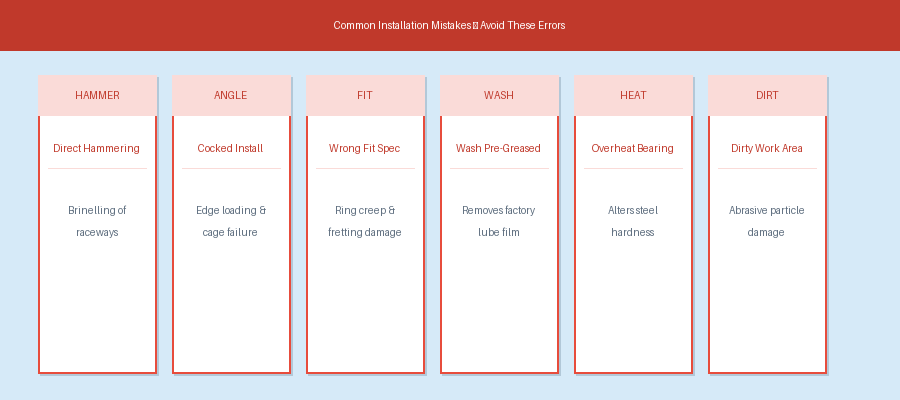
Common Mistakes to Avoid When Installing Needle Bearings


Misalignment

Improper alignment is a common cause of needle bearing failure.

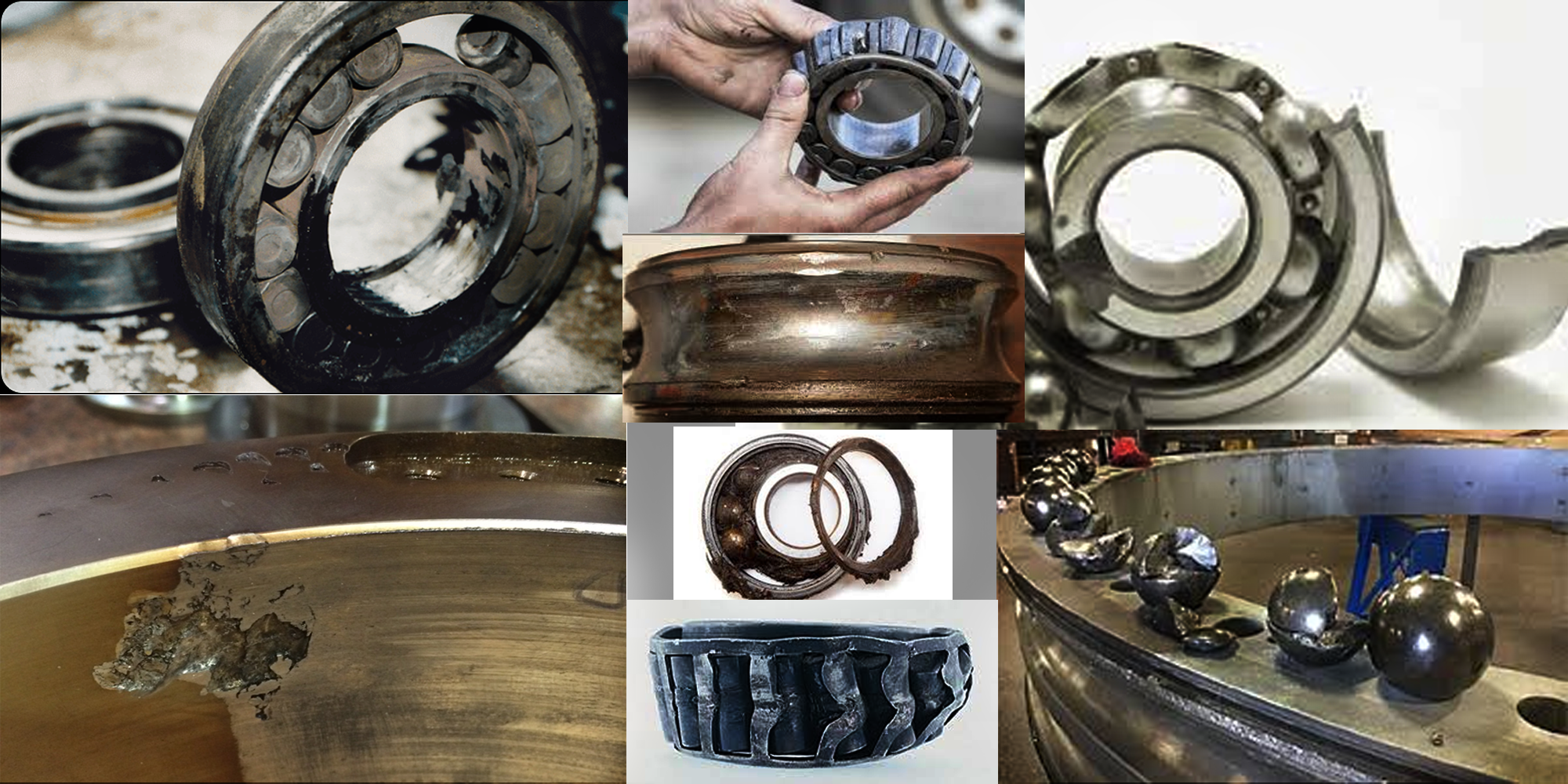
When the bearing isn't aligned correctly, it causes uneven pressure, leading to wear and friction. (Here is How to Prevent Bearing Failures)

This can make the bearing fail early, so proper alignment is important for longer-lasting performance.


Here are some tips to ensure proper alignment when installing needle bearings.

  • Inspect the Shaft and Housing: Make sure both the bearing shaft and housing are clean and smooth. They should also be free of any burrs or debris that could affect alignment.
  • Use Alignment Tools: Consider using alignment tools like dial indicators or alignment jigs. These tools can help check and adjust the bearing’s position during installation.
  • Install Carefully: Use a bearing press or driver to press the bearing in evenly. Avoid using a hammer, as it can cause misalignment or damage.
  • Check for Play: After installing needle bearings, check for any axial or radial play in the bearing. If there's any movement, it may indicate misalignment.
  • Ensure Even Pressure: Apply steady, even pressure to the bearing during installation. This helps avoid tilting or shifting, which can cause misalignment.
  • Verify with Measurements: Measure the distance between the bearing and housing after installation. This ensures that the bearing is properly seated.


Using the Wrong Tools

Don't use incorrect or makeshift tools when installing needle bearings.

Using the wrong tools can damage the bearing and housing, causing misalignment or deformation.

Always use the right press and driver tools to ensure a safe and proper installation.

A bearing press or bearing driver ensures even pressure, preventing damage to the bearing or housing.

These tools help seat the bearing correctly and maintain proper alignment.

Using the right tools minimizes the risk of errors. This extends the bearing’s lifespan and ensures smooth and reliable operation.


Skipping Lubrication

Lubricating the bearing before and during installation is crucial for proper needle bearing setup.

Lubrication helps reduce friction, making the installation process smoother and preventing damage to the bearing and housing.

It also ensures the bearing operates efficiently from the start and helps protect it from wear and corrosion.

Without enough lubrication, friction increases, which makes the bearing get too hot and wear out faster.

This can cause premature failure, and the bearing might stop working properly.

Proper lubrication helps the bearing run smoothly, stay cool, and last longer.


Applying Excessive Force

Forcing the bearing into place can cause permanent damage to both the bearing and the machine.

Applying too much pressure can deform the bearing, misalign it, or damage the housing.

Always use the correct installation tools. Apply steady, even pressure to avoid issues and ensure a proper fit.


Common Mistakes to Avoid


Pro Tips & Expert Advice

  • Always handle needle bearings with clean, dry cotton gloves — fingerprint acids initiate corrosion pitting on polished raceway surfaces.

  • For tight interference fits, place the shaft in a freezer at –20°C for 2 hours to reduce press force by up to 40%.

  • When installing loose needle rollers in cageless designs, pack the raceway with petroleum-based assembly grease to hold rollers in position while the shaft is introduced.

  • Listen to the press — a smooth, gradually increasing tone indicates correct alignment. A sharp crack signals a problem.

  • Document all measured dimensions, lubricant type/quantity, and installer name for every installation for traceability.

  • Ensure shaft lead-in chamfer is smooth and burr-free (15°–30° angle, Ra < 1.6 µm) to prevent roller edge damage.

  • Never mix different grease types without fully purging old lubricant first — incompatible greases can cause rapid degradation.


Conclusion


Following best practices is essential when installing needle bearings. Always refer to the manufacturer's guidelines for specific instructions related to your equipment. 

If you have any needs, please contact LILY Bearing.

Linear Guide Installation: Step-by-Step Guide

Linear Guide Installation: Step-by-Step Guide

Linear rail guides are engineered for applications requiring precise motion and strong load capacity. However, incorrect installation can introduce...
Read More
How to Install Pillow Block Bearings: Step-by-Step Guide

How to Install Pillow Block Bearings: Step-by-Step Guide

Quick Answer — 8 Steps Clean and inspect the shaft Slide the bearing into position Lightly bolt the housing down Set the final mounting...

Read More
How to Prevent Bearing Failures: Tips and Techniques to Reduce Wear on Bearings

How to Prevent Bearing Failures: Tips and Techniques to Reduce Wear on Bearings

Bearing failures can be a major headache for any facility, causing increased downtime, high-maintenance costs, missed deliveries, loss of revenue...

Read More