

Home/
Blog/
Bearing Load Calculation for Gear Mesh Transmission: Spur, Helical & Herringbone Gear Force Analysis

2 min read

Bearing Load Formulas for Spur, Helical & Herringbone Gears

Bearing Load Formulas for Spur, Helical & Herringbone Gears
Bearing Load Calculation for Gear Mesh Transmission: Spur, Helical & Herringbone Gear Force Analysis
3:03

Transmission methods for equipment include mechanical, hydraulic, electric, and magnetic. Mechanical transmission is further divided into friction transmission (using belts, chains, etc.), mechanical transmission (couplings, universal joints, etc.) and gear mesh transmission (using gears).

Gear transmission is very common. To determine the bearing's rated service life and select the appropriate size and model of rolling bearings, it is crucial to consider the forces at the gear mesh point and the load transferred to the bearings.


Gear Types


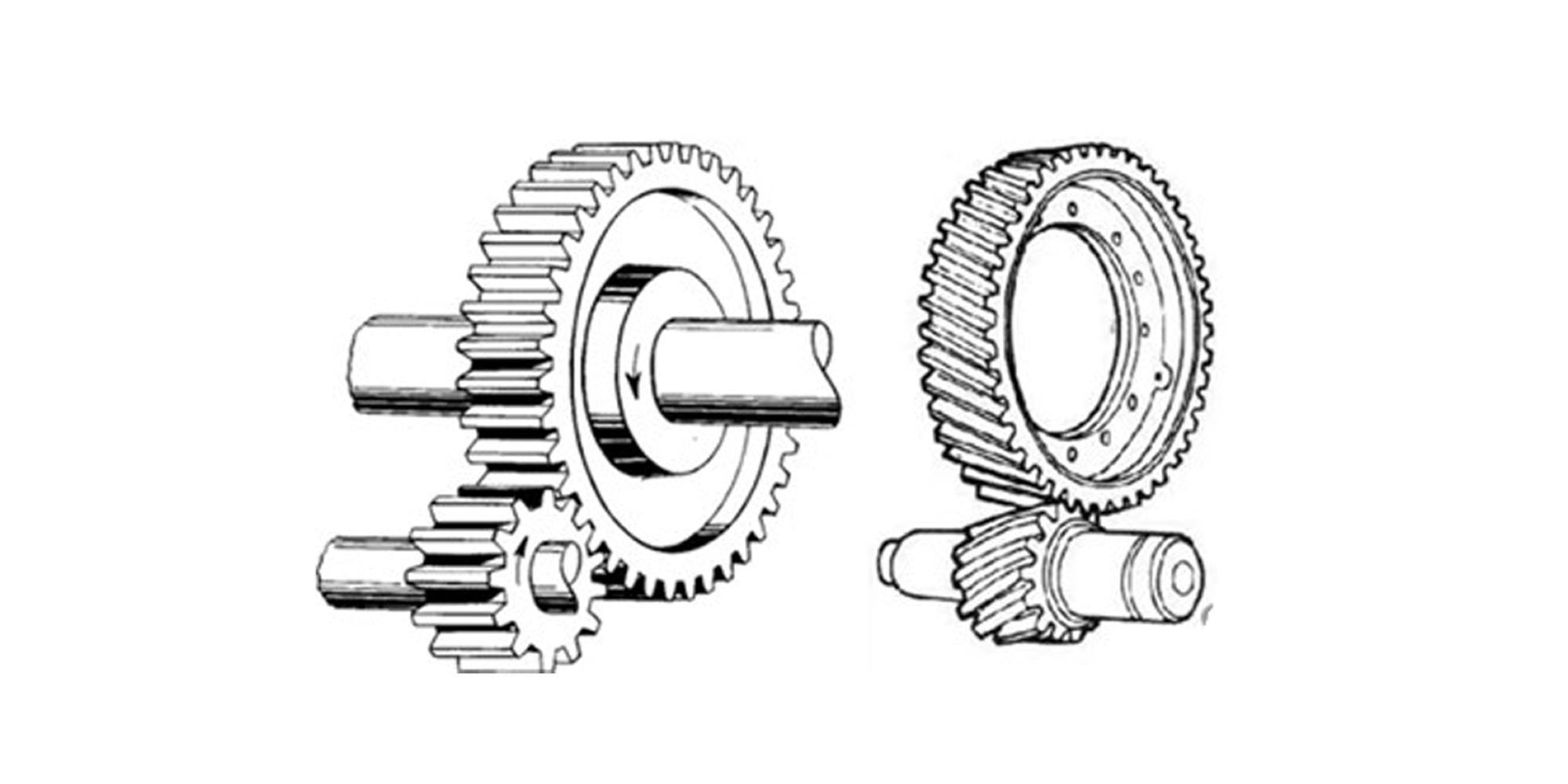
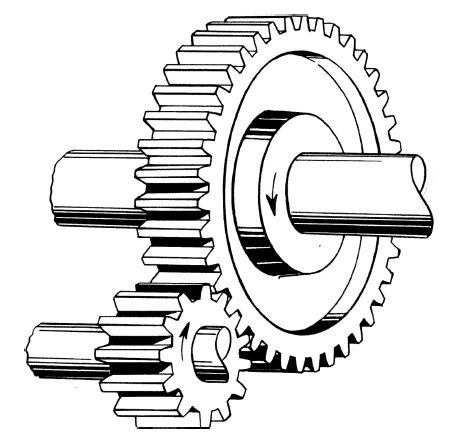
  • Spur Gears: Spur gears are the simplest type, with teeth parallel to the gear shaft axis.


spur gears


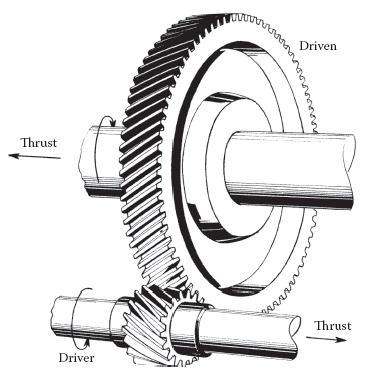
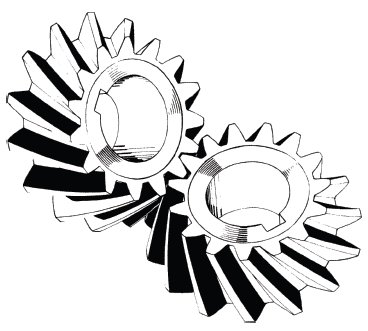
  • Helical Gears: The teeth of helical gears are not parallel to the axis, which creates axial forces. These bearings can absorb these forces are required.


helical gear and pinion


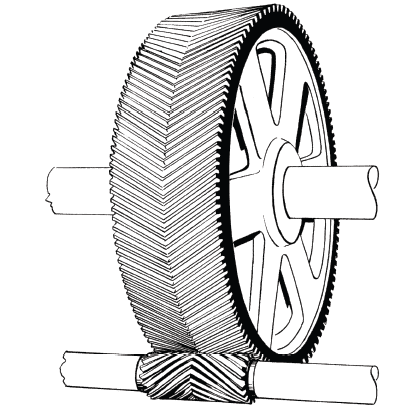
  • Herringbone Gears: Herringbone gears are composed of two helical gears with opposite orientations, canceling out the axial forces.


herringbone gears


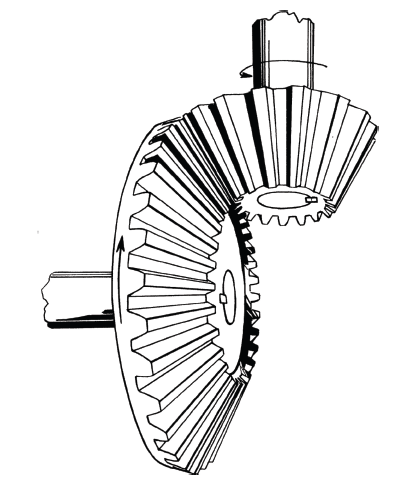
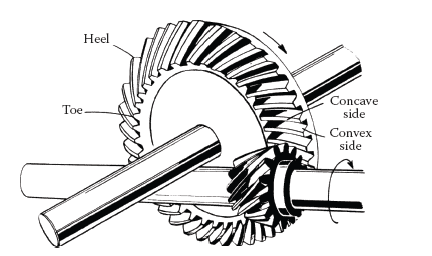
  •  Bevel Gears:  Bevel gears transmit power between two intersecting axes, often at a right angle. There are two types: straight bevel gears and spiral bevel gears.                 


spiral bevel gear


                                                                 bevel gears


  • Hypoid Gears: Transfer motion between two non-parallel and non-intersecting axes.

                                     Hypoid gears  

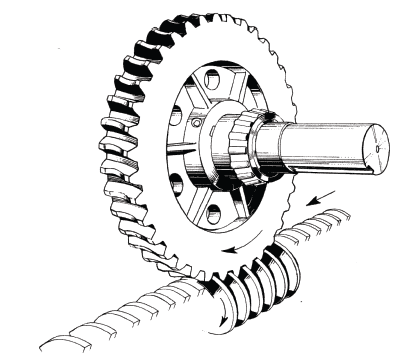
  • Worm Gears: Worm gears are used to transmit power and motion between two perpendicular axes.               


worm gear


Basic Gear Parameters


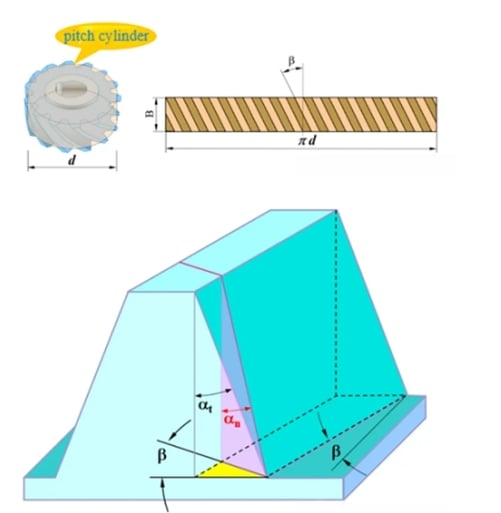
  • Pressure Angle (α): The acute angle between the direction of the force exerted by the tooth profile at a point of contact and the velocity direction at that point.
  • Normal Pressure Angle (an): The angle between the normal line at the tooth surface and the tangent to the base circle of the gear.
  • Pitch Circle Diameter (d): The diameter of the pitch circle, which is the imaginary circle where two gears effectively mesh and engage.
  • Helix Angle (β): The angle between the gear tooth line and the gear axis, also known as the tooth line helix angle.


Fig 00


Load Calculation at Gear Mesh Points


Spur Gear Calculation


Spur gear mesh transmission has no axial force.


Spur gear mesh transmission has no axial force.


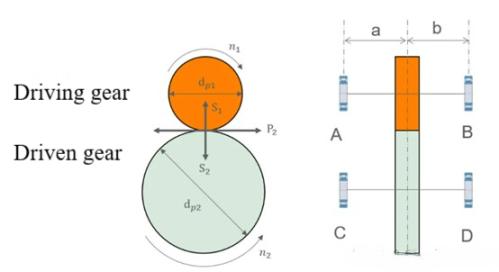
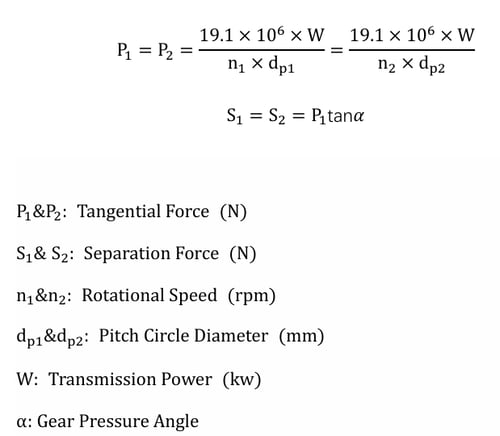
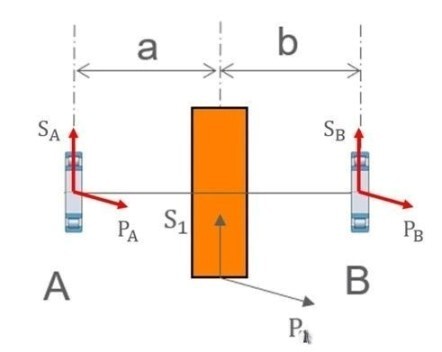
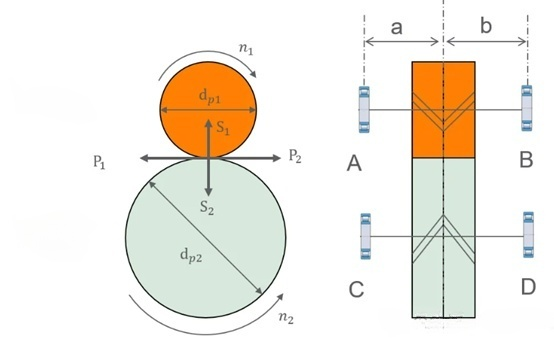
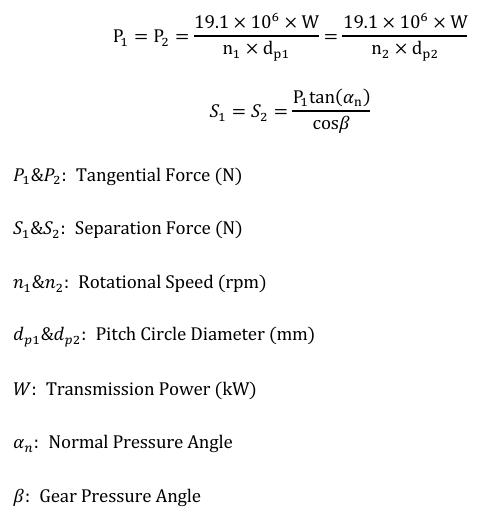
Force Analysis and Calculation at Spur Gear Mesh Points:


F1


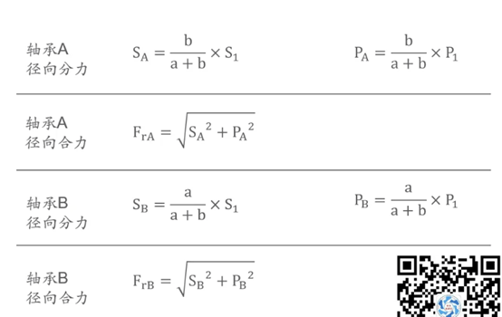
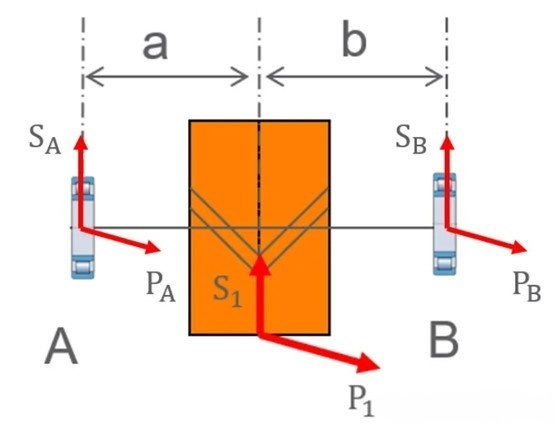
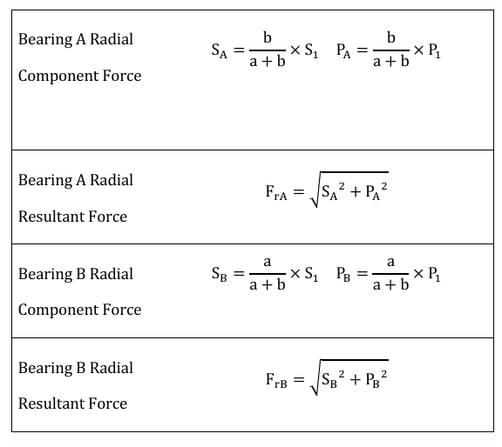
Radial Force Analysis on Bearings on Both Sides of the Gear Shaft:


Fig 2.png

公式 2

 Note:

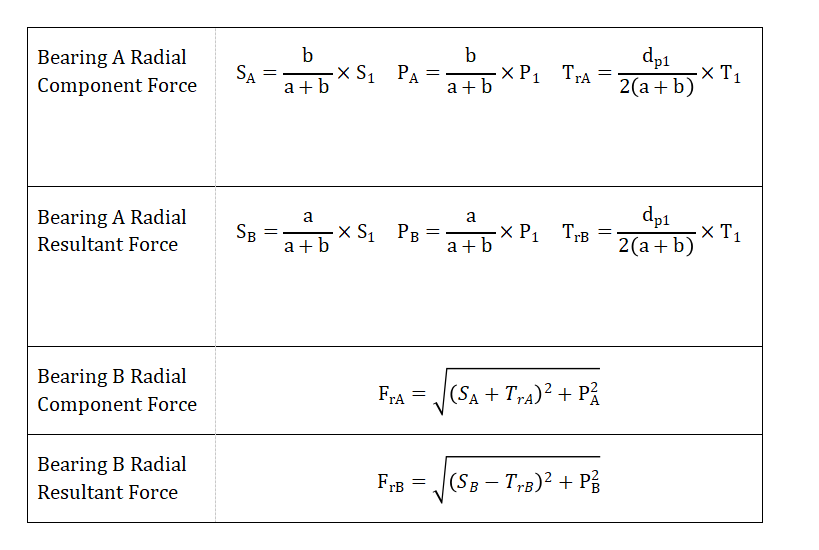
Bearing A Radial Component Force
Bearing A Radial Resultant Force
Bearing B Radial Component Force
Bearing B Radial Resultant Force


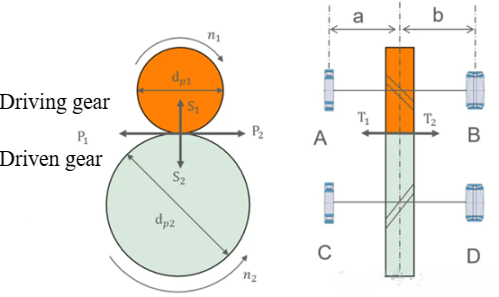
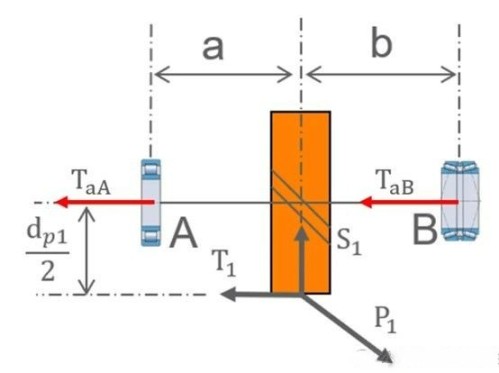
Helical Gear Calculation: Helical gear mesh transmission has axial force.


Fig 3


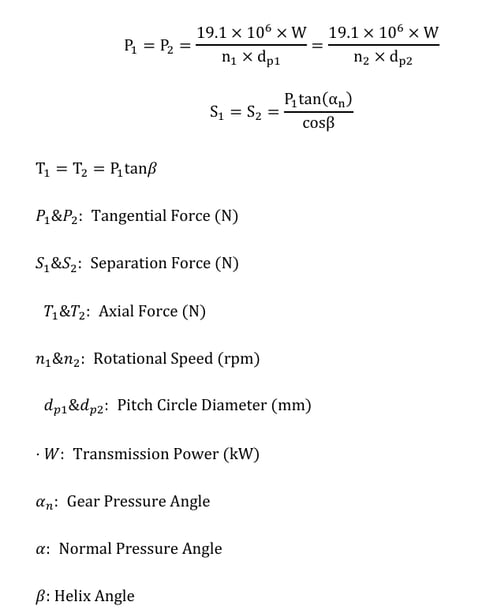
Force Analysis and Calculation at Helical Gear Mesh Points:


F3


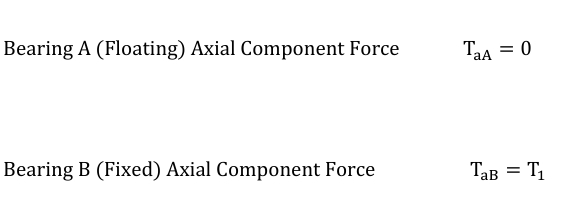
Axial Force Analysis on Bearings on Both Sides of the Gear Shaft:


Fig5


 F4


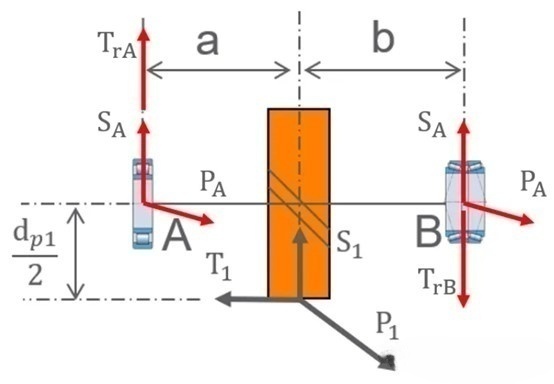
Radial Force Analysis on Bearings on Both Sides of the Gear Shaft:


Fig 7

微信图片_20250918160410


Herringbone Gear: The axial forces generated by the gear teeth cancel each other out


图片9


Force Analysis and Calculation at Herringbone Gear Mesh Points:


F6


Radial Force Analysis on Bearings on Both Sides of the Gear Shaft:


Fig 11


F8


Note:

The above bearing force analysis only considers forces from gear meshing. Even in systems without axial force, it is necessary to design locating and floating ends.

The use of cylindrical roller bearings at both ends of the gear shaft is shown for ease of understanding the theoretical absence of axial force in gear mesh transmission.

Spherical Roller Bearings in Wind Turbine Gearboxes: Challenges and Solutions

Spherical Roller Bearings in Wind Turbine Gearboxes: Challenges and Solutions

Introduction: Why Bearings Make or Break a Wind Turbine Wind energy has become one of the world's fastest-growing renewable energy sources, with...
Read More
How to Choose the Right Slewing Bearing for Your Application

How to Choose the Right Slewing Bearing for Your Application

A slewing bearing failure on a mobile crane costs an average of $50,000–$200,000 in downtime and replacement — yet many engineers make their initial...

Read More
Bearing Suppliers Near Me: Find Reliable Bearing Manufacturers

Bearing Suppliers Near Me: Find Reliable Bearing Manufacturers

"Choosing the right bearing supplier isn't just about price — it's about finding a partner who can deliver consistent quality, technical support, and...

Read More