


Home/
Blog/
Beyond the Rail: How to Choose the Right Linear Guide for Any Precision Application

7 min read

Beyond the Rail: How to Choose the Right Linear Guide for Any Precision Application

Beyond the Rail: How to Choose the Right Linear Guide for Any Precision Application
14:34

What Is a Linear Guide?

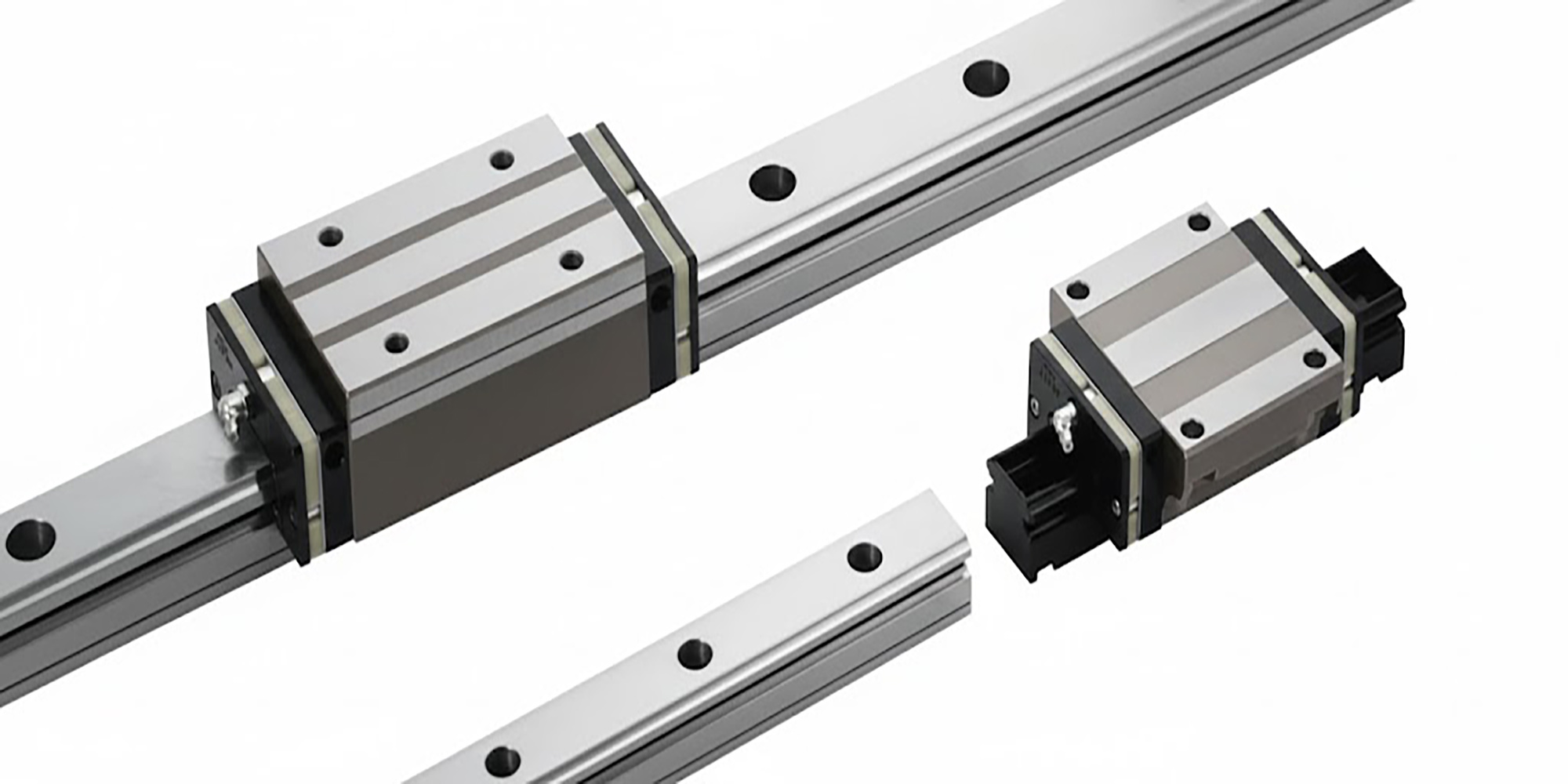
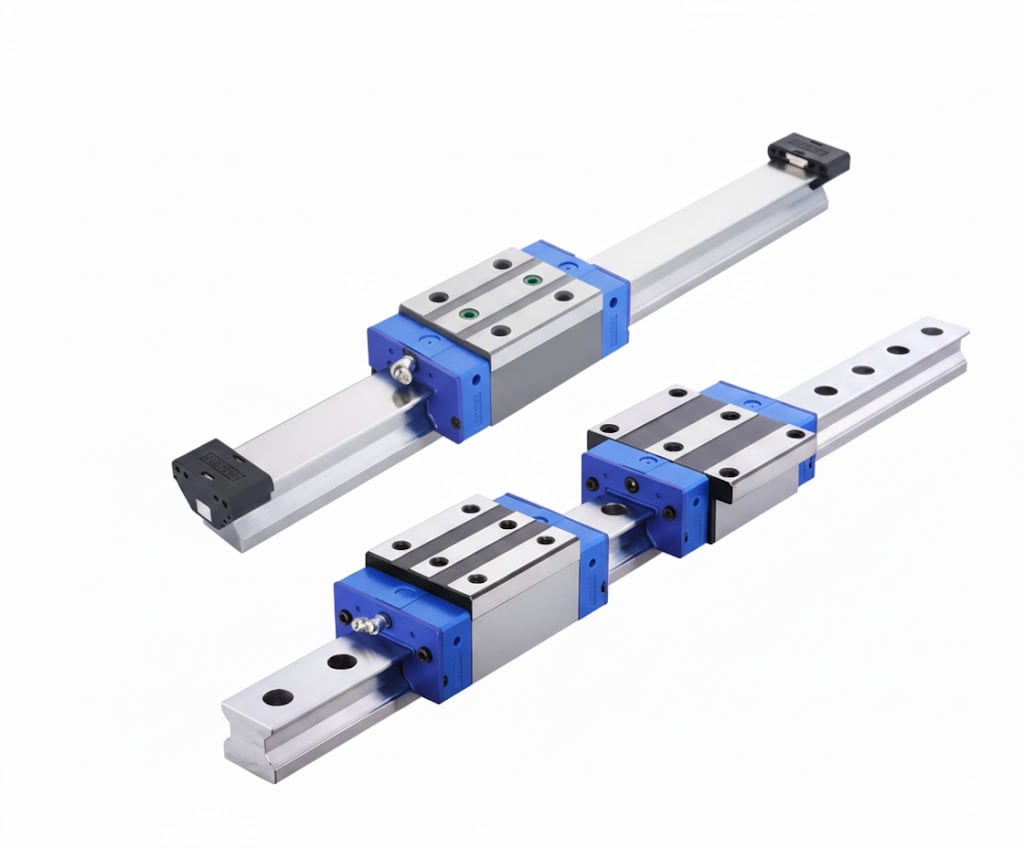
A linear guide is a mechanical component. It is also known as a linear motion guide or linear guideway. It is made to support and guide a load. This allows for smooth, straight movement along a specific path.


1-4


Structure of the Linear Guide


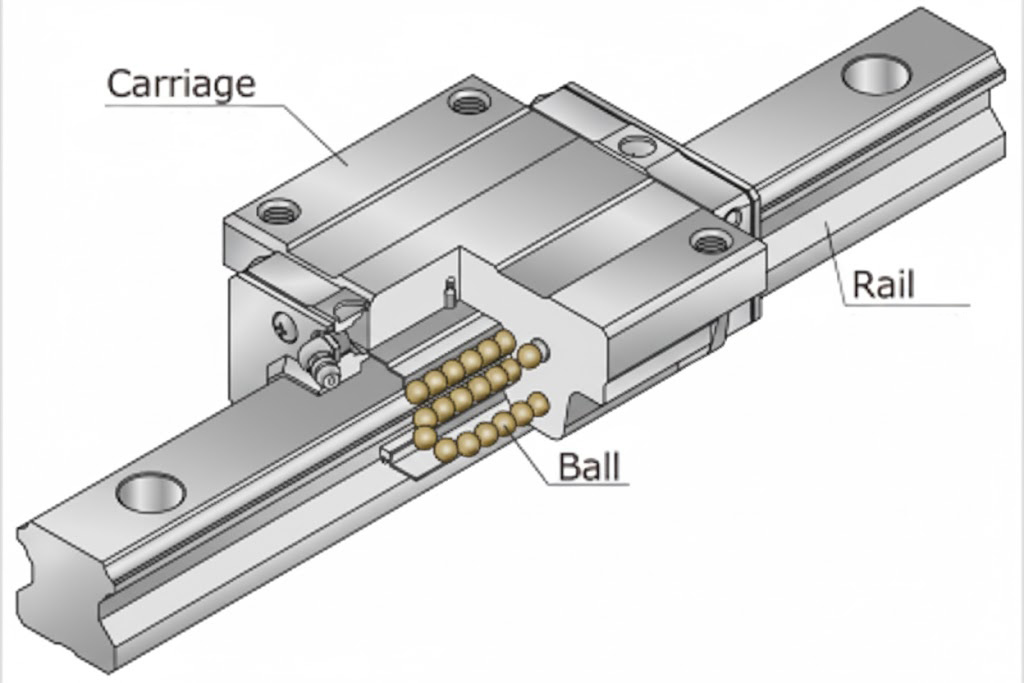
The components of the linear guideway


4


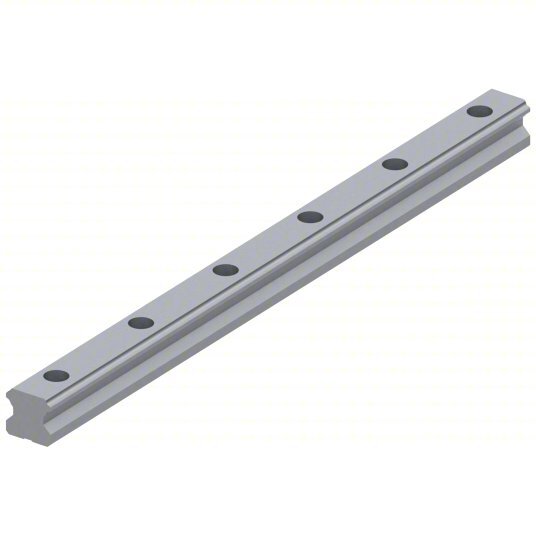
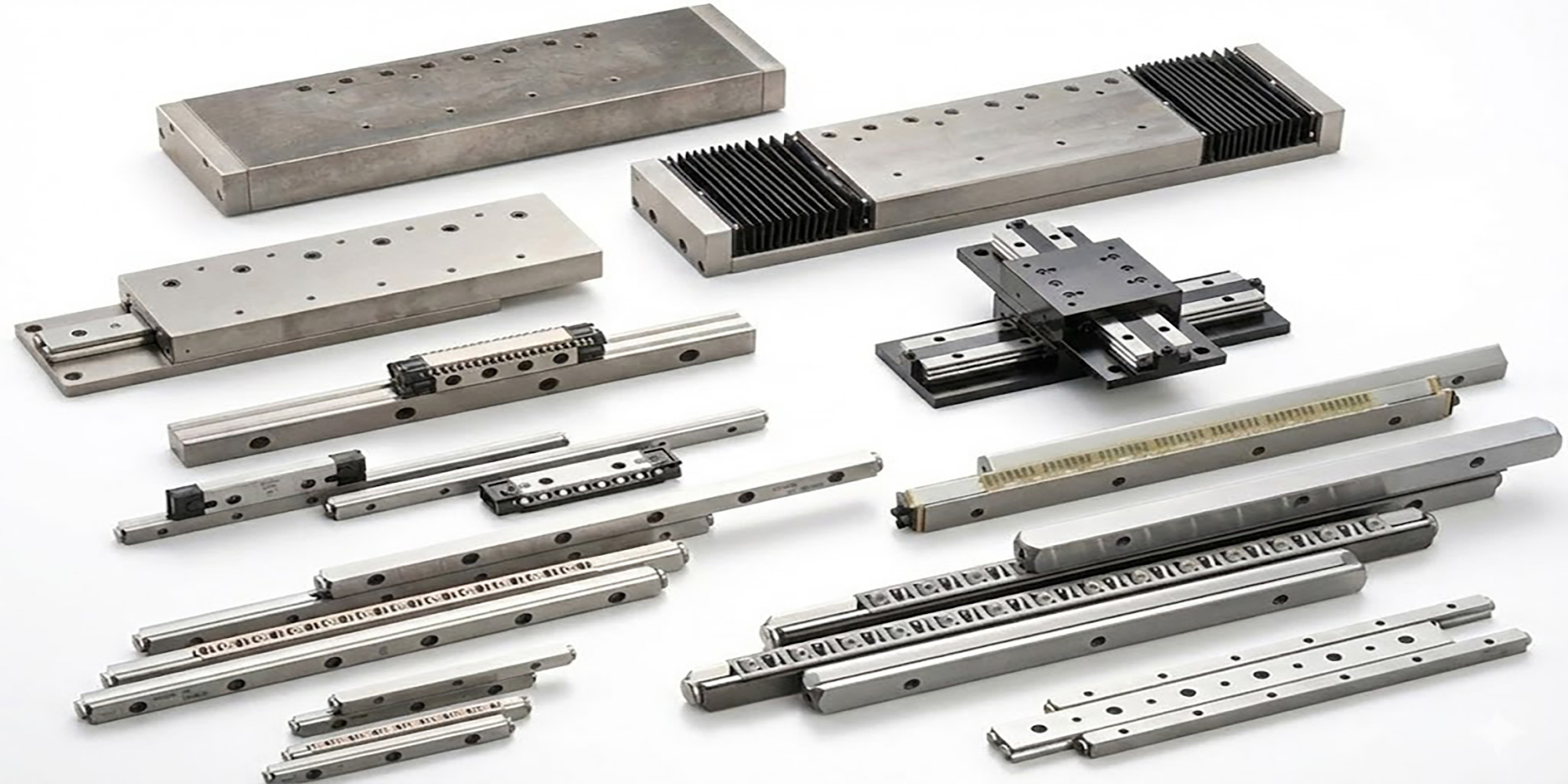
Linear Rail (Guide Rail)

The Linear Rail is the stationary, foundational component of the system.

  • Function: It serves as the fixed track or guideway that dictates the direction of travel.
  • Structure: It is a long, shaped bar. It is usually made of strong, hardened steel. The bar is precision-ground to ensure it is accurate and flat. The linearslide rail contains specially shaped raceways (grooves) that the rolling elements move within.


HSR-rail__80X0_v1


Carriage (Bearing Block)

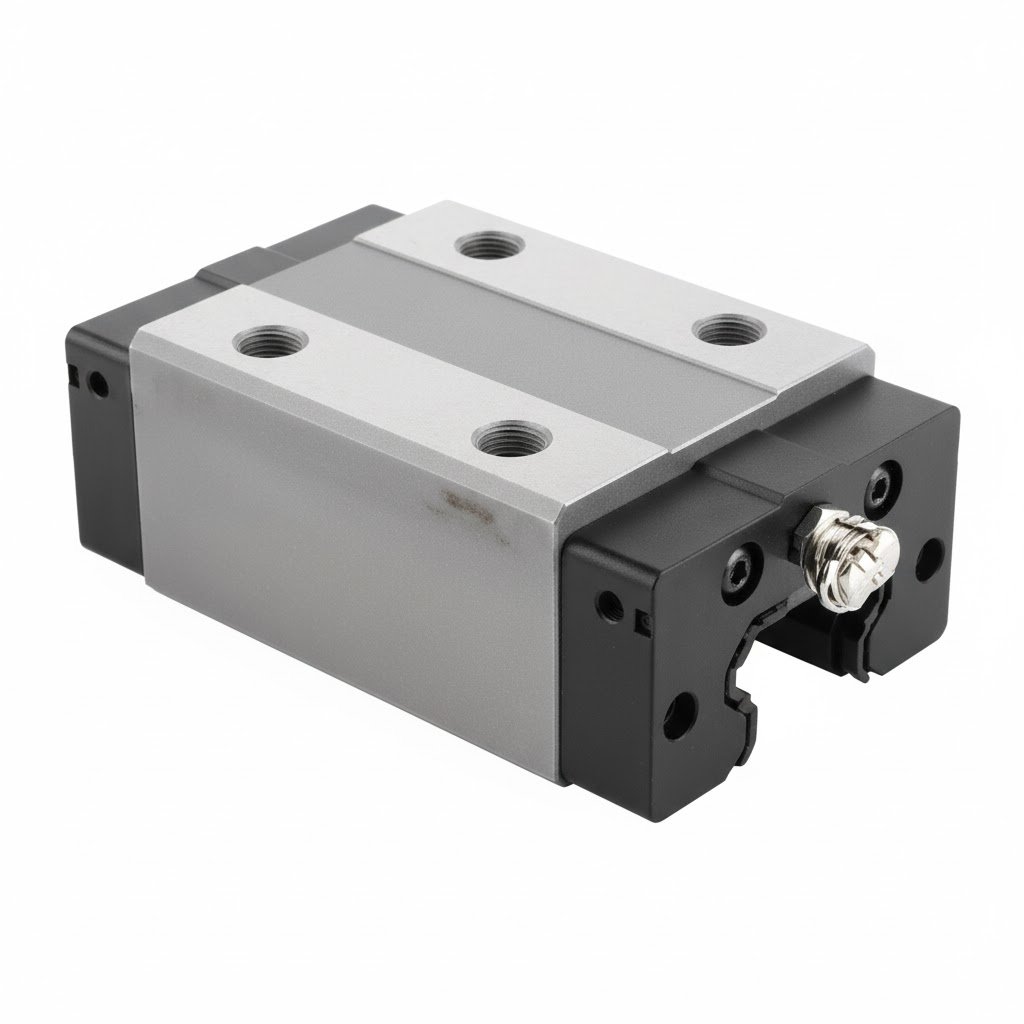
The Carriage is the moving component that rides along the rail. It's often referred to as a linear block or slider.

  • Function: The carriage holds the load, like a machine table, tool, or sensor. It also helps attach the load to the linear motion system. It houses the rolling elements.
  • Structure: It's a housing that wraps around the rail. Inside, it has a path for the rolling parts to move as the carriage goes. This is important for allowing unlimited travel length.


2-2


Rolling Elements (Bearings)

The Rolling Elements are the key components that enable the low-friction motion.

  • Function: They help movement by creating a rolling surface between the rail and the carriage. This changes sliding friction into rolling friction.
  • Types: The most common types are:

Balls (Ball Bearings): Used for lighter loads, higher speeds, and applications requiring high precision.

Rollers (Roller Bearings): These are cylindrical or tapered rollers. They are used for heavy-duty tasks. They provide high load capacity and strong support.


未标题-1-Oct-17-2025-02-33-48-5370-AM


How linear guides facilitate linear motion

A linear guide is a mechanical component that converts rotary motion into smooth, precise linear movement. It enables a machine part—such as a table, stage, or carriage—to move in a straight line with minimal friction.

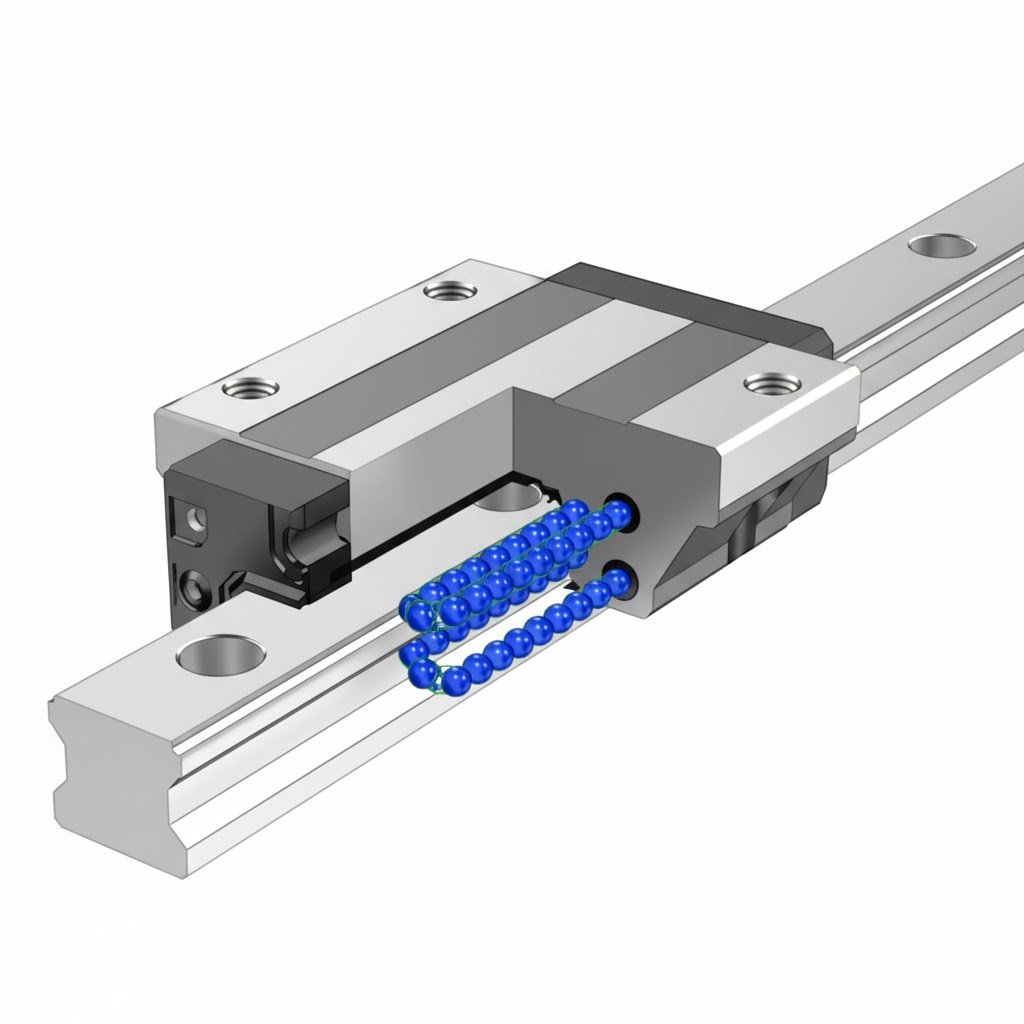
This motion is achieved through the use of rolling elements, such as steel balls or rollers, placed between the rail and the block. As these rolling parts move inside the block, they help the block glide smoothly along the rail. This keeps it strong and accurate.

Compared with traditional sliding guides, linear guides offer higher load capacity, longer service life, and greater positioning precision. For this reason, they are widely used in CNC machines, automation equipment, industrial robots, and semiconductor manufacturing systems.


Types of Linear Guides


Ball Bearing Linear Guides

Ball Bearing Linear Guides uses steel balls as rolling elements between the rail and the block. The ball circulation design minimizes friction and allows for high-speed, smooth movement. These linear guides offer low noise, low friction, and excellent precision.


6


Roller Bearing Linear Guides

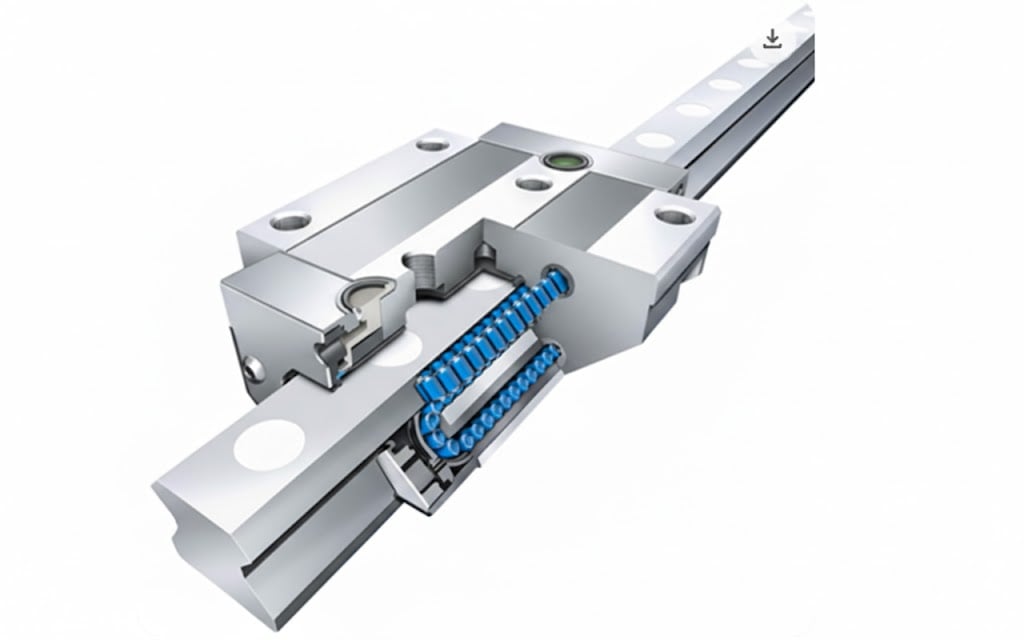
Instead of balls, roller bearing linear guides use cylindrical rollers that increase the contact area with the rail. This design provides higher rigidity and load capacity.


7


Features of the Linear Guide


Light movement with no clearance

As linear guides are rolling guides, they have no clearance and lighter movements than sliding guides.


Infinite linear motion is possible

Rolling guides like cross-roller guides and ball guides have limited strokes. However, the balls in linear guides recirculate endlessly. This means the stroke can be as long as the rail is made.


High permissible load

The linear guide’s raceways are curved grooves, which provide surface contact between the balls and raceways. This makes the permissible load about 13 times greater than that of guide components with point contact, such as the linear bushing. A linear guide can handle a similar load as a point-contact type. It does this with a more compact design.


Advantages of the Linear Guide


High positional accuracy

When a load moves on a linear motion guideway, it rolls on the bed desk. This creates rolling contact. The coefficient of friction is just 1/50 of regular contact.

The difference between dynamic and static friction is small. Therefore, there would be no slippage while the load is moving.


Long life with high motion accuracy

With a traditional slide, errors in accuracy are caused by the counter flow of the oil film. Insufficient lubrication causes wear between the contact surfaces, which become increasingly inaccurate. In contrast, rolling contact has little wear; therefore, machines can achieve a long life with highly accurate motion.


High speed motion is possible with a low driving force

Because linear guideways have little friction resistance, only a small driving force is needed to move a load. This results in greater power savings, especially in the moving parts of a system. This is especially true for the reciprocating parts.


Equal loading capacity in all directions

With this special design, these linear guideways can take loads in either the vertical or horizontal directions. Conventional linear slides can only take small loads in the direction parallel to the contact surface. They are also more likely to become inaccurate when they are subjected to these loads.


Easy installation

Installing a linear guideway is fairly easy. Grinding or milling the machine surface is important. Following the recommended installation steps is also key. Tightening the bolts to the right torque helps achieve exceptionaly accurate linear motion.


Easy lubrication

With a traditional sliding system, insufficient lubrication causes wear on the contact surfaces. It can be hard to provide enough lubrication to the contact surfaces.

This is because finding the right lubrication point is not easy. With a linear motion guideway, grease can be easily supplied through the grease nipple on the linear guideway block. You can also use a centralized oil lubrication system. This system pipes the lubrication oil to the joint.


Interchangeability

Compared with traditional boxways or v-groove slides, linear guideways can be easily replaced should any damage occur. For high precision grades consider ordering a matched, non-interchangeable, assembly of a block and rail.


How to select a Linear Guide


Determine Mechanical Requirements


Load Capacity and Rigidity

This is the most critical step. You must calculate the forces acting on the guide to ensure the chosen model will last.

  • Static Load (C0): The maximum stationary load the guide can withstand without permanent deformation.
  • Dynamic Load (C): The load the guide can handle while in motion for a specified travel life (typically 50 km or 100 km). This is used for life calculations.
  • Load Direction: Check if your load is only radial (straight to the rail) or if it also has moment loads (pitch, roll, or yaw).

Ball Guides offer high precision and speed.

Roller Guides offer higher rigidity and greater load capacity because the line contact (vs. ball point contact).

  • Safety Factor: Always choose a guide where the manufacturer's load rating significantly exceeds your calculated maximum equivalent load.


Speed and Acceleration

Check the manufacturer's maximum permissible speed and acceleration ratings for the chosen block size and type. High-speed systems are generally better served by recirculating ball guides due to their low friction.


Required Accuracy and Preload

Determine the necessary positioning accuracy and repeatability for your application. This dictates the accuracy grade you must specify (e.g., Normal, High, Precision, Super Precision).


Preload: This is a load applied to the rolling parts. It helps remove internal gaps and makes the system stiffer.

  • High Rigidity/Precision Applications (e.g., machine tools) require a medium or heavy preload to minimize deflection and vibration.
  • High-Speed/Minimal Friction Applications (e.g., handling systems) may use a lighter preload or even a clearance fit.


Evaluate Operating Environment

  • Contamination: If the environment is dusty or dirty, choose a guide with strong seals and wipers. A caged-ball design can also help resist dust better.
  • Corrosion/Moisture: Corrosion and moisture can be a problem in wet or humid places. This includes food processing and medical areas. In these environments, choose stainless steel materials or guides. You can also use materials with corrosion-resistant coatings, like chrome plating.
  • Temperature: Make sure the material and the lubricant can handle the lowest and highest temperatures of your machine.


Specify Configuration and Life

  • Travel Length (Stroke): Calculate the total required stroke. For exceptionally long lengths (over 4 m), you will need to specify a butt join between multiple rail sections.
  • Rail Type:

Profile (Square) Rails: The standard for high-precision, high-load industrial machinery. They require very flat, precisely mounted surfaces.

Round Rails: Round rails are cheaper, easier to install, and more forgiving of misalignment. They are often used in simple transport applications.

  • Calculated Life: Use the manufacturer's formula to calculate life. This formula is based on dynamic load rating, applied load, and travel distance. It helps ensure the system meets the machine's expected service life.


The Service Life of the Linear Guide

The service life of a linear guide is usually defined by its nominal life (L10). This is a measure of the total distance that 90% of identical linear guides can travel.

They will do this without failing because material fatigue, like flaking or spalling, under the same conditions. This service life is mainly shown as a distance, like kilometers. It can also be changed to time if you know the stroke length and how often it moves back and forth.


Factors Affecting Service Life

  • Load (P): The actual load applied to the guide. This is the most critical factor, as life is inversely proportional to the cube (or 10/3 power) of the load. A small increase in load can drastically shorten the lifespan.
  • Basic Dynamic Load Rating (C): A value provided by the manufacturer, which is the constant load that 90% of a set of guides will endure for a reference travel distance (often 50 km for ball-type and 100 km for roller-type guides).
  • Lubrication: Proper and timely lubrication is essential. Poor or insufficient lubrication is a major cause of premature failure.
  • Operating Speed and Acceleration: High speeds and accelerations can increase vibration, heat, and dynamic loads, which reduce life.
  • Environmental Conditions: Contamination (dust, dirt, moisture) can cause scoring and wear, while high temperatures can affect the material properties and lubricant effectiveness.
  • Installation and Alignment: Misalignment or improper mounting can lead to uneven load distribution and excessive stress, significantly shortening life.
  • Material and Hardness: The hardness of the raceways (typically 58-64 HRC for optimal performance) affects the guide's load capacity and fatigue resistance.


Linear Guide Applications


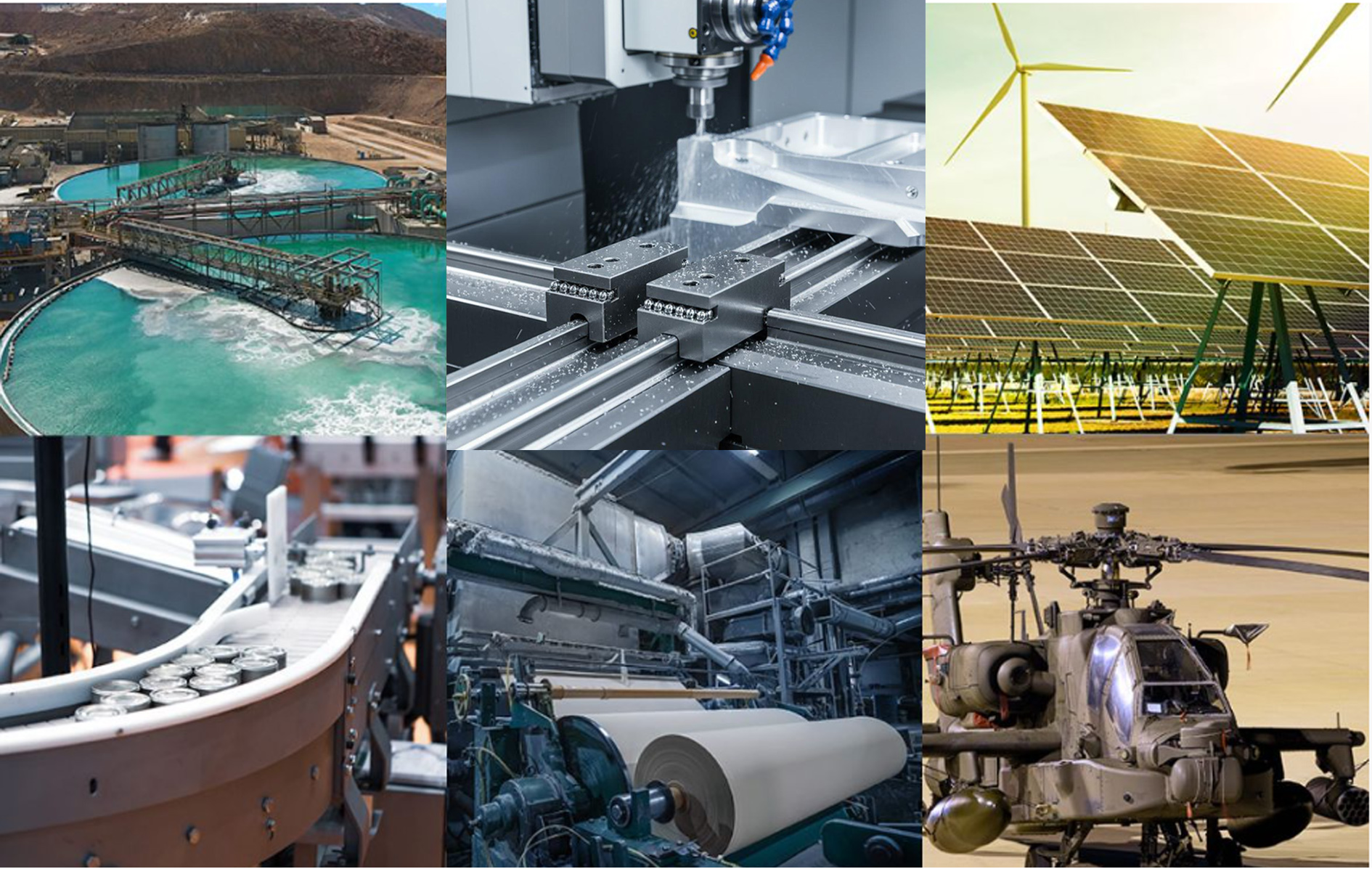
Industrial and Manufacturing Applications

The need for high speed, accuracy, and repeatability makes linear guides indispensable in factory automation.

Application Area

Specific Use of Linear Guides

Key Benefit

CNC Machines

Guiding the movement of spindles, cutting tools, and work tables (X, Y, and Z axes) in milling, turning, and grinding machines.

High Rigidity & Precision for repeatable, sub-micron machining accuracy.

Industrial Robotics

This helps joints, arms, and positioning stages move quickly and smoothly. This is important for multi-axis robots and Cartesian robots.

Speed & Repeatability for assembly and pick-and-place operations.

3D Printing

Guiding the print head and build platform with high accuracy to ensure precise layer-by-layer material deposition.

Accuracy & Smooth Motion for high-quality final parts.

Material Handling

Used in conveyor systems, automated storage and retrieval systems (AS/RS), and high-speed sorting machines.

High Load Capacity and reliable movement over long distances.

Packaging Machinery

Providing linear motion for filling, sealing, cutting, and labeling processes in high-speed production lines.

Speed & Reliability to maintain throughput.

Semiconductor & Electronics Manufacturing

Critical for ultra-high precision stages in wafer handling, lithography, inspection tools, and cleanroom environments.

Extreme Precision in controlled environments (often miniature guides are used).


未标题-3


Specialized and Consumer Applications

Linear guides are important in areas where movement needs to be controlled, quiet, and safe. They are also used in products for consumers.

Application Area

Specific Use of Linear Guides

Key Benefit

Medical Equipment

Providing smooth and controlled movement for MRI and CT scanner tables, robotic surgical arms, and lab liquid handling systems.

Safety & Precision where the margin of error is zero.

Inspection & Measurement (Metrology)

Guiding probes and sensors in Coordinate Measuring Machines (CMMs) and optical inspection equipment.

Minimal Friction and high-resolution positioning.

Transportation

Used in sliding doors on trains and buses, adjustable seating mechanisms in automobiles, and various aerospace tooling.

Reliability & Durability under heavy, repetitive use.

Adjustable Furniture

This allows for smooth and quiet movement in adjustable standing desks. It also works for sliding shelves and drawers in high-end cabinets and appliances, like refrigerators.

Smoothness & User Comfort in consumer products.

Energy

Used in solar panel tracking systems, these devices adjust the angle of the panels during the day. This helps to achieve maximum efficiency.

Corrosion Resistance (when stainless steel is used) for outdoor use.


Specialized and Consumer Applications


Summary

Choosing the right linear guide involves balancing load needs, speed requirements, and environmental factors. This balance ensures the best machine performance.

Start your selection process correctly to ensure the long-lasting and precise accuracy your application needs.

Ready to optimize your motion control system? Explore high-performance linear guides at LILY Bearing today!

Linear Guide: Key Factors That Influence Linear Rail Costs

Linear Guide: Key Factors That Influence Linear Rail Costs

For purchasing engineers or equipment manufacturers, the cost of linear motion guides is a key consideration when selecting products. However, the...
Read More
From Semiconductor Fabs to Surgery Rooms: Linear Guides Are Everywhere You Don't Notice

From Semiconductor Fabs to Surgery Rooms: Linear Guides Are Everywhere You Don't Notice

$8.2B Global Market (2024) 6.4% CAGR Through 2030 20+ Industries Served The Invisible Infrastructure of Modern Manufacturing Think...

Read More
Top 10 Linear Bearing Brands in 2026: THK, Hiwin, igus & Alternatives

Top 10 Linear Bearing Brands in 2026: THK, Hiwin, igus & Alternatives

Picking the wrong linear bearing brand doesn't just cost you money upfront — it costs you downtime, maintenance headaches, and sometimes a scrapped...

Read More