


Understanding the Load Capacities of Kaydon Bearings
Bearings ensure the smooth operation and long life of mechanical components. Kaydon Bearings are known for their high performance and versatility....
9 min read
William
:
Aug 22, 2025 4:06:13 AM
We see it regularly at Lily Bearing: an engineer sends over load specifications, we run the numbers, and the bearing they originally had in mind would have failed within months.
Nine times out of ten, the culprit is an underestimated moment load — not the axial load everyone pays attention to.
Getting the selection right matters.
The wrong bearing means premature failure, unplanned downtime, and in heavy equipment, a real safety risk.
This guide walks you through what turntable bearings are, how they're built, which type suits your application, and what it takes to keep them running long-term.
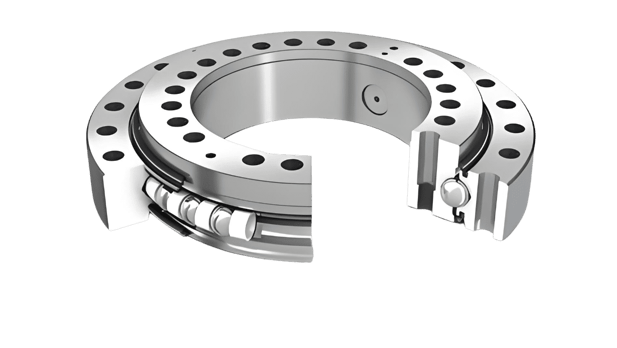
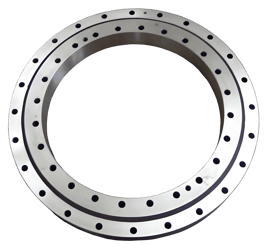
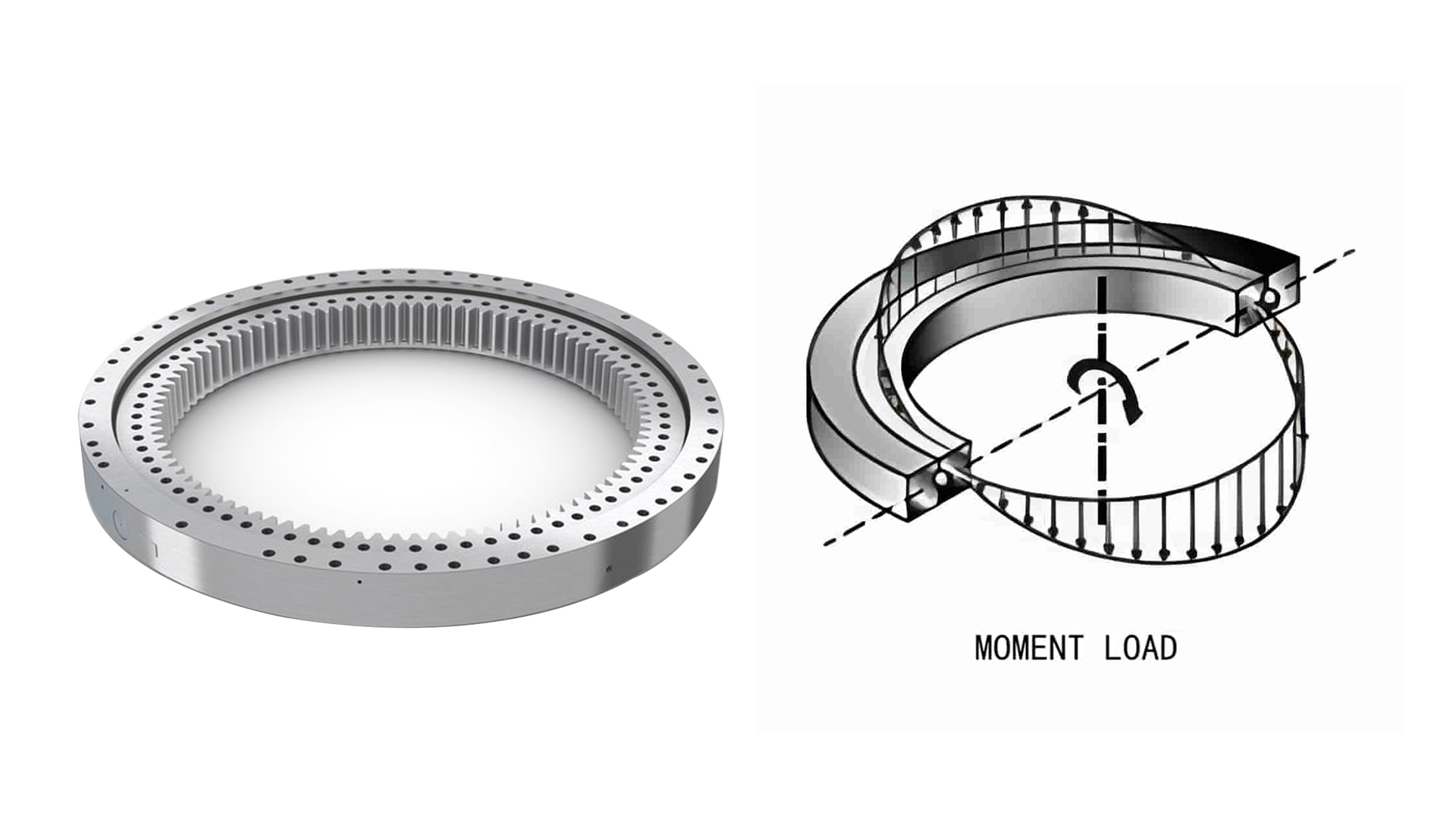
A turntable bearing is a large-diameter rolling-element bearing built for full 360-degree rotation.
What sets it apart from standard bearings is its ability to handle three load types at once: axial loads (vertical thrust), radial loads (sideways force), and moment loads (tilting force from an offset load) — all within a single compact ring.
Standard bearings are optimized for one primary load direction.
Turntable bearings are engineered for the messier reality of rotating structures, where loads come from multiple directions simultaneously and the rotating platform must stay stable throughout.
That's what makes them the go-to solution for cranes, robotic arms, medical scanners, and wind turbines.
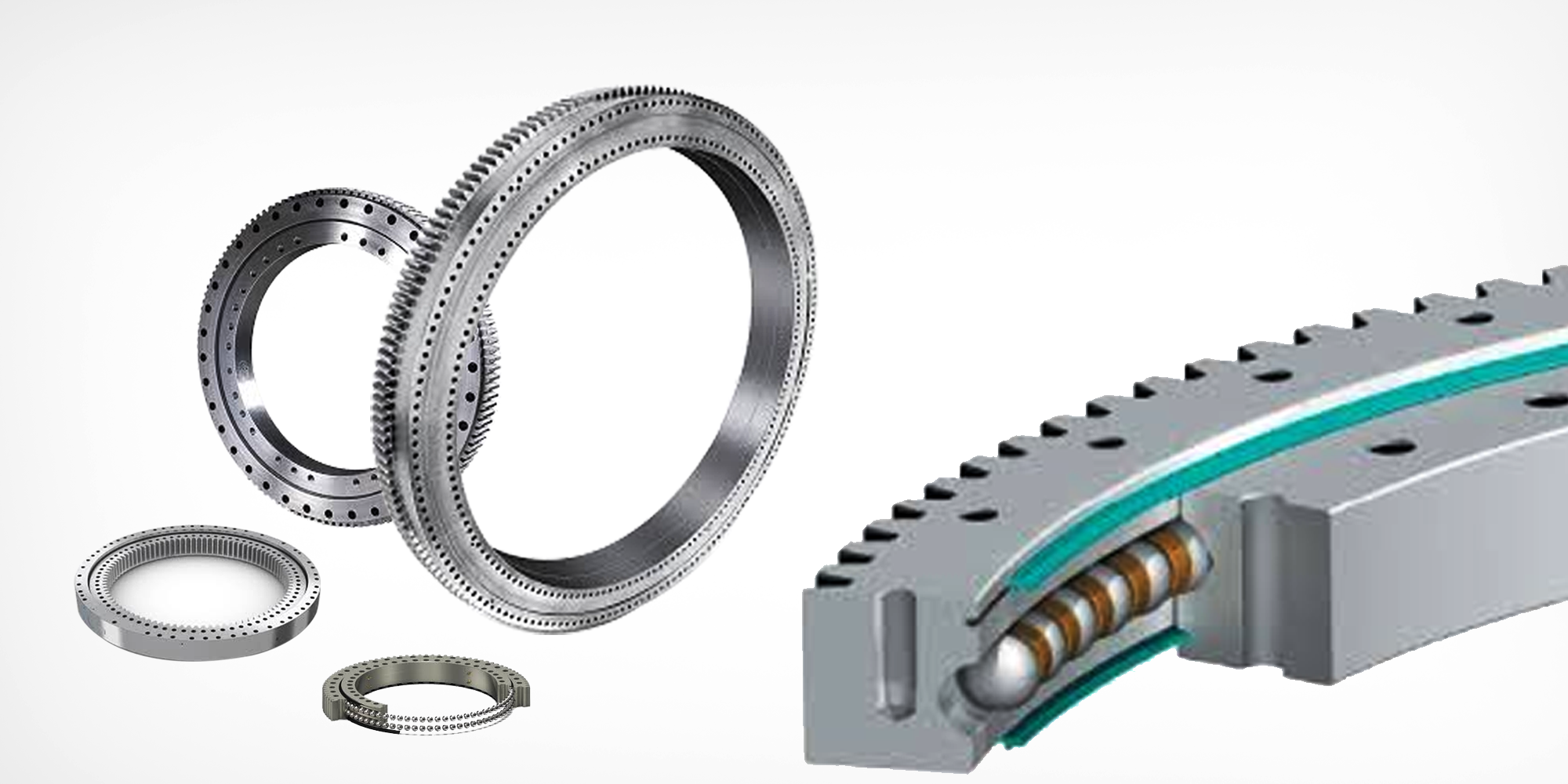
Five main parts make up a turntable bearing, and understanding each one helps with both selection and troubleshooting:
Material choice depends on load, environment, and operating temperature:

The ability to carry axial, radial, and moment loads simultaneously is the core engineering value of a turntable bearing.
Depending on design and diameter, they handle axial loads ranging from a few hundred kilograms to several hundred tonnes.
Deeper race grooves increase rolling element contact area, which improves load distribution and reduces peak contact stress — a direct contributor to longer fatigue life in demanding applications.
Precision-ground raceways and consistent rolling element spacing keep vibration and torque variation low during rotation.
For radar antenna systems, positional accuracy depends on it.
For rotating theater stages, the audience sees any irregularity.
For CT scanners, vibration directly degrades image quality.
The bearing doesn't just need to rotate — it needs to rotate consistently, revolution after revolution.
Actual bearing life is calculated using the L10 methodology per ISO 281, which accounts for dynamic load rating, applied loads, and rotational speed.
As a rough reference for planning purposes, well-maintained industrial turntable bearings in moderate-duty applications achieve between 10,000 and 30,000 operating hours — but that range shifts significantly with load intensity and maintenance quality.
Always verify against your specific duty cycle using the bearing's rated dynamic load (C) and your calculated equivalent load (P).
Turntable bearings come in two maintenance configurations:
Skipping re-lubrication on open bearings is the most common failure mode we see.
The sequence is predictable: insufficient grease → higher friction → heat build-up → accelerated wear → seizure. It's entirely preventable.
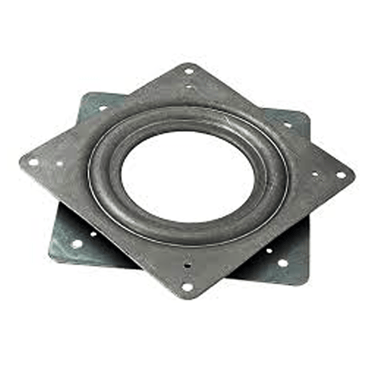
The lightest and simplest variant.
Low-profile, easy to install with standard fasteners, and designed for non-industrial rotating platforms — kitchen storage systems, display turntables, rotating furniture.
For standard household and light commercial applications, load capacity is typically under 200 kg.
Not suited for industrial loads or outdoor exposure without additional protection.

Crossed roller bearings arrange cylindrical rollers alternately at 90-degree angles within a single raceway.
Each roller carries load in an alternating direction, which gives this design its standout characteristic: very high moment load capacity and rigidity in a compact cross-section.
Made from high-carbon chromium steel (AISI 52100), they achieve positional accuracy in the micron range.
That level of precision makes them the first choice for:
Where installation space is tight but load and precision requirements are both high, crossed roller bearings are usually the answer.

These terms overlap significantly — all slewing bearings are turntable bearings, but not all turntable bearings qualify as slewing bearings.
The practical distinction comes down to scale and application context.
|
Feature |
Turntable Bearings |
Slewing Bearings |
|
Primary focus |
Precision rotation (machine tools, robotics) |
Heavy-duty load handling (construction machinery) |
|
Typical application |
Light to medium equipment |
Excavators, cranes, wind turbines |
|
Load capacity |
Moderate |
High to very high |
|
Precision |
Moderate to high |
High |
|
Design variants |
Ball type, crossed roller, Lazy Susan |
Four-point contact, eight-point contact, cross roller, triple-row cross roller, thrust ball, custom |
|
Environment flexibility |
Low to moderate |
High |
When a customer asks us whether they need a turntable bearing or a slewing ring, the honest answer is usually: describe the load and the application, and the right category becomes obvious.
The naming convention matters less than the load data.
Lazy Susan storage systems, rotating display stands, camera tripod heads, office chair bases.
These applications need quiet, smooth, low-friction rotation under light loads — typically under 200 kg — with corrosion resistance for indoor environments.
For a deeper look at heavy-duty configurations and load rating considerations, see our Heavy Duty Turntable Bearing Guide.
Start with all three load components:
Apply a safety factor to your calculated loads:
1.5× for smooth, steady-state conditions (conveyors, display systems);
2× for moderate dynamic loading (rotating stages, positioning equipment);
3× or higher for shock-loaded applications (cranes, excavators).
These ranges align with general mechanical engineering practice — verify against any applicable industry standard for your sector.
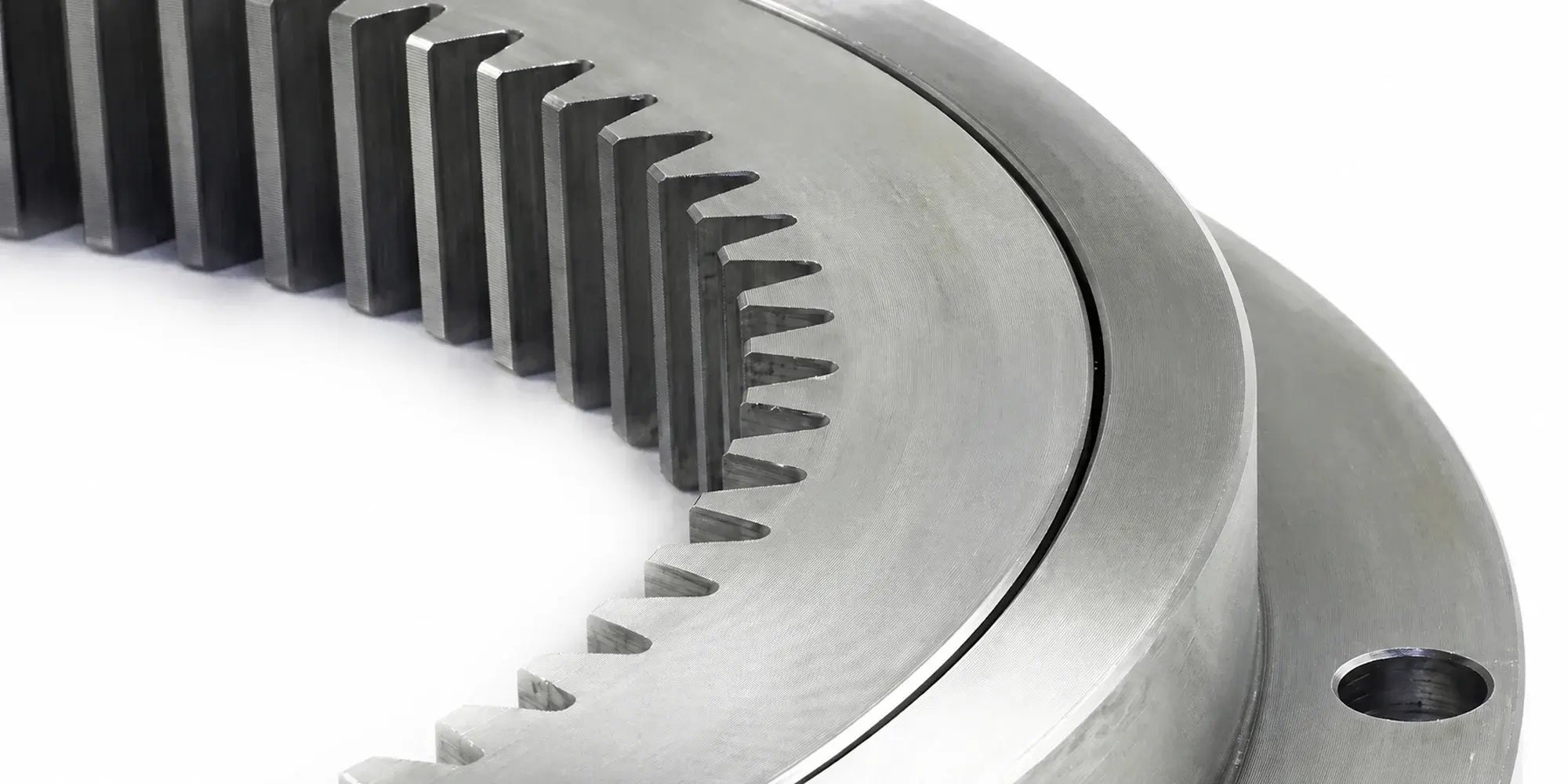
Decide whether you need internal gear teeth, external gear teeth, or no gear at all.
Verify that the bolt hole circle, bore diameter, and overall outside diameter fit within your structural design.
For driven applications, the gear module and tooth count need to match your drive pinion or worm gear.
Choose a slewing ring when combined loads are high, the application involves shock loading, or the equipment must operate reliably in harsh outdoor environments over many years.
Slewing rings are engineered for the load levels and duty cycles found in cranes, excavators, and wind turbines.
A standard turntable bearing is the right choice when precision and compactness matter more than raw load capacity — robotics, medical equipment, machine tool rotary tables.
Moment load equals the applied force multiplied by the horizontal distance from the bearing centerline to the load application point.
As a worked example: a 1,000 kg load acting 500 mm from the bearing center generates a tilting moment of 500 kg·m, which converts to approximately 4,900 N·m.
In practice, also account for dynamic factors — wind load, acceleration forces, and any impact loads — before applying your safety factor and selecting a bearing rated for the resulting equivalent load.
Watch for increased rotation torque (harder to drive than it used to be), audible changes — grinding, clicking, or rumbling that wasn't there before — and visible indicators like seal damage, grease leakage, or surface corrosion at the raceway area.
If the bearing is accessible, check for radial play beyond the manufacturer's tolerance.
A bearing showing multiple symptoms simultaneously is unlikely to recover with re-lubrication alone and should be replaced before it fails in service.
There is no single answer — service life is calculated per ISO 281 L10 methodology based on the bearing's dynamic load rating, the actual equivalent load, and rotational speed.
As a planning reference: well-maintained bearings in moderate industrial duty can reach 10,000–30,000 hours, while crane and wind turbine bearings are typically designed for 5–10 year replacement intervals at their respective duty cycles.
The number that matters is the one you calculate for your specific application, not a general range.
IP65 is the practical minimum for most outdoor installations — it provides full dust exclusion and protection against water jets.
For marine or coastal environments where saltwater spray is involved, IP66 or IP67 combined with stainless steel construction and marine-grade grease gives much better long-term corrosion resistance.
For submerged or regularly pressure-washed applications, specify IP68 and verify the bearing manufacturer has tested to that rating, not just labelled it.
U-series turntable bearings have a U-shaped outer ring cross-section that allows direct bolting to a flat mounting surface without a separate housing or adapter.
This keeps the installation height low and simplifies integration into rotating platform designs.
They appear most often in positioning tables, light to medium industrial turntables, and custom rotating fixtures where a compact, bolt-on solution is needed.
Turntable bearings do a job that sounds simple — let something rotate — but the engineering behind getting that right at scale is anything but.
Load combinations, environment, precision requirements, drive configuration, maintenance access: each one shapes the correct specification, and a miss on any of them shows up eventually.
At Lily Bearing, we've been manufacturing slewing rings and turntable bearings for over two decades, supplying OEMs and engineering teams across construction, robotics, medical, and renewable energy sectors.
If you're working through a selection and want a second set of eyes on the load data, contact our engineering team — we're happy to check the numbers before the bearing goes on order.
Bearings ensure the smooth operation and long life of mechanical components. Kaydon Bearings are known for their high performance and versatility....
Slewing bearings, also known as slew bearing or slewing ring bearings, facilitate pivotal movement in machinery, handling axial, radial, and moment...
Can you fit a bearing with 35,000N load capacity in a 30mm radial envelope? The answer is no for cylindrical roller bearings, but yes for needle...