

Slewing Bearing and Jib Crane Bearing Guide
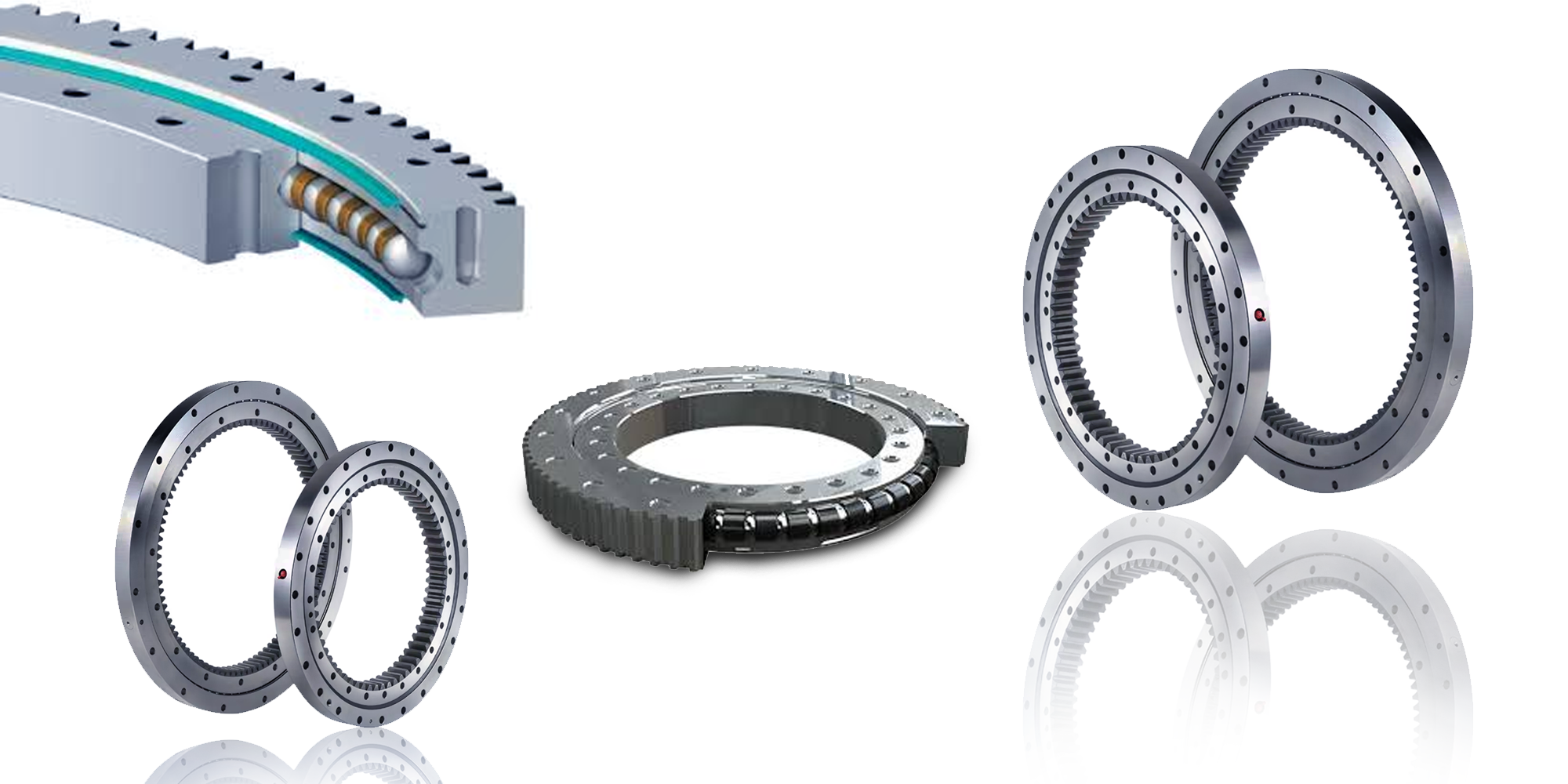
Slewing bearings are essential in heavy machinery like cranes. They allow jib cranes to function effectively with 360-degree movement for precise...
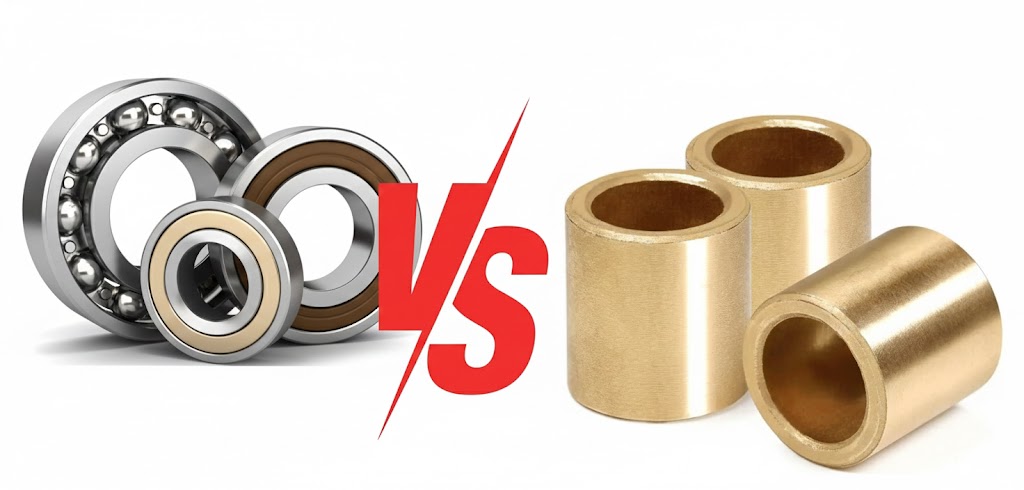
When it comes to selecting the right bearing for a mechanical application, two types dominate the conversation: sleeve bearings and ball bearings.
Both are designed to reduce friction and support rotating shafts, yet they work in fundamentally different ways — and each excels in different situations.
Choosing the wrong bearing type can mean premature failure, excessive noise, overheating, or unnecessary cost.
Whether you are an engineer designing an industrial motor, a technician maintaining HVAC equipment, or a buyer sourcing components for a cooling fan system, understanding the true differences between sleeve bearings and ball bearings is essential.
This comprehensive guide covers everything: how each bearing works, their key differences in performance, their pros and cons, and clear guidance on which one is right for your specific application.
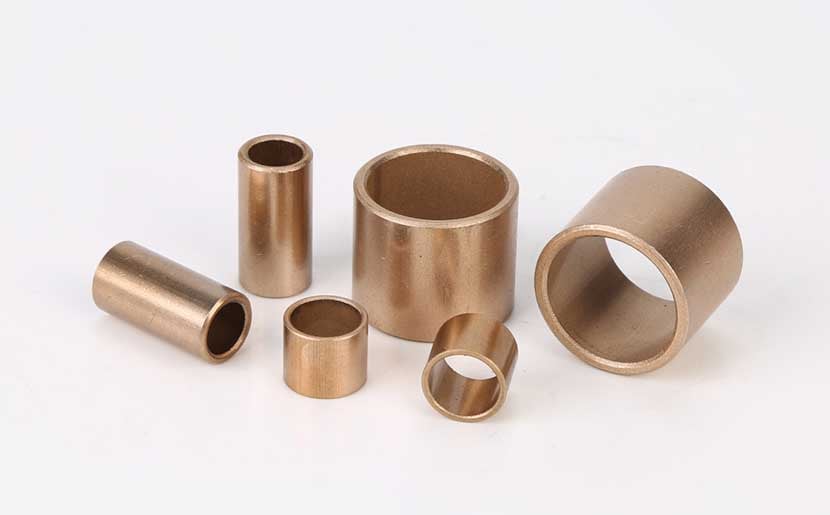
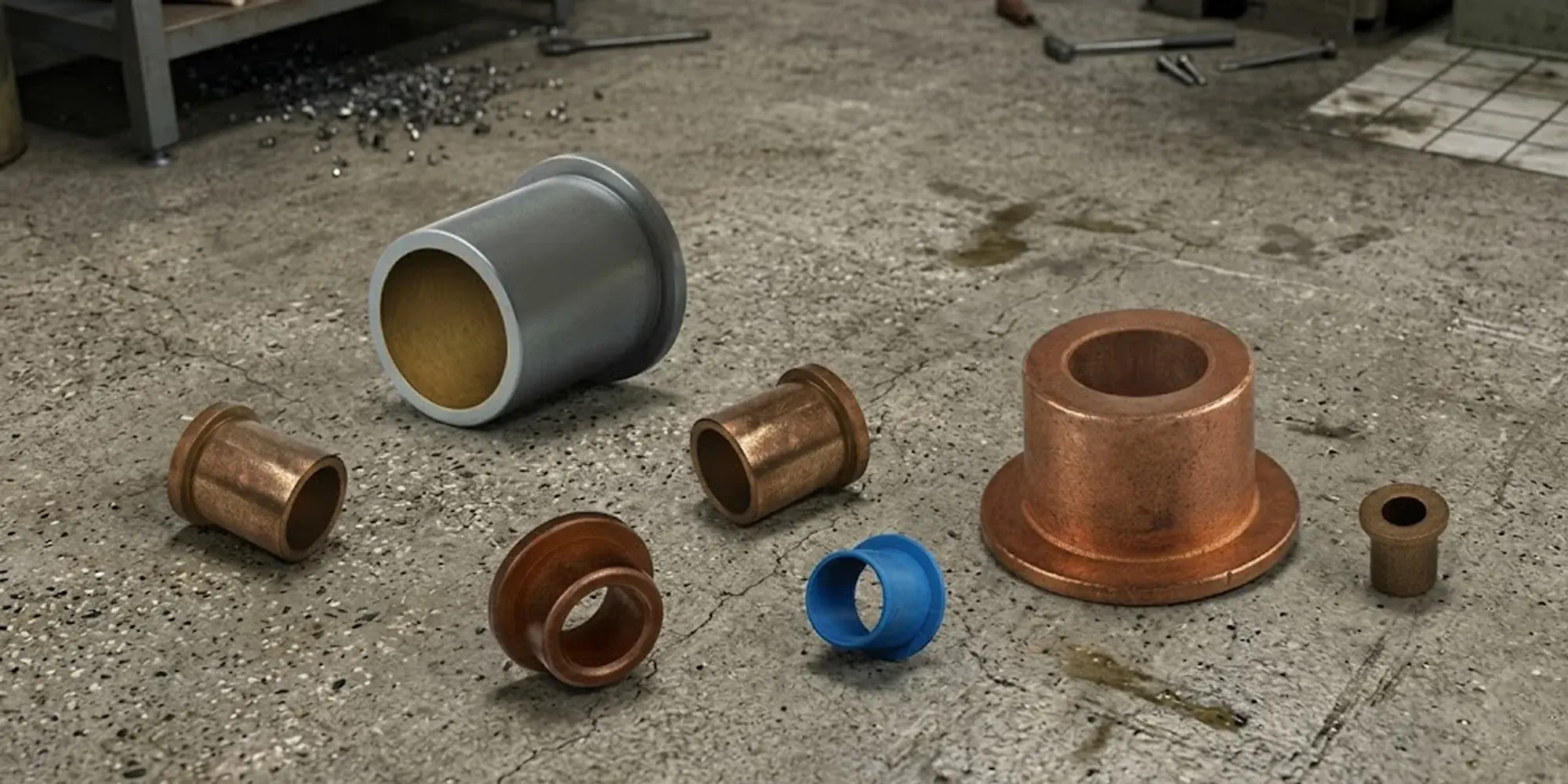
Sleeve bearings—also called plain or “friction” bearings—are the earliest form of bearing technology. They are highly adaptable and can function as linear bearings, rotary bearings, or a mix of both. While generally simple in structure, they can also be engineered for complex applications, such as gas-lubricated sleeve bearings used in high-speed turbine rotors.
In many designs, a sleeve bearing consists of two machined surfaces with an oil-impregnated cylindrical liner between them. This arrangement enables the bearing to support loads from all directions while operating at high speeds.
Sleeve bearings are commonly chosen for low-speed applications because they require minimal maintenance. However, they are not ideal for high-vibration conditions or extreme temperatures, as they tend to wear out faster than other bearing types under such stresses.
Sliding (not rolling) contact between shaft and bearing surface
Simple cylindrical or flanged construction with no internal moving parts
Self-lubricating capability in sintered metal designs
Excellent shock load resistance due to full-surface contact
Low cost and easy installation via press fit
Quiet operation, particularly at low speeds

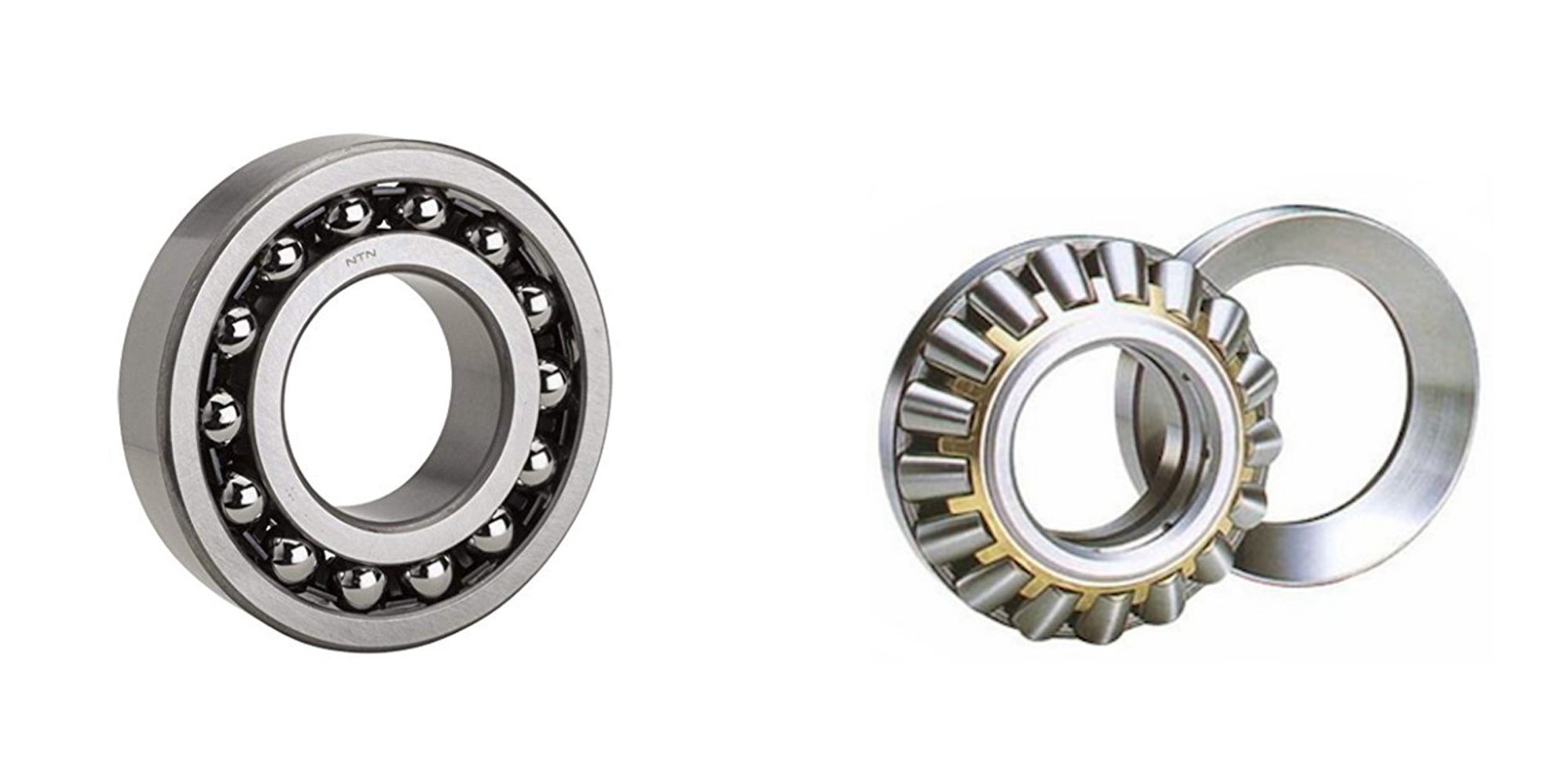
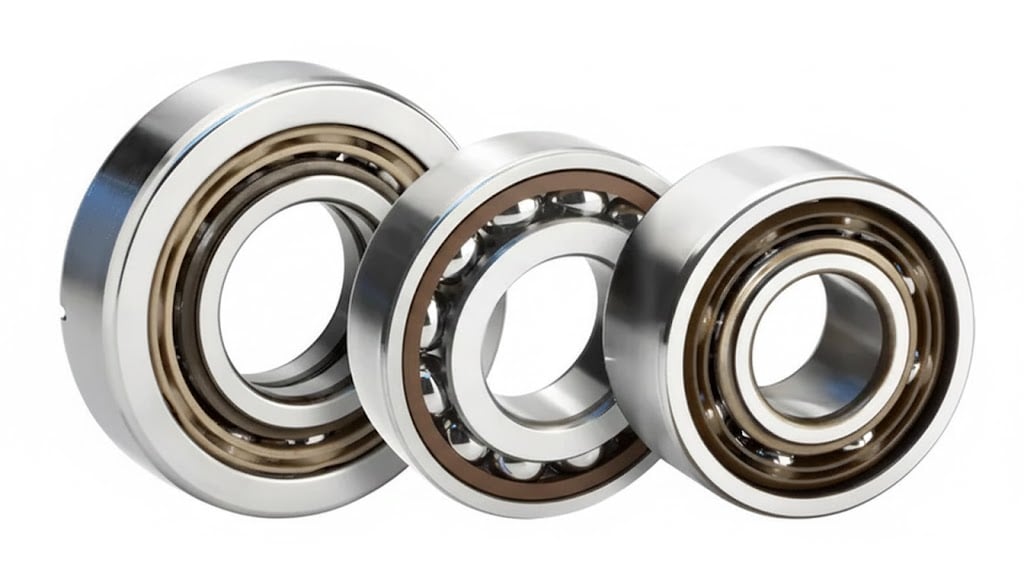
What is a Ball bearing? A ball bearing is a type of rolling-element bearing. It uses spherical metal balls to keep the bearing races separated.
Ball bearings are designed to reduce friction between moving parts. They provide smooth rotation and support for both radial loads and axial loads.
They are known as antifriction bearings because their rolling elements minimize friction, unlike sleeve bearings, which lack rolling components and therefore rely on sliding contact that generates surface friction.
Rolling contact between balls and precision-ground raceways
Handles both radial and axial (thrust) loads effectively
Lower friction than sleeve bearings, generating less heat
Higher precision due to machine-controlled manufacturing tolerances
Longer service life under high-speed and high-load conditions
Available shielded or sealed for contamination protection

The fundamental distinction between sleeve and ball bearings is their contact mechanism. Sleeve bearings use sliding contact — the shaft surface moves against the bearing surface, separated only by lubricant. Ball bearings use rolling contact — tiny steel balls roll between precisely machined races, minimizing the area and nature of contact. This single difference drives nearly all the performance characteristics that distinguish the two types.
.jpg?width=2500&height=2000&name=%E6%9C%AA%E6%A0%87%E9%A2%98-1_compressed%20(1).jpg)
Ball bearings are versatile because they can handle both radial loads and axial loads.

The rolling balls evenly distribute these forces, allowing smooth and efficient operation in multiple directions.
This flexibility makes ball bearings ideal for applications with combined or changing load conditions. They are commonly used in motors, gearboxes, and rotating machinery.
Sleeve bearings are primarily designed to handle radial loads, which act perpendicular to the shaft.
They provide smooth motion when the shaft slides along the bearing surface.
However, sleeve bearings have limited or no capacity to handle axial (thrust) loads, which act along the shaft.
This makes them less suitable for applications where both radial and axial loads are significant.
|
Feature |
Sleeve Bearing |
Ball Bearing |
|
Structure |
Simple sleeve with no rolling parts. |
Has balls between inner and outer races. |
|
Friction |
Higher friction (sliding). |
Lower friction (rolling). |
|
Load Capacity |
Good for low-speed, low-load. |
Good for high-speed, high-load. |
|
Size and Design |
Simple and compact. |
More complex design. |
|
Lubrication |
Needs lubrication to work well. |
Needs lubrication, but less often. |
|
Durability |
Wears faster under heavy loads. |
Lasts longer under high speeds. |
|
Cost |
Usually cheaper. |
Usually more expensive. |
|
Applications |
Used in fans and low-speed machines. |
Used in high-speed machinery and motors. |
Choosing the right bearing for your cooling fan is a critical decision that can greatly affect its performance, lifespan, and overall efficiency.
To select the most suitable option, it’s important to evaluate several factors that match your specific needs.
This section highlights the key considerations and provides a guide to help you determine the best bearing type for your application.
Sleeve bearings are ideal for low-speed, low-load applications.
Examples include home appliances, low-power fans, and quiet office equipment.
Their lower cost and quieter operation make them suitable for less demanding environments.
Sleeve bearings are good for short-term use in a vertical position where they are not exposed to high temperatures.
In this setup, sleeve bearings handle light loads and are effective for temporary applications. They keep costs low and perform well in less demanding conditions.
Ball bearings are perfect for high-speed, high-load uses in automotive, industrial machinery , pumps, and HVAC systems.
They provide smooth, reliable performance, handling both speed and heavy loads. This helps equipment run efficiently and last longer.
Ball bearings are ideal for long-term, high-temperature environments, offering durability and efficiency over time.
They can handle high heat while maintaining low friction.
This makes them perfect for automotive engines, industrial machinery, and aerospace applications where reliable, long-lasting performance is crucial.
This helps reduce maintenance and extend the life of equipment.
The choice of bearing depends on the operating life and environmental conditions.
Ball bearings are best for long-lasting use, like in automotive engines or industrial machinery.
Sleeve bearings are suitable for short-term or cost-sensitive needs.
Heat-resistant materials like ceramic or treated steel are used in high-temperature environments.
Sealed ball bearings work well in dusty conditions. For humid or corrosive environments, stainless steel or ceramic bearings resist rust.
The right bearing balances performance, durability, and cost based on these factors.
Choose the bearing based on your application, operating temperatures, and budget. For low-speed, light-load uses, sleeve bearings are more affordable. Ball bearings are more suitable for high-speed, heavy-load, or long-term applications, although they come at a higher cost. Consider factors like environment and lifespan when making your choice.
Make sure to carefully assess your needs before choosing a bearing. If unsure, it's smart to consult lily bearing to pick the best option.
Neither is universally better. Sleeve bearings are quieter, cheaper, and simpler. Ball bearings last longer, run faster, and handle more complex loads. The best choice depends on your specific application requirements.
Ball bearings generally last longer, especially at high speeds and temperatures. Ball bearing fans typically run for 50,000+ hours compared to 30,000+ hours for sleeve bearing fans under equivalent conditions.
In many cases, yes — provided the dimensions are compatible. In fact, upgrading from a sleeve bearing to a ball bearing is a common technique for improving the longevity and performance of fans and motors.
Yes, sleeve bearings are generally quieter, particularly at low speeds. This makes them preferred in noise-sensitive environments such as offices, bedrooms, and quiet industrial spaces.
Sleeve bearings are commonly made from bronze, sintered iron, plastic (PTFE, nylon), or composite materials. Sintered metal versions are the most common and offer self-lubrication properties.
Both types are used. Budget and low-noise PC fans often use sleeve bearings; premium or high-performance fans use ball bearings for their longer lifespan and better performance at higher speeds.
Slewing bearings are essential in heavy machinery like cranes. They allow jib cranes to function effectively with 360-degree movement for precise...
What Is a Flanged Sleeve Bearing? In most shaft-and-housing assemblies, retaining a plain bushing axially requires either a shoulder machined into...
Bearings are essential parts of machines and equipment. They reduce friction, making it easier for parts to move smoothly. Two main types of bearings