

Home/
Blog/
Mounted Flange Bearing Selection: 2, 3, 4-Bolt Types Compared

7 min read

Mounted Flange Bearing Selection: 2, 3, 4-Bolt Types Compared

Mounted Flange Bearing Selection: 2, 3, 4-Bolt Types Compared
14:32

Choosing the right mounted flange bearing is more than just matching a shaft diameter. It protects your entire power transmission system from premature failure.

From high-speed blowers to heavy-duty mining conveyors, your bearing selection determines how often equipment fails and how efficiently it operates.


Engineering Overview: The Role of Flange Mounted Units

Unlike standard bearings that are press-fitted into a housing, flanged bearings have a specialized "lip" or rim on the outer race.

This design provides a "ready-to-mount" solution where the shaft axis is perpendicular to the mounting surface.

These bearing units are pre-assembled and sealed, designed to handle radial loads while offering protection against shaft deflection and vibration.


The L.E.S.C. Selection Framework

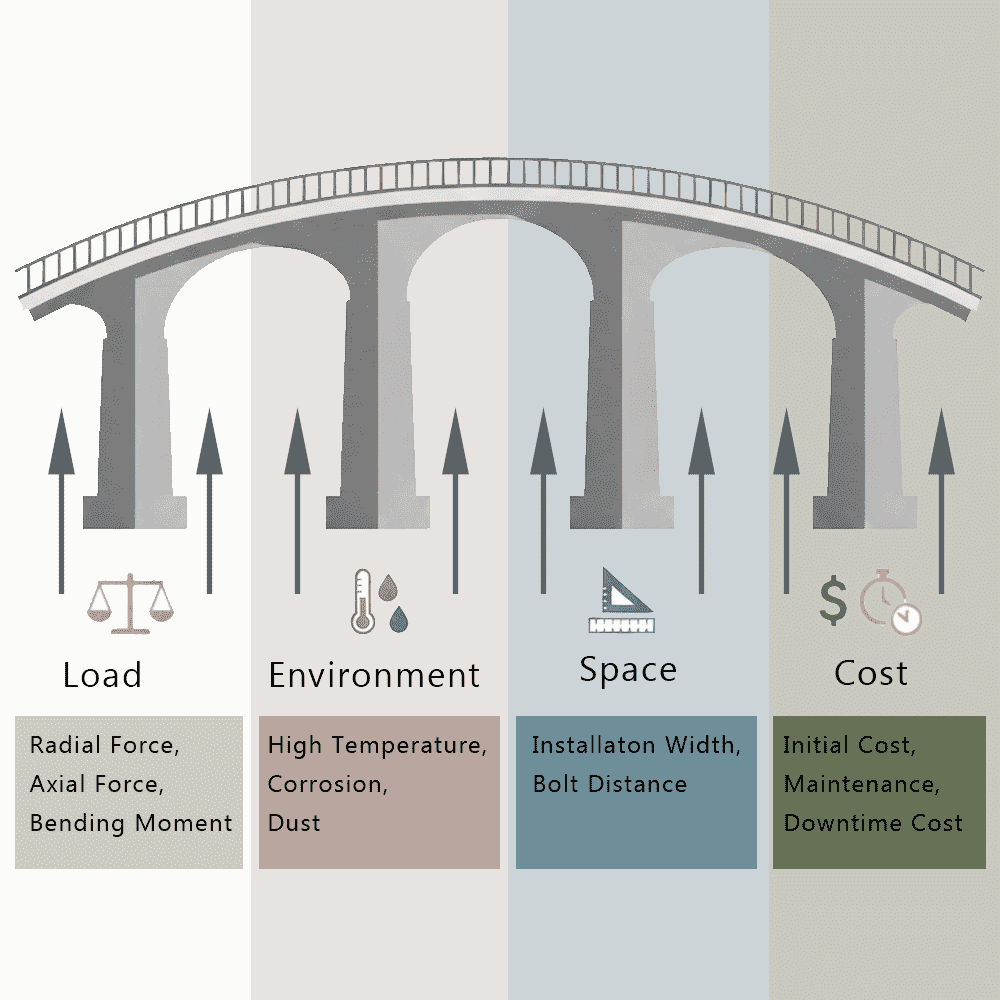
To move beyond "catalog checking" and into true engineering selection, we utilize the L.E.S.C. framework:

The L.E.S.C. Selection Framework

  • Load: Assessing magnitude and direction (radial, axial, or moment) to determine the required load rating and ensure the specific load capacities of the rolling element are not exceeded.
  • Environment: Evaluating moisture, chemical exposure, and high temperatures which may require specialized bearing lubricants or materials.
  • Space: Identifying dimensional constraints and selecting the appropriate housing style to fit the mounting surface.
  • Cost: Considering total lifecycle costs, including maintenance and downtime.


Quick Selection Logic:

  • Loads > 5kN or High Vibration: Default to 4-bolt(UCF series).
  • Limited Space (< 50mm width) & Loads < 3kN: Use 2-bolt(UCFL series).
  • Vertical Mounting: Consider 3-bolt(UCFT series).


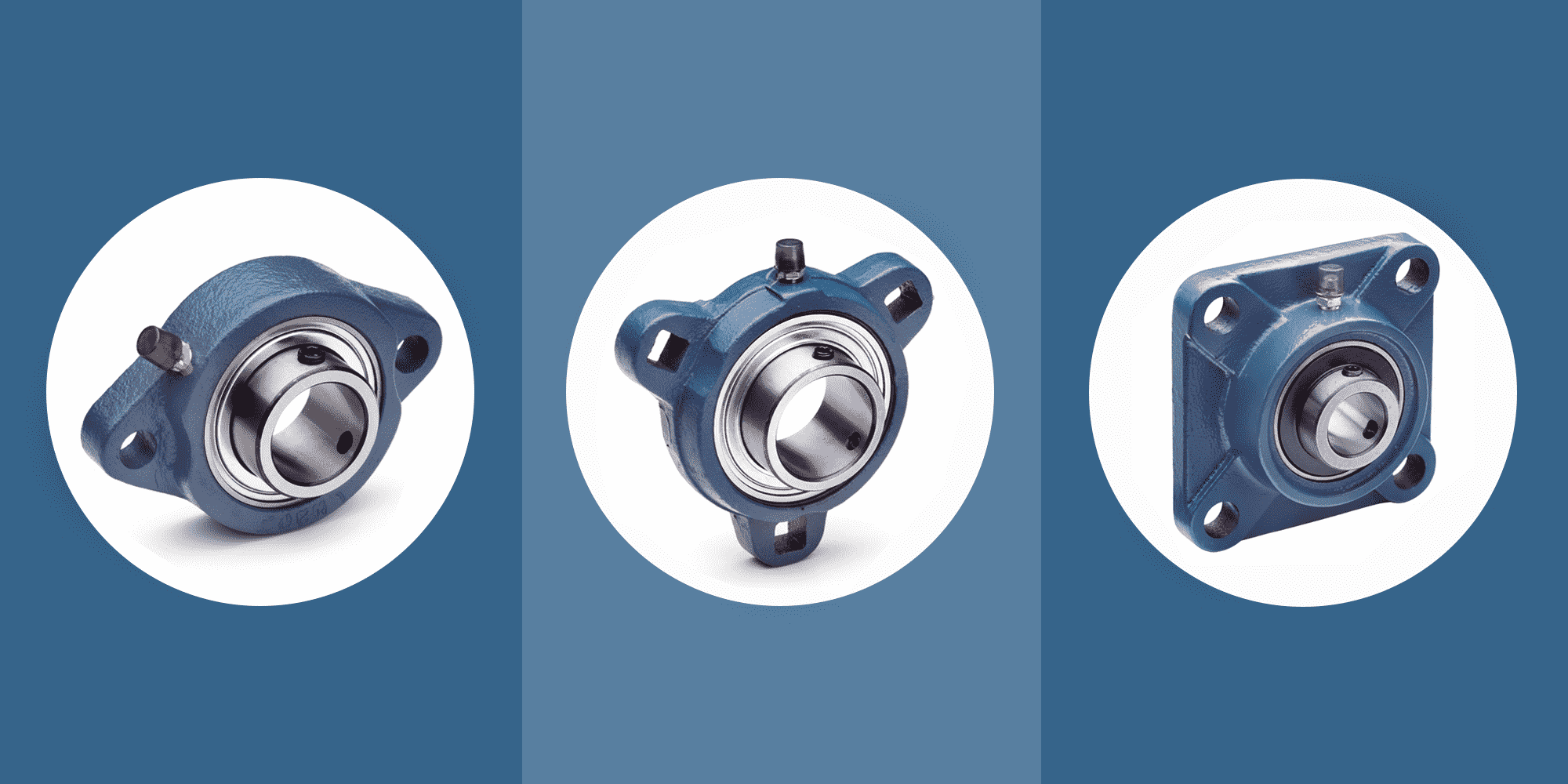
Understanding Housing Configurations: 2, 3, and 4-Bolt Units

The housing configuration is the foundation of your bearing's performance. Choosing the wrong bolt pattern can lead to premature failure.


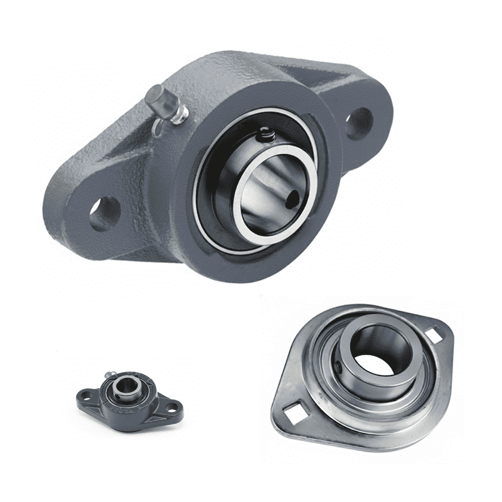
2-Bolt Flange Bearings (Oval/UCFL Series)

The UCFL series features a compact, diamond-shaped footprint ideal for narrow machinery frames.

  • Critical Risk: Avoid these units in high-vibration or heavy axial thrust applications.
  • Failure Mode: Under excessive moment loads, the typical failure is housing ear cracking or bolt loosening.

2-Bolt Flange Bearings

Field Failure Case Study

  • Application: Food processing conveyor belt
  • Configuration: UCFL204 (⌀20mm bore)
  • Operating Conditions:
  1. Radial load: 2.8 kN (within rating)
  2. Vibration: 8 Hz, 0.5mm amplitude
  • Runtime: 16 hours/day
  • Result: Housing ear crack detected at 2,200 hours (3 months)
  • Root Cause: Insufficient moment resistance under cyclic loading
  • Solution: Replaced with UCF20414,000+ hours, zero failures


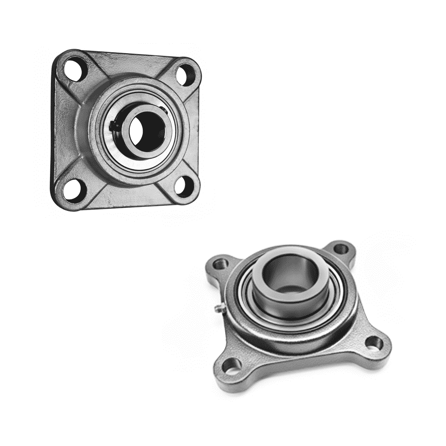
4-Bolt Flange Bearings (Square/UCF Series)

The UCF series is the industrial standard for maximum structural rigidity and vibration resistance.

  • Critical Risk: Base flatness is vital. A deviation of even 0.1mm can reduce bearing life by 30%, while 0.2mm slashes it by 55%.
  • Failure Mode: Improper mounting typically leads to outer ring distortion and premature fatigue.

4-Bolt Flange Bearings

Mounting Surface Deviation Study

  • Test Matrix: UCF208 under 6 kN radial load
  • Surface Flatness vs. Bearing Life:
  1. ≤0.05mm deviation: 22,000 hours (baseline)
  2. 0.10mm deviation: 15,400 hours (30% reduction)
  3. 0.20mm deviation: 9,800 hours (55% reduction)
  • Measured Impact: Each 0.1mm = 30% life loss (as stated in outline) - Validation Method: Strain gauge on outer ring, vibration analysis


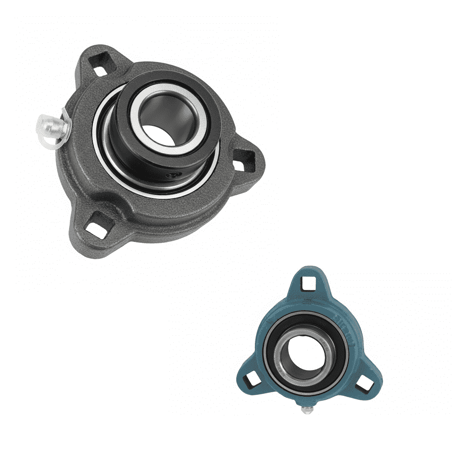
3-Bolt Flange Bearings (Bracket/Triangular Units)

These provides offset stability specifically for vertical plate mounting.

  • Orientation is Key: The "apex" of the bolt triangle must oppose the primary load vector.
  • Failure Mode: Misaligned triangle orientation causes uneven bolt load distribution, leading to premature fastener fatigue.

3-Bolt Flange Bearings

Misorientation Impact Analysis

  • Test Setup: UCFT206 under 3.5 kN radial load (vertical shaft)
  • Correct Orientation (apex opposing load):
  1. Bolt stress distribution: 40% / 30% / 30%
  2. L10 life: 18,000 hours
  • Incorrect Orientation (apex aligned with load):
  1. Bolt stress distribution: 65% / 17.5% / 17.5%
  2. L10 life: 6,500 hours (64% reduction)
  3. First bolt loosening: 4,200 hours
  • Quantified Risk: Wrong orientation = 2.8x faster failure rate


Comparative Selection Guide

Criteria

2-Bolt (UCFL)

3-Bolt (UCFT/Bracket)

4-Bolt (UCF)

Bore Size Range

12 - 50 mm

20 - 60 mm

25 - 100+ mm

Load Stability

Moderate

Good (Asymmetric)

Excellent

Moment Resistance

Low

Moderate

Highest

Typical Warning

Don't use for axial thrust.

Orientation dependent.

Must have flat base.


Engineering Quick Rule (Based on Field Data):

Loads >5kN or shock/vibration → 4-bolt (UCF series)

Space-critical + loads <3kN2-bolt (UCFL series)

Vertical mounting or asymmetric loads → 3-bolt (UCFT series)


Selecting the Right Insert: Balls vs. Rollers

Once the housing is determined, the internal bearing type must match your operational data.

Most flanged bearings use ball or roller inserts.

However, some specific low-speed applications sometimes use plain bearings—these reduce friction without rolling elements.


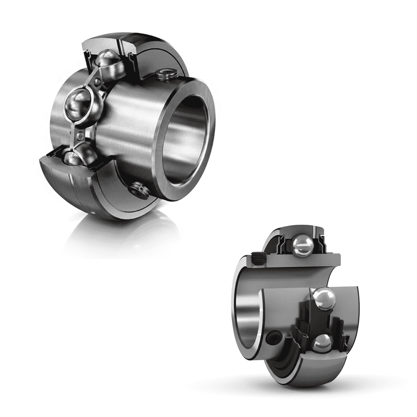
Ball Bearing Inserts (Precision)

Ball bearing inserts are best for high speeds. For example, a 40mm shaft at 3,000 RPM results in a d*n factor of 120,000, making ball bearings the primary choice.

Ball Bearing Inserts

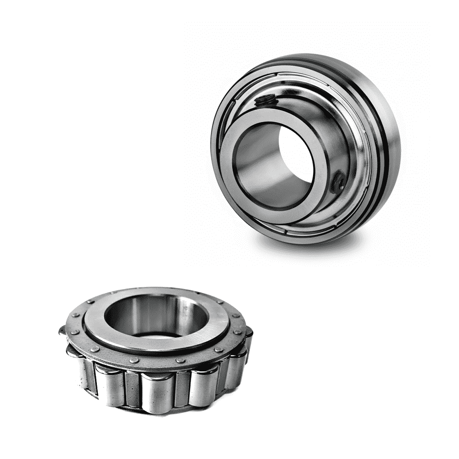
Roller Bearing Inserts (Heavy Duty)

Consider radial load index (Fr / C0r).

If radial load (Fr) is 5 KN and the bearing's static capacity (C0r) is 40 KN, the index is 0.125.

Since this exceeds 0.1, a transition to roller bearings is highly recommended.

Roller Bearing Inserts

Insert Locking Mechanisms

The shaft-to-insert connection determines whether your bearing stays put or develops fretting corrosion from micro-movement.

Three mechanisms dominate the market, each suited to specific conditions.


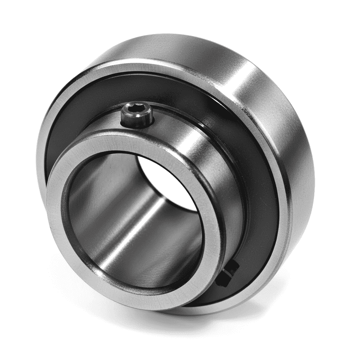
Set Screw

Quick installation for loads under 3KN, but creates an indentation on the shaft surface.

Acceptable for non-critical applications where shaft reuse isn't required.

Avoid in any vibration environment above 5 Hz—the screws will loosen.

Set Screw Locking-1

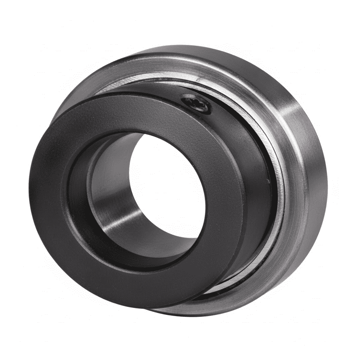
Eccentric Collar

The solution for vibration and reversing loads. The cam-action collar creates 360° shaft contact without surface damage.

Use this for any application with vibration exceeding 5 Hz, bi-directional rotation, or where shaft preservation matters.

Approximately 1.4x the cost of set screws, but eliminates the most common cause of premature bearing failure: shaft slip.


 Eccentric Collar Locking

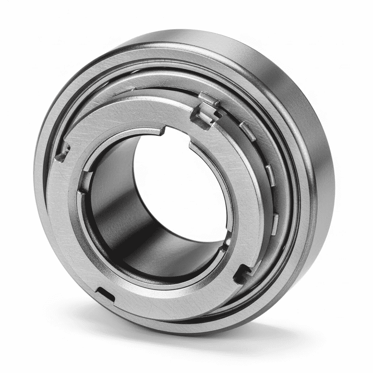
Concentric Locking (Collar/Clamp)

The gold standard for high-speed precision.

It uses a 360° squeeze mechanism to ensure the shaft center aligns perfectly with the bearing center.

This eliminates the eccentric imbalance of set screws, significantly reducing noise and vibration in high-RPM applications (e.g., HVAC fans).


Concentric Locking-1

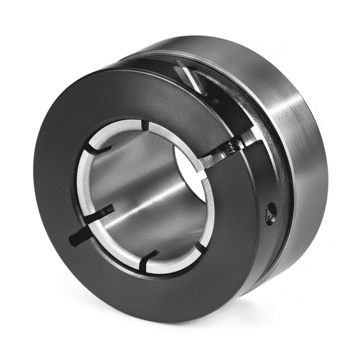
Adapter Sleeve

Heavy-duty applications exceeding 8 kN demand adapter sleeves.

The tapered design with hydraulic locknut provides the highest clamping force and allows tool-free removal.

Essential for shafts over 50mm diameter or facilities where maintenance frequency justifies the 3x cost premium over set screws.


Adapter Sleeve Locking

Selection checkpoint:

  • Light duty (<3kN, no vibration) → Set Screw
  • Any vibration (>5 Hz) or reversing → Eccentric Collar
  • High speed (High n) or low vibration requirements → Concentric Locking.
  • Heavy loads (>8kN) or frequent maintenance → Adapter Sleeve


Material Selection for Challenging Environments

Housing material determines service life in harsh environments.

The wrong material choice here doesn't just cause premature failure.

It can lead to contamination issues in food processing or catastrophic fractures in high-impact applications.


Housing Material Properties Comparison

Material

Temp Range

Corrosion Resistance

Impact Strength

Relative Cost

Cast Iron (GG-25)

-20 to 200°C

Poor (rust-prone)

Moderate

1.0x (baseline)

Ductile Iron (GGG-40)

-20 to 250°C

Poor

High (fracture-resistant)

1.3x

Stainless Steel (304)

-40 to 300°C

Excellent

High

3.5x

Thermoplastic (PPS)

-10 to 120°C

Excellent (chemical)

Low (creep risk)

2.5x


Critical Notes:

  • Thermoplastic: Monitor creep behavior under sustained loads exceeding 2KN. Not suitable for long-term static loading.
  • Ductile Iron: Preferred for shock loads in mining, aggregate processing, and demolition equipment because of 3x fracture toughness versus cast iron.


Application-Specific Selection Guide


Cast Iron (Standard Industrial)

  • Applications: Conveyors, pumps, fans, general machinery
  • Why it works: Cost-effective, adequate for dry/indoor environments
  • Limitations: Rusts in moisture, brittle under shock


Stainless Steel (Corrosive/Sanitary)

  • Applications: Food processing, marine, pharmaceutical
  • Mandatory when: FDA compliance, saltwater exposure, washdown zones
  • Trade-off: 3.5x cost but eliminates contamination risk


Thermoplastic (Chemical Resistance)

  • Applications: Chemical plants, wastewater treatment, plating lines
  • Mandatory when: PH <3 or >11, chlorine/acid contact
  • Critical Limit: <120°C and avoid continuous loads >60% of rating


Ductile Iron (High-Impact)

  • Applications: Mining crushers, rock screens, demolition equipment
  • Why it works: 3x fracture toughness vs. cast iron
  • Trade-off: 30% cost premium justified by reduced breakage


Material Selection Decision Tree

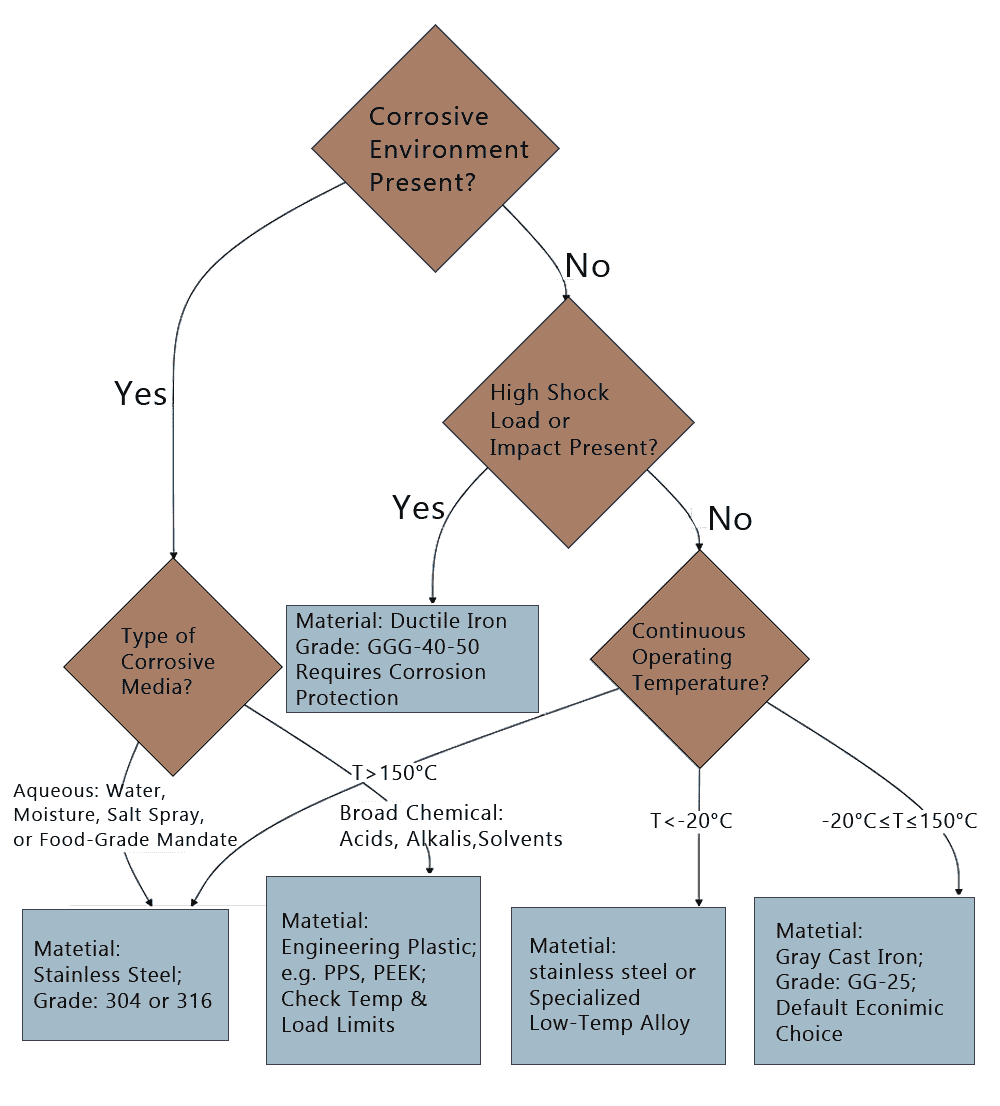
The following decision tree provides a systematic method for narrowing down material options based on the primary environmental and operational drivers. 

Use it as your first-step screening tool.

Material Selection Decision Tree


When You MUST Use Stainless Steel

  1. Regulatory Compliance: FDA, USDA, or 3A Sanitary Standards apply to your process. No exceptions, no alternatives.
  2. Contamination Risk: Direct food contact or pharmaceutical clean room environments where foreign material introduction causes product recalls.
  3. Corrosion Certainty: Marine environments with saltwater spray or caustic washdown protocols that guarantee moisture exposure.
  4. High Temperature + Moisture: Steam environments exceeding 150°C where thermal cycling combined with condensation creates aggressive corrosion conditions.


Cost Justification Example

Cast iron bearing housings in a marine conveyor application typically fail from corrosion within 18 months, requiring complete replacement.

Stainless steel units in the same environment deliver 7+ years of service.

Break-even occurs after 2.1 replacement cycles—by year 3, stainless steel has paid for itself and continues providing value.

Factor in labor costs and production downtime, and the payback period often shrinks to under 2 years.


Installation Best Practices

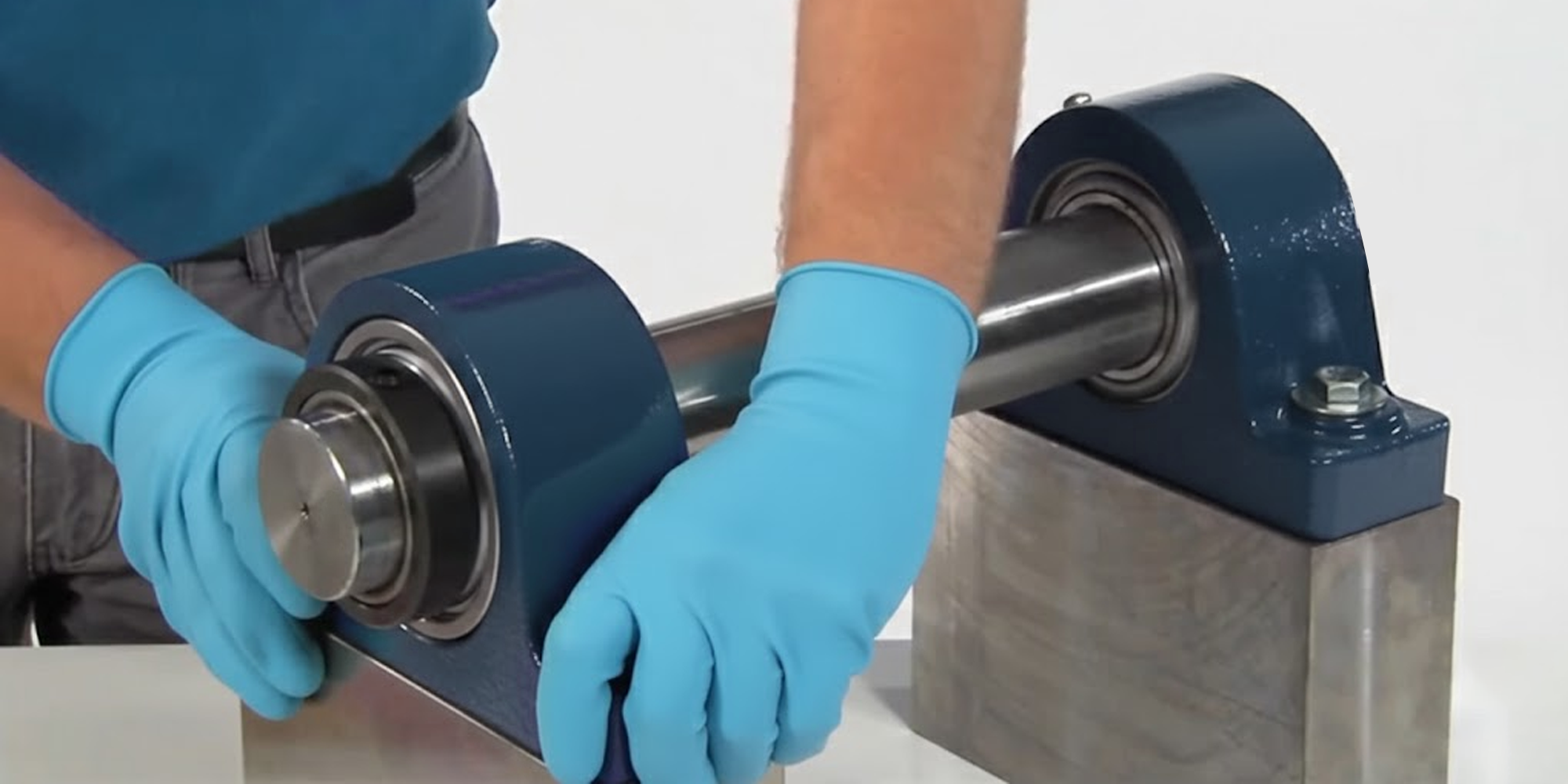
Proper installation determines whether your carefully specified flange bearing achieves its design life or fails prematurely.

The following checkpoints prevent 90% of installation-related failures.


Pre-Installation Verification


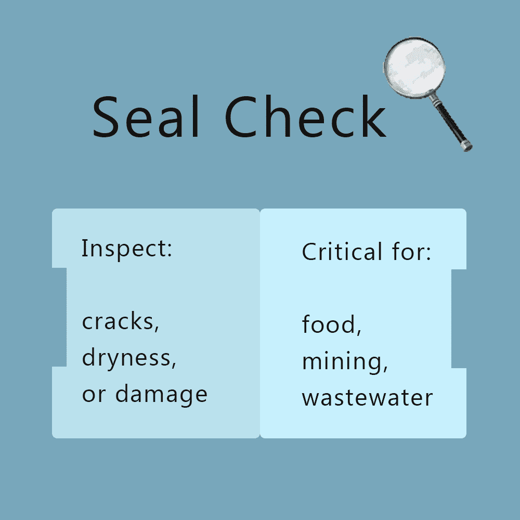
Sealing Integrity Check

Inspect all seals—rubber lips, labyrinth designs, or contact seals—for cracks, dryness, or damage before installation.

In contaminated environments (food processing, mining, wastewater treatment), the bearing seal is your primary defense against bearing failure.

A damaged seal that costs $5 to replace will destroy a $200 bearing if missed during inspection.

Sealing Integrity Check

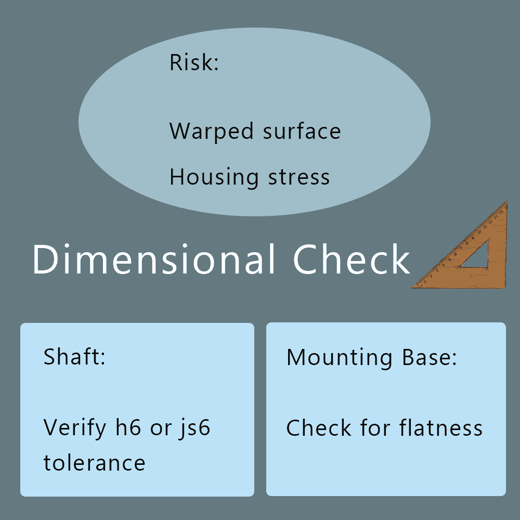
Dimensional Accuracy

Verify shaft tolerances match specifications (typically h6 or js6 tolerance grades).

Measure shaft diameter at multiple points and check surface planarity of the mounting base.

Out-of-tolerance shafts create interference problems, while warped mounting surfaces induce stress into the housing.

Dimensional Check

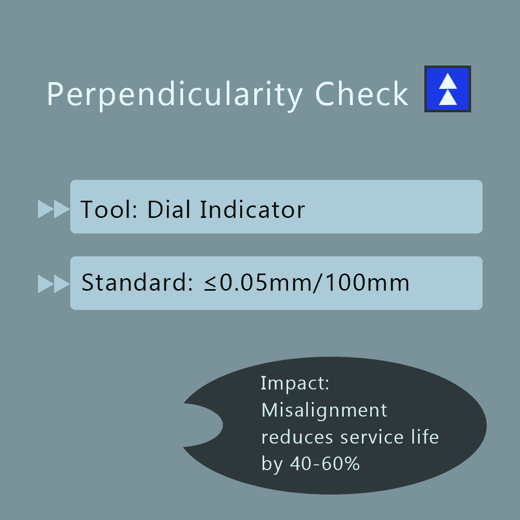
Perpendicularity

Use a dial indicator to validate shaft-to-surface verticality within 0.05mm per 100mm.

Angular misalignment creates edge loading that accelerates bearing wear and reduces service life by 40-60%.

Perpendicularity Check


The Torque-Tension Relationship

Implement the star pattern tightening sequence for all multi-bolt housings.

  1. Tighten bolts in criss-cross order to finger-tight
  2. Return to each bolt at 50% final torque
  3. Final pass at 100% torque

This sequence ensures even load distribution and prevents housing distortion.

Reference manufacturer torque tables for specific values—these vary significantly based on bolt size, housing material, and application.

Under-tightening allows movement and fretting; over-tightening cracks housings or distorts bearing rings.

Use a calibrated torque wrench, not an impact gun.


Predictive Maintenance Data Points

Transition from time-based to condition-based maintenance by monitoring two key parameters:


Vibration Analysis

Establish baseline vibration signatures during commissioning.

Schedule monitoring at regular intervals based on criticality—monthly for critical equipment, quarterly for standard applications.

Frequency spectrum changes indicate developing bearing defects before catastrophic failure.


Temperature Monitoring

Bearing temperatures exceeding 20°C above ambient indicate lubrication issues, contamination, or developing faults.

Thermal imaging during operation identifies hot bearings that require investigation.

These monitoring approaches catch problems early when a $200 bearing replacement prevents a $20,000 equipment failure.


Conclusion

Proper flange bearing selection prevents the specification errors that cause 90% of premature failures.

The L.E.S.C. framework—Load, Environment, Space, Cost—provides a systematic approach to matching configurations to actual operating conditions.

Match the configuration to your environment, verify mounting surfaces, and document your installation procedures.

Need help selecting the right bearing? Contact LILY Bearing's technical team for recommendations.

Or browse our complete mounted bearing catalog to find solutions for your equipment.


Mounted Bearings: Types, Advantages, and Uses

Mounted Bearings: Types, Advantages, and Uses

In the world of machinery, mounted bearings play a pivotal role. They are integral to the smooth operation of various equipment across industries. ...
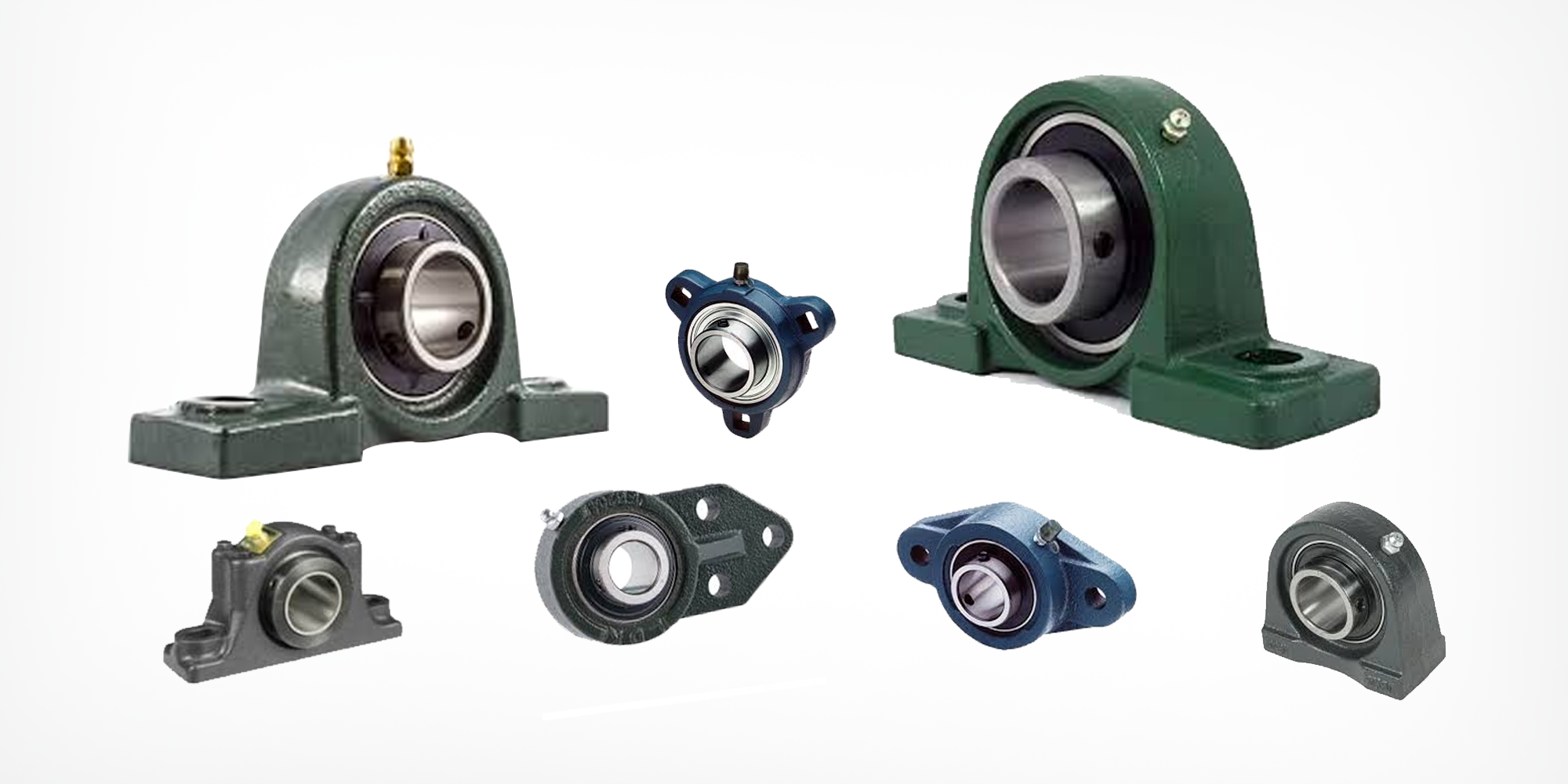
Read More
What Are Mounted Bearings Used For?

What Are Mounted Bearings Used For?

Mounted bearings play a crucial role in various machinery and equipment. These versatile components support a rotating shaft and are essential for a...

Read More
How to Install Mounted Bearings to h7 Standards (4-Phase Guide)

How to Install Mounted Bearings to h7 Standards (4-Phase Guide)

In the industrial world, an unplanned shutdown is a maintenance manager’s worst nightmare. Consider this: Install a $50 mounted bearing with just ...

Read More