


Home/
Blog/
Mounted Bearing Insert Designs: Key Types, Locking Methods, and Selection Considerations

6 min read

Mounted Bearing Insert Designs: Key Types, Locking Methods, and Selection Considerations

Mounted Bearing Insert Designs: Key Types, Locking Methods, and Selection Considerations
12:13

In mechanical power transmission, a rotating shaft's efficiency depends on the bearing that supports it. Standard radial bearings are common.

However, mounted bearing inserts, or wide inner ring bearings, are the heavy lifters in industry. Large conveyor systems in mining and fast bottling lines in food processing use these parts. They connect moving pieces to fixed structures.

Choosing the right bearing insert is not merely a matter of matching a shaft diameter. It involves a deep dive into locking geometries, sealing technology, and metallurgy. This guide provides an


What Is a Bearing Insert?

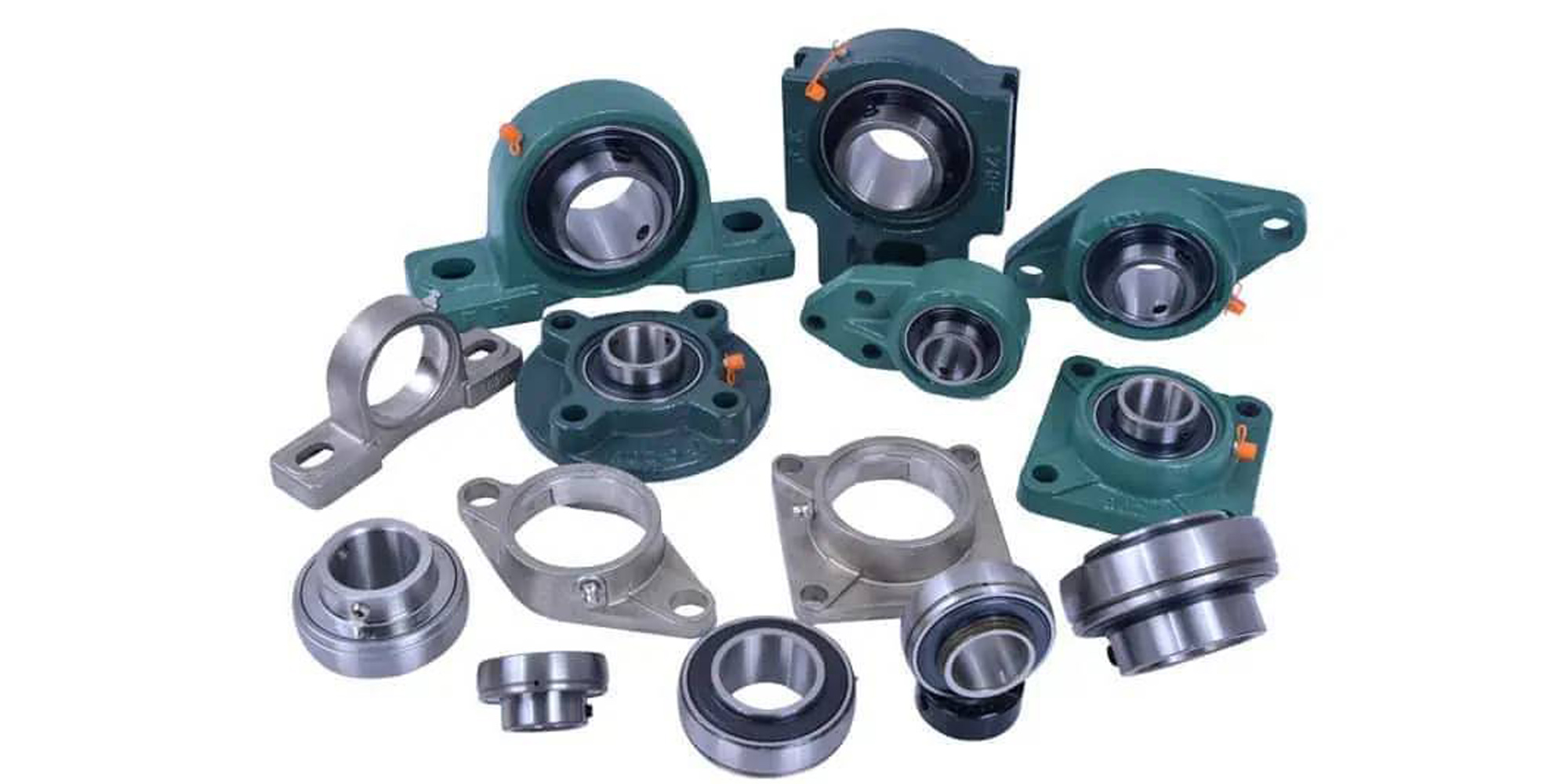
Bearing inserts are the functional core of mounted bearing units.

The housing gives support and stability. The insert controls how the bearing works with the shaft. It also helps with misalignment and performs well under load and speed.

Understanding bearing insert designs is important. It helps you choose the right mounted bearing. This choice affects reliability, service life, and maintenance ease.


Bearing Inserts


The Description of Bearing Insert

A bearing insert is a rolling bearing—typically a deep groove ball bearing—with a spherical outer diameter.

This spherical geometry allows the insert to self-align within the housing, compensating for minor shaft or mounting misalignment.

Bearing inserts are commonly used in pillow block, flange, take-up, and hanger bearing units across industrial applications.


The Construction of Bearing Insert

The Core Components

The assembly consists of four primary structural elements designed to work within a housing:

  • Spherical Outer Ring: The outer diameter (OD) is convex (spherical). When put into a matching concave housing, this forms a "ball-and-socket" joint. This joint lets the bearing tilt and self-align. It helps adjust for shafts that are not perfectly straight.
  • Extended Inner Ring: Unlike standard bearings, the inner ring is wider than the outer ring. This creates a bigger contact area with the shaft. It stops it from "rocking" and allows room for the locking mechanism.
  • Rolling Elements & Cage: It typically uses a single row of high-grade chrome steel balls held by a synthetic or steel cage. This design lets it manage both radial loads (weight pushing down) and moderate axial loads (side-to-side force).
  • Anti-Rotation Pin: Many inserts have a small pin or notch on the outer ring. This fits into a slot in the housing to prevent the outer ring from spinning within the housing, which would cause heat and wear.


Advanced Sealing Systems

Because these bearings are often used in "dirty" environments (farms, mines, food plants), their construction includes heavy-duty protection:

  • The Seal: A rubber lip seal, usually made of NBR, fits into the outer ring. It rubs against the inner ring to keep grease inside.
  • The Flinger (Slinger): A metal shield attached to the inner ring that rotates with the shaft. It uses centrifugal force to literally "fling" dirt, water, and debris away from the rubber seal.
  • Triple-Lip Seals: In tough conditions, some inserts have three rubber lips. This design helps keep out contaminants.


Primary Types of Bearing Insert Designs

Bearing inserts are categorized by their outer ring shape and their load capacity.

Spherical (Spheroid) Outer Ring

This is the industry standard for "Y-bearings" or "Pillow Block Bearings." The curvature of the outer ring matches the concave bore of the housing.

  • Benefit: Self-alignment. It can accommodate 1° to 5° of misalignment.
  • Use Case: Agricultural machinery and general industrial conveyors.


MountedUnits-SentinelSeries-1


Cylindrical Outer Ring

These inserts have a flat outer surface. They do not allow for self-alignment and must be installed into precision-machined bores.

  • Benefit: Extremely high radial stability.
  • Use Case: Precision gearboxes and high-accuracy spindles.


Cylindrical Outer Ring


Heavy-Duty vs. Standard Duty

  • 200 Series: The standard choice for most industrial applications.
  • 300 Series: Features larger balls and thicker rings for extreme shock loads and higher radial forces.


Internal Clearance and Self-Alignment

Mounted bearing inserts are designed with greater internal radial clearance than standard ball bearings. This compensates for:

  • Shaft misalignment
  • Housing distortion
  • Thermal expansion

The spherical outer diameter allows the insert to self-align within the housing, typically up to ±2 degrees. This feature significantly reduces edge loading and extends bearing life.


Mounted Bearing Insert Locking Methods

H3: Set Screw (Grub Screw) Locking

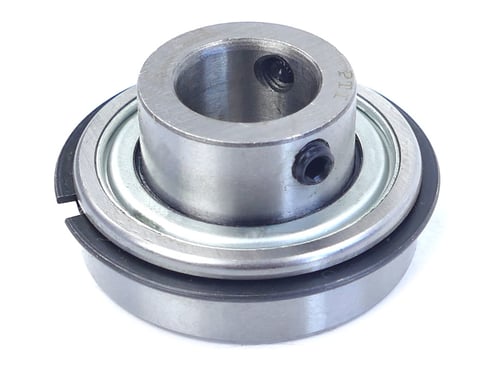
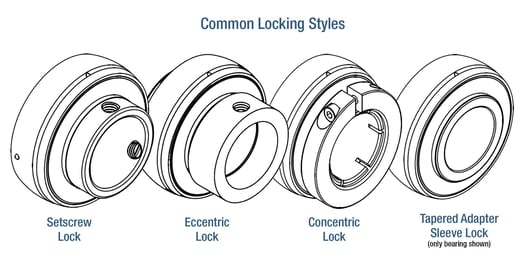
This is the most common and cost-effective method. The inner ring of the bearing has two holes. These holes are usually 90° to 120° apart. Hardened screws are tightened through these holes until they grip the shaft.

  • Pros: Easy to install; works for both forward and reverse rotation.
  • Cons: Can damage the shaft (scarring); slightly pushes the shaft off-center, which can cause vibration at high speeds.
  • Best For: General-purpose, low-to-medium speed applications.


Eccentric Locking Collar

This method uses a "cam" action. The inner ring of the bearing has an offset extension. A separate collar with a matching offset fits over it.

You turn the collar in the same direction as the shaft rotates. This will press it tightly against the shaft. Then, secure it with a small set screw.

  • Pros: Greater holding power than standard set screws;Reliable over time as it "self-tightens."
  • Cons: Uni-directional only—if the shaft reverses, the collar can unlock; still slightly off-center.
  • Best For: Agricultural machinery and conveyors where the shaft always spins in one direction.


Concentric (Clamp) Collar

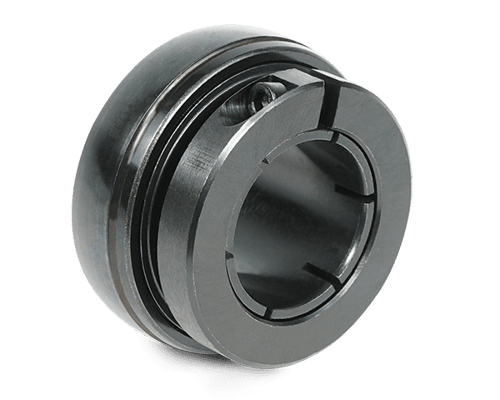
Often marketed under names like Accu-Loc or Skwezloc, this design uses a "C-clamp" style collar. The inner ring of the bearing is slotted (split) into several "fingers." When the collar's bolt is tightened, it evenly squeezes these fingers around the whole 360° circle of the shaft.

  • Pros: Keeps the shaft perfectly centered (concentric); minimizes vibration; does not damage the shaft.
  • Cons: More expensive than set screws.
  • Best For: High-speed fans, air handling units (HVAC), and precision equipment.


Tapered Adapter Sleeve

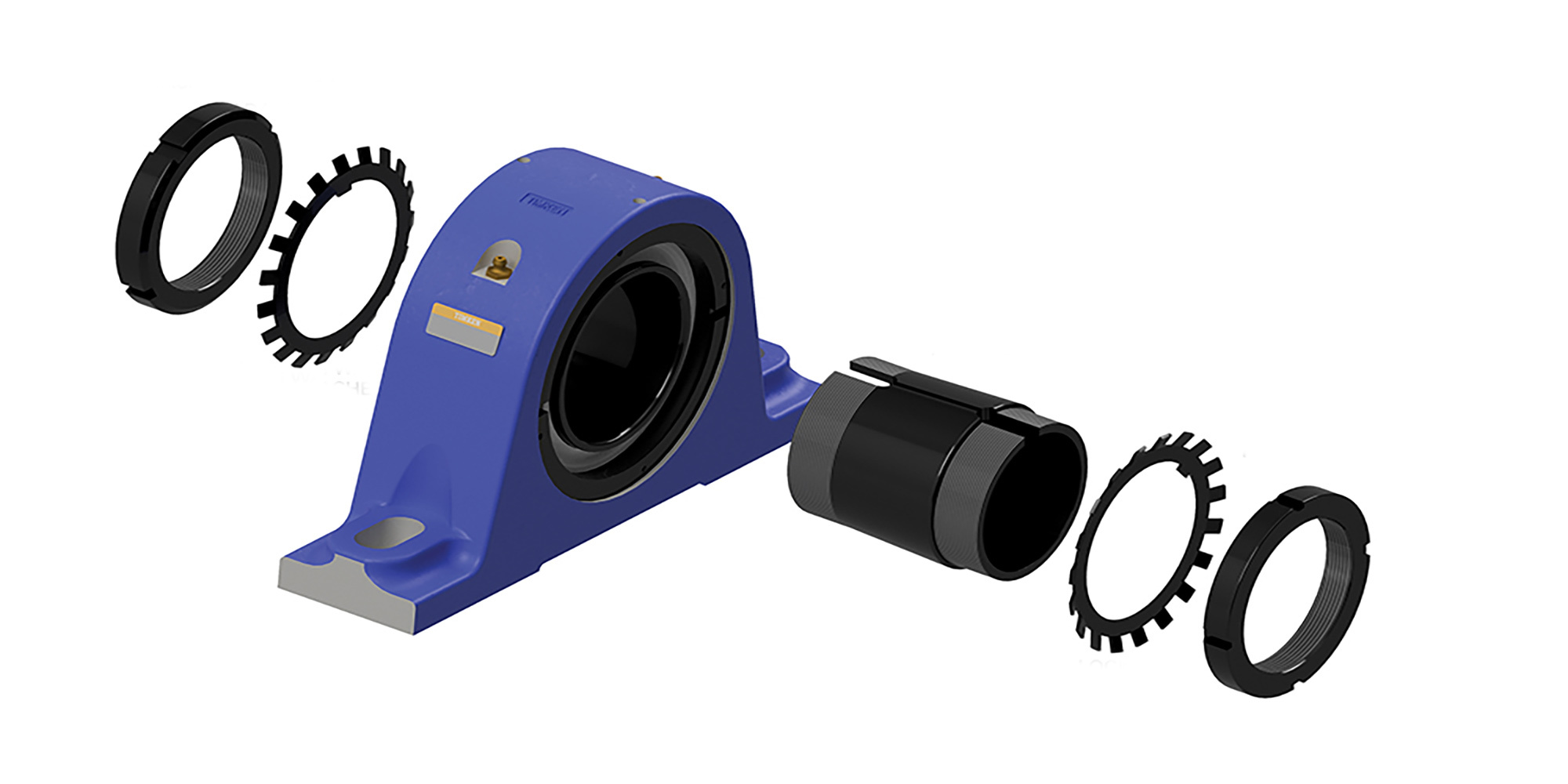
This is the "heavy-duty" option. The bearing has a tapered bore (it gets narrower at one end). A split, tapered sleeve is inserted between the shaft and the bearing. As a large nut is tightened on the sleeve, it pulls the bearing up the taper, creating a massive amount of clamping force.

  • Pros: Highest holding power; handles extreme vibration and shock; accommodates slightly undersized shafts.
  • Cons: It is hard to install. You need a torque wrench or a good sense of touch. This helps to avoid over-tightening the bearing, which can crush the internal clearances.
  • Best For: Mining, heavy rock crushers, and large industrial blowers.


Mounted Bearing Insert Locking Methods


Selection Considerations: The Technical Checklist

When specifying a bearing insert, engineers must look beyond the dimensions. Consider these variables:


Load Dynamics

Calculate the Basic Dynamic Load Rating for bearings in motion. Also, find the Static Load Rating for bearings that may sit still under weight.

Note: If the load exceeds 10% of the dynamic rating, bearing life drops exponentially.


Rotational Speed (RPM Limit)

Speed limits vary by locking method.

  • Set Screw: Moderate speeds.
  • Adapter Sleeve: Highest speeds because ofbalanced weight distribution.


Environmental Sealing

  • Standard Shrouded Seals: For dry, dusty conditions.
  • Triple-Lip Seals: Essential for "washdown" areas (food/beverage) or agricultural mud.
  • Labyrinth Seals: For high-speed applications where friction-generated heat must be minimized.


Metallurgy and Corrosion Resistance

  • Chrome Steel: Standard industrial use.
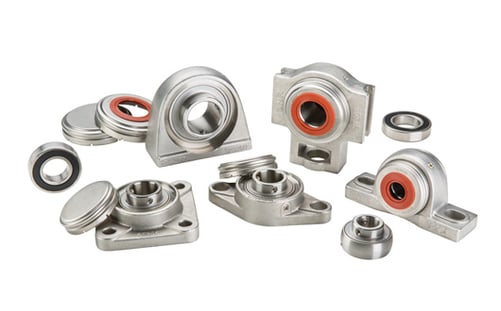
  • Stainless Steel (440C): For food safety and chemical exposure.
  • Zinc/Nickel Plating: A cost-effective alternative to stainless steel for humid environments.


Lubrication Strategy

  • Relubricatable: Feature a grease groove and holes. Ideal for dirty environments where fresh grease "flushes" out contaminants.
  • Maintenance-Free: Sealed for life. Ideal for inaccessible locations or clean-room environments.


Comparison of Locking Mechanisms

Feature

Set Screw

Eccentric Collar

Adapter Sleeve

Ease of Install

Excellent

Good

Moderate

Vibration Level

Moderate

Moderate

Extremely Low

Shaft Damage

High

Moderate

None

Reversing Loads

Fair

No

Excellent

High Speed

Fair

Fair

Excellent


Common Failure Modes and How Proper Design Prevents Them

Improper bearing insert selection can lead to:

  • Shaft fretting and scoring
  • Lubricant leakage
  • Overheating because ofexcessive friction
  • Premature fatigue failure

Matching insert design to application conditions is the most effective way to prevent these issues.


Maintenance and Failure Analysis

Even the best-selected bearing will fail if improperly maintained. Watch for these "Red Flags":

  • Heat: A bearing that is more than 50°C (122°F) hotter than the surrounding temperature may have issues. This often indicates over-lubrication or misalignment.
  • Noise: High-pitched screeching usually points to a lack of lubricant, while "growling" indicates raceway damage (spalling).
  • Fretting: Rusty powder appearing at the shaft/inner-ring interface means the locking mechanism has loosened.


Frequently Asked Questions About Mounted Bearing Inserts


Q1: How is a bearing insert different from a standard ball bearing?

Bearing inserts are different from standard ball bearings. They are not press-fit into tight housings. Instead, they are made for easy installation on shafts that have looser tolerances.

Bearing inserts have built-in sealing systems and shaft-locking mechanisms. This makes them perfect for mounted bearing units in industrial settings.


Q2: Which locking method is best for high-vibration applications?

For high-vibration or shock-load applications, eccentric locking collar inserts or concentric locking bearing inserts are generally preferred. These designs offer a stronger and more even grip on the shaft than set screw locking methods. This reduces the chance of axial movement and loosening.


Q3: Are set screw bearing inserts bad for shafts?

Set screw bearing inserts are not bad by themselves. However, they can harm the shaft in certain situations. This is especially true in high-load or reversing applications. For important shafts or fast systems, other locking methods like concentric or tapered bore designs may work better.


Q4: What is the advantage of a spherical outer ring on a bearing insert?

The round outer diameter lets the bearing insert align itself in the housing. It can usually handle up to ±2 degrees of misalignment. This feature helps compensate for shaft deflection, installation errors, and housing distortion, reducing edge loading and extending bearing life.


Q5: Can bearing inserts handle axial loads?

Bearing inserts are mainly made for radial loads. However, they can handle some axial loads based on their design and housing setup. For applications with significant thrust loads, additional axial support or specialized bearing arrangements may be required.


Q6: Are bearing inserts interchangeable between different housings?

In many cases, bearing inserts can fit into housings of the same size and standard. However, differences in outer ring shape, locking method, or seal design may affect compatibility. Always verify dimensional standards and application requirements before substitution.


Q7: When should a tapered bore bearing insert be used?

Tapered bore bearing inserts are best suited for applications requiring high concentricity, strong shaft grip, and reduced shaft stress. They are commonly used in high-load or higher-speed industrial equipment where precise shaft alignment is critical.


Summary

Are you experiencing premature bearing failure in your facility? I can help you analyze your current load data and environmental factors to suggest a more robust insert design.

Please contact Lily Bearing.

Mounted Bearing Selection Process: A Step-by-Step Guide

Mounted Bearing Selection Process: A Step-by-Step Guide

When you choose mounted bearing solutions for your application, your main goal is to ensure good performance and reliability. You also want to keep...
Read More
How to Install a Mounted Bearing Units: The Ultimate Professional Guide

How to Install a Mounted Bearing Units: The Ultimate Professional Guide

Mounted bearing—often referred to as pillow blocks or flange units—are the unsung heroes of the industrial world. They support rotating shafts,...

Read More
Mounted Flange Bearing Selection: 2, 3, 4-Bolt Types Compared

Mounted Flange Bearing Selection: 2, 3, 4-Bolt Types Compared

Choosing the right mounted flange bearing is more than just matching a shaft diameter. It protects your entire power transmission system from...

Read More