


Home/
Blog/
Full VS Hybrid Ceramic Bearings

6 min read

Full VS Hybrid Ceramic Bearings

Full VS Hybrid Ceramic Bearings
9:58

Overview: Whether you're sourcing bearings for CNC spindles, electric motors, aerospace actuators, or medical devices, the choice between full ceramic and hybrid ceramic bearings profoundly impacts performance, reliability, and total cost of ownership. This guide breaks down every variable so you can make the right call.


Ceramic bearings have surged in adoption over the past decade, driven by the demand for higher speeds, longer service life, and operation in extreme environments where conventional steel bearings simply fail. Yet "ceramic bearing" is not a monolithic category — the distinction between full ceramic and hybrid ceramic construction leads to dramatically different performance profiles and application fits.

In this comprehensive guide, we examine the engineering differences, material science, performance data, cost considerations, and application guidelines that separate these two technologies — giving you the framework to specify with confidence.


What Are Ceramic Bearings?

Ceramic bearings use ceramic material — most commonly Silicon Nitride (Si₃N₄), Silicon Carbide (SiC), or Zirconia (ZrO₂) — in some or all of their rolling components. Their defining advantages over steel bearings include significantly lower density, extreme hardness, non-conductivity, corrosion immunity, and the ability to run with minimal or no lubrication.

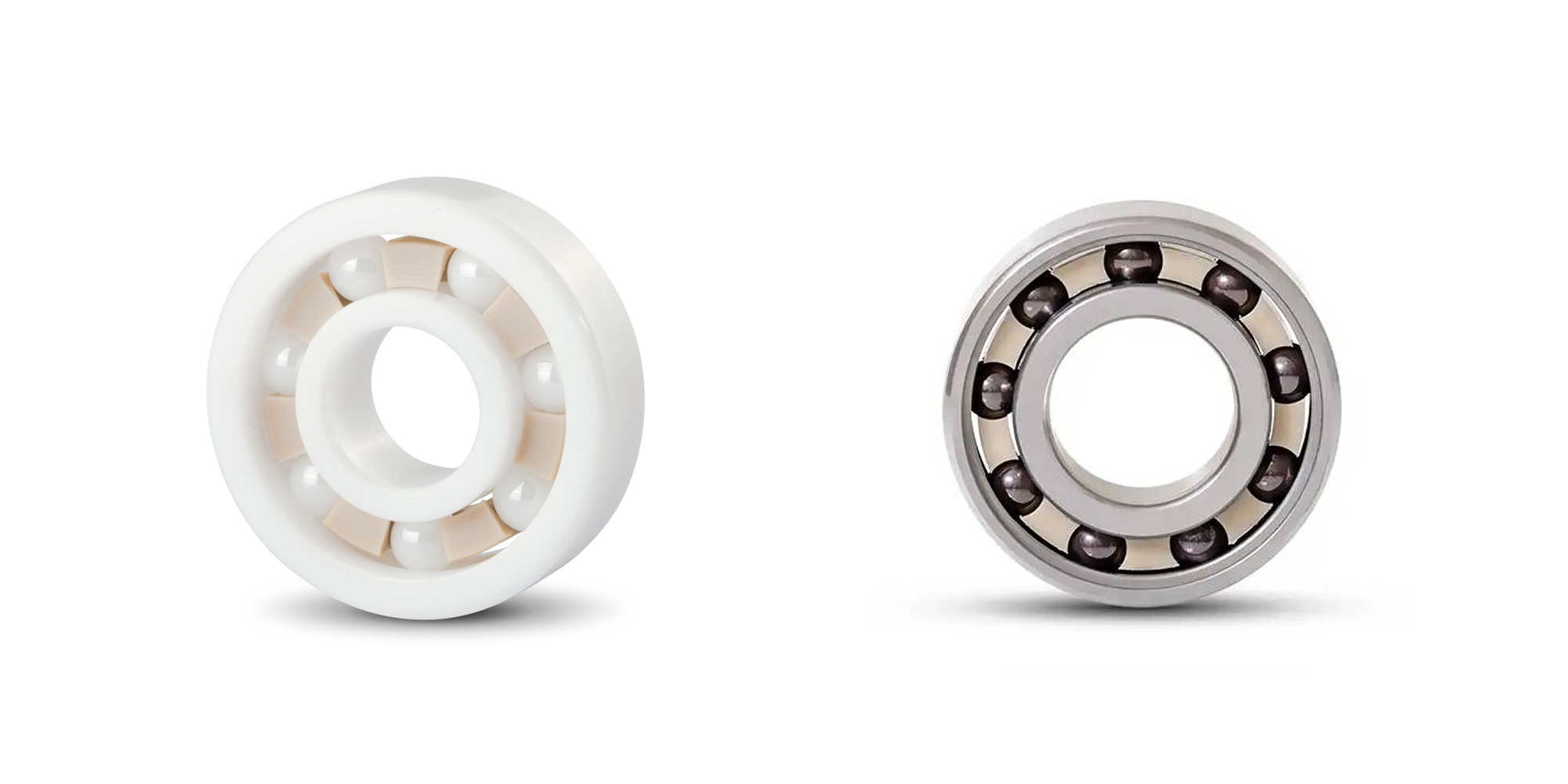
Full Ceramic Bearings

All components — inner ring, outer ring, rolling elements, and cage — are made entirely from ceramic material. Zero metallic parts.

Hybrid Ceramic Bearings

Ceramic rolling elements (Si₃N₄ balls) combined with steel rings (chrome or stainless). Best-of-both design at a fraction of full ceramic cost.


The terminology matters. When a manufacturer lists a "ceramic bearing," always confirm whether it is full or hybrid — the two serve very different markets and have radically different price points and performance envelopes.


Construction & Material Differences


Silicon Nitride (Si₃N₄) — The Dominant Ceramic

Silicon Nitride is the gold standard for bearing ceramic elements. Its combination of high fracture toughness, low thermal expansion, and excellent surface finish capability makes it ideal for rolling contact applications. Compared to steel, Si₃N₄ balls are 60% less dense, 50% harder, and offer superior fatigue resistance under high-speed cyclic loading.

Full Ceramic Construction

In a full ceramic bearing, both rings and balls are ceramic — often Si₃N₄ or Al₂O₃ (alumina). The cage is typically PTFE, PEEK, or ceramic itself. This construction achieves near-total electrical insulation, chemical inertness across almost all media, and the ability to operate dry or in highly corrosive environments. The tradeoff is brittleness under shock loads and significantly higher manufacturing costs.


Hybrid Ceramic Construction

Hybrid bearings retain proven steel ring geometry — giving them the macro-dimensional stability and shock tolerance engineers trust from decades of steel bearing design — while substituting ceramic balls for the rolling elements. Since balls constitute the contact stress concentration in a bearing, this substitution captures most of the ceramic performance benefits (speed, wear, temperature) at a fraction of the full ceramic cost.

Key Insight: In rolling element bearings, approximately 70–80% of the performance-limiting phenomena (heat generation, centrifugal force, raceway fatigue) are driven by ball properties — not ring material. This is why hybrid bearings deliver such compelling performance-to-cost ratios.


Performance Comparison

Speed (DN Value)

The DN value (bore diameter in mm × rotational speed in RPM) is the standard metric for bearing speed capability. Full ceramic bearings achieve higher theoretical DN values due to lower mass and self-lubrication, but hybrid ceramics — with superior ring dimensional stability — consistently demonstrate higher practical operating speeds in precision spindle applications. Hybrid ceramic angular contact bearings routinely operate at DN values exceeding 2.0 million in machine tool spindles.

Temperature Resistance

Full ceramic bearings can operate at temperatures up to 800°C (1,470°F), making them unique for extreme thermal applications. Hybrid bearings are constrained by the steel rings, typically rated to 150–200°C continuous, though special stainless grades extend this to ~300°C. For most industrial applications, hybrid bearing temperature limits are not a limiting factor.

Corrosion & Chemical Resistance

Full ceramic bearings win decisively here. Ceramic is chemically inert to virtually all acids, alkalis, and solvents. Hybrid bearings with standard chrome steel rings are unsuitable for highly corrosive media, though stainless steel ring variants close this gap considerably for moderate chemical environments.

Electrical Insulation

Full ceramic bearings are 100% non-conductive — critical for preventing bearing damage from stray electrical currents in electric motors and generators. Hybrid bearings offer partial insulation due to ceramic balls interrupting the conductive path, but are not fully insulating since the steel rings still conduct. For complete insulation, full ceramic or coated hybrid variants are required.


Full Specifications Comparison Table

Table 1 — Full Ceramic vs Hybrid Ceramic: Complete Specification Comparison

Property

Full Ceramic Bearing

Hybrid Ceramic Bearing

Advantage

Rolling Elements

Ceramic (Si₃N₄, Al₂O₃)

Ceramic (Si₃N₄)

Rings

Ceramic

Steel (chrome or stainless)

Density

2.4–3.2 g/cm³

3.4–5.2 g/cm³ (blended)

Full Ceramic

Max Operating Temp.

Up to 800°C (1,470°F)

150–300°C (302–572°F)

Full Ceramic

Corrosion Resistance

Excellent (full inertness)

Good (stainless) / Moderate (chrome)

Full Ceramic

Electrical Insulation

100% non-conductive

Partial (balls only)

Full Ceramic

Practical Speed (DN)

High (~1.5M DN)

Very High (~2.0M+ DN)

Hybrid Ceramic

Load Capacity

Lower (brittle rings)

High (steel rings)

Hybrid Ceramic

Shock Load Tolerance

Low (brittle fracture risk)

High

Hybrid Ceramic

Lubrication Requirement

Can run dry

Minimal lube required

Full Ceramic

Friction Coefficient

Very Low

Low

Full Ceramic

Service Life

Very Long (in suitable env.)

Very Long

Comparable

Relative Cost

$$$$ (Very High)

$$–$$$ (Moderate–High)

Hybrid Ceramic

Availability

Limited (specialized)

Widely Available

Hybrid Ceramic

Magnetic Properties

Non-magnetic

Balls non-magnetic; rings may be

Full Ceramic


Table 2 — Material Properties: Si₃N₄ Ceramic vs Bearing Steel (52100)

Property

Si₃N₄ Ceramic

52100 Chrome Steel

Unit

Density

3.2

7.8

g/cm³

Hardness (Vickers)

1,400–1,700

700–800

HV

Elastic Modulus

310

210

GPa

Thermal Expansion

3.2

12.0

×10⁻⁶/°C

Thermal Conductivity

30

46

W/(m·K)

Electrical Resistivity

>10¹⁴

~0.2

Ω·cm

Max Service Temp.

1,000+

~150–200

°C

Corrosion Resistance

Excellent

Poor (without coating)


Pros & Cons of Each Type


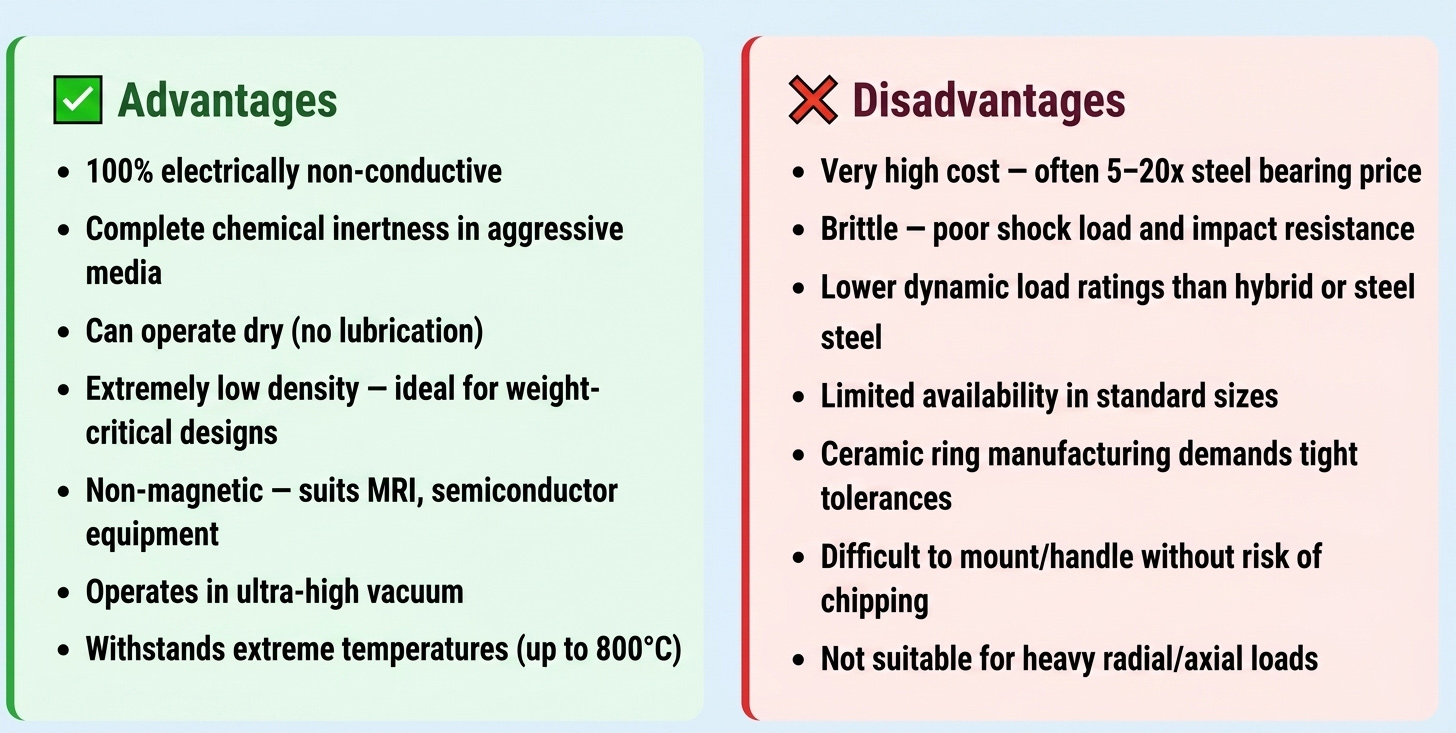
Full Ceramic Bearings

Pros & Cons of Full Ceramic Bearings


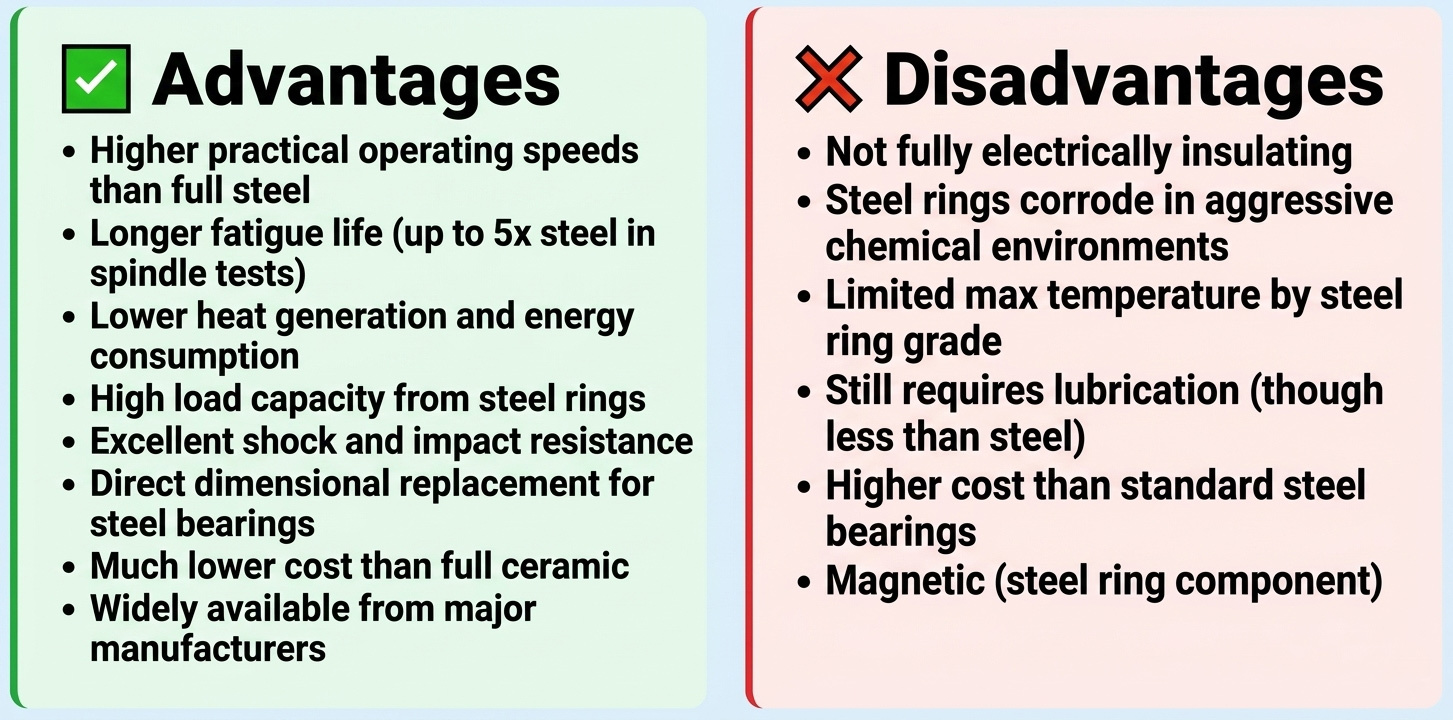
Hybrid Ceramic Bearings

Pros & Cons of Hybrid Ceramic Bearings


Application Guide by Industry

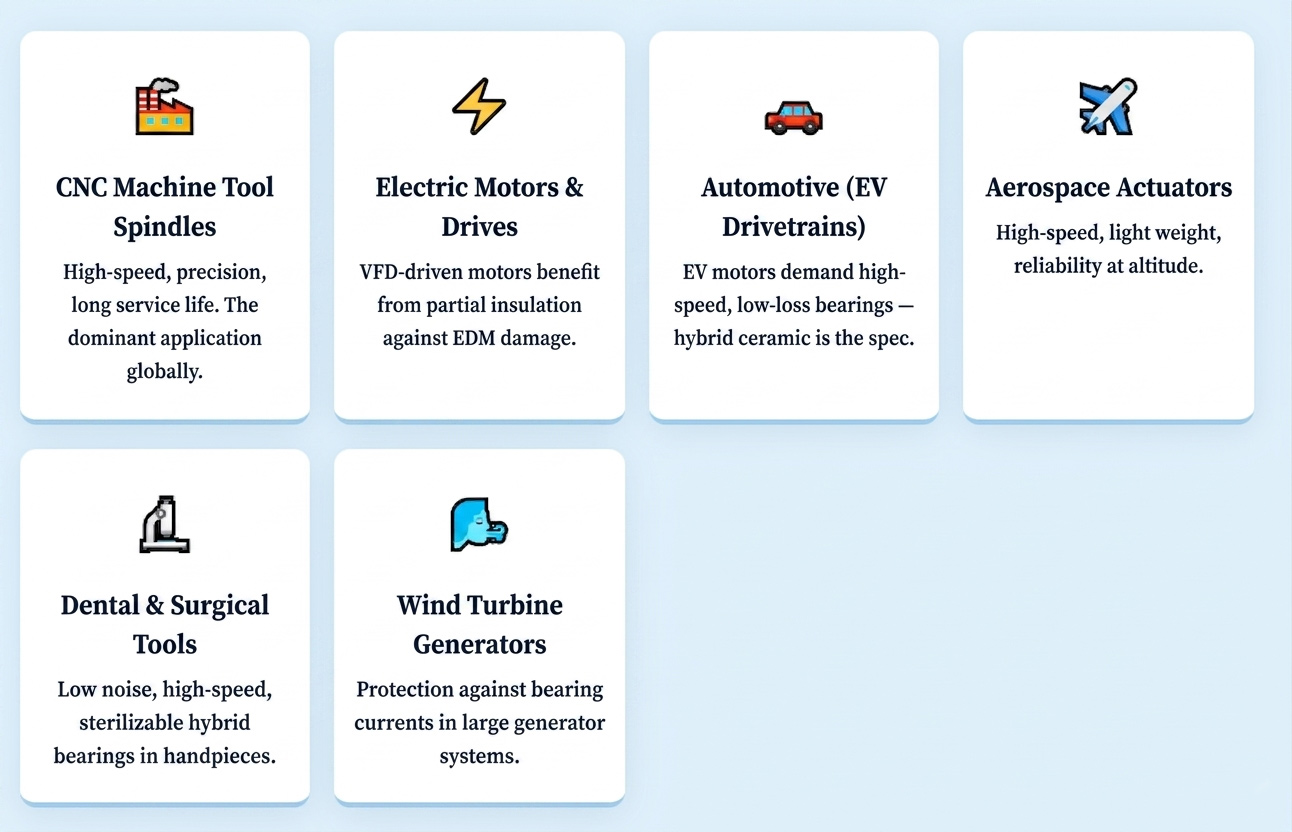
Matching bearing type to application environment is critical. Here's how these two technologies map across key industries:


Where Hybrid Ceramic Bearings Excel

Where Hybrid Ceramic Bearings Excel


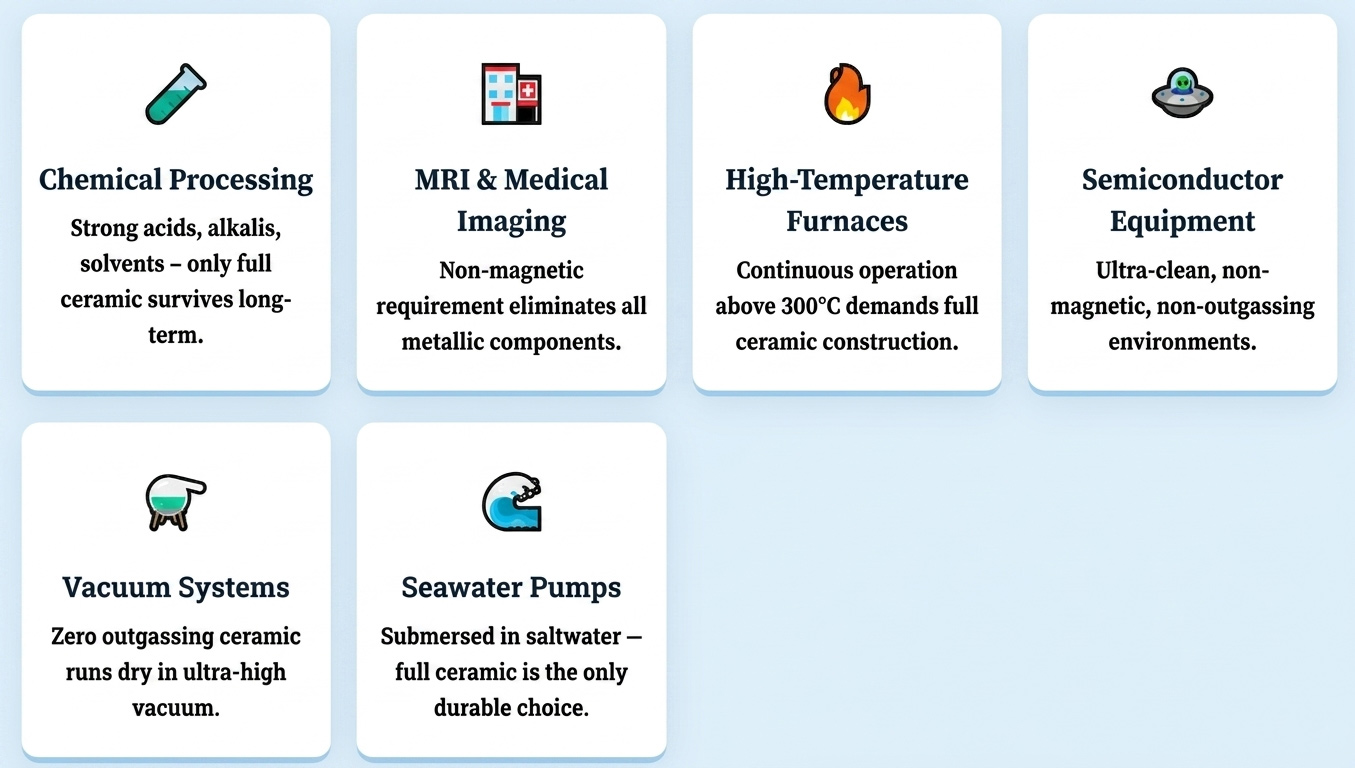
Where Full Ceramic Bearings Are Required

Where Full Ceramic Bearings Are Required


Table 3 — Application Decision Matrix

Application Requirement

Recommended Type

Reason

High-speed precision spindle (>30,000 RPM)

Hybrid Ceramic

Superior DN value, load capacity, availability

Fully submerged in acid/alkali

Full Ceramic

Steel rings would corrode rapidly

Electric motor with VFD drive

Hybrid Ceramic

Interrupts ball-to-raceway current path

MRI or NMR equipment

Full Ceramic

Absolute non-magnetic requirement

Continuous duty >300°C

Full Ceramic

Steel ring temperature limit exceeded

CNC machining center

Hybrid Ceramic

Best balance of speed, life, cost

Budget-conscious upgrade from steel

Hybrid Ceramic

Direct replacement, 2–5× life improvement

Dry running (no lubrication possible)

Full Ceramic

Self-lubricating ceramic-on-ceramic

High shock loads

Hybrid Ceramic

Steel rings absorb shock; ceramic would crack

Seawater pump (submerged)

Full Ceramic

Complete saltwater corrosion resistance

Semiconductor cleanroom equipment

Full Ceramic

Non-magnetic, zero contamination, dry-run

Wind turbine generator bearing

Hybrid Ceramic

Protection against stray bearing currents


Cost Analysis & Total Cost of Ownership

Purchase price is only one dimension of bearing economics. The true cost calculation must factor in replacement frequency, downtime costs, lubrication consumption, energy efficiency, and the catastrophic cost risk of bearing failure in critical machinery.


Table 4 — Relative Cost Index (Steel Bearing = 1.0× Baseline)

Bearing Type

Purchase Price Index

Lube Cost (Annual)

Replacement Freq.

5-Year TCO Index

Standard Steel Bearing

1.0×

High

Baseline

1.0×

Hybrid Ceramic

3–8×

Reduced 30–50%

2–5× longer

0.7–1.1×

Full Ceramic (general)

15–50×

Minimal/None

3–8× longer

1.5–3.0×

Full Ceramic (corrosive env.)

15–50×

None

10–20× longer

Lowest overall

Relative Cost Index (Steel Bearing = 1.0× Baseline)

TCO Reality: In a semiconductor fab where a bearing failure halts a $2M/day production line, the price premium of full ceramic bearings is economically trivial compared to downtime risk. Context defines value — always calculate TCO, not just purchase cost.


Energy Efficiency Gains

Hybrid ceramic bearings in high-speed spindles typically reduce bearing operating temperature by 15–40°C versus steel equivalents. This directly translates to lower energy consumption, reduced coolant requirements, and better thermal stability of the machined workpiece. In large installations with dozens of spindles, the cumulative energy savings can offset the bearing cost premium within 12–18 months.


How to Choose the Right Bearing

Use this decision framework to identify the right bearing technology for your application requirements:

Table 5 — Bearing Selection Decision Framework

Ask Yourself...

If YES → Consider

If NO → Consider

Is electrical insulation critical?

Full Ceramic (or coated Hybrid)

Hybrid Ceramic is sufficient

Will it contact strong acids/alkalis?

Full Ceramic only

Hybrid Ceramic (stainless rings for mild corrosion)

Does operating temp exceed 300°C?

Full Ceramic required

Hybrid Ceramic suitable

Are heavy shock loads present?

Hybrid Ceramic (steel rings absorb shock)

Either type viable

Is lubrication impossible?

Full Ceramic (dry running)

Hybrid Ceramic with minimal lube

Non-magnetic requirement (MRI/NMR)?

Full Ceramic mandatory

Hybrid Ceramic acceptable

Direct drop-in replacement needed?

Hybrid Ceramic (same dims as steel)

Either type, check dimensions


Frequently Asked Questions


Are hybrid ceramic bearings better than steel in all applications?

Not always. In low-speed, high-load applications where steel bearings are well-lubricated and temperatures are moderate, the incremental benefit of hybrid ceramics diminishes. Always evaluate the specific operating profile before specifying a ceramic upgrade.


Can I directly replace my steel bearing with a hybrid ceramic bearing?

In most cases, yes. Hybrid ceramic bearings are manufactured to the same dimensional standards (ISO, ABEC) as steel bearings and are designed as drop-in upgrades. However, the reduced heat generation may require slight preload adjustment in precision spindle applications.


What is the main cause of hybrid ceramic bearing failure?

In field experience, the most common failure mode is contamination-induced raceway damage — the same as steel bearings. Ceramic balls themselves rarely fail before the steel raceways. Proper sealing, correct lubricant selection, and avoiding misalignment remain the critical success factors.


Are full ceramic bearings suitable for food processing equipment?

Yes — full ceramic bearings are an excellent fit for food and beverage processing where frequent washdown with aggressive cleaning agents occurs. Their chemical inertness, ability to run dry or with food-grade lubricants, and non-corrosive properties make them a growing choice in this sector.


How do I identify counterfeit ceramic bearings?

Counterfeit "ceramic" bearings with coated steel balls are a real market problem. Always purchase from authorized distributors. Request material certification with spectral analysis. Genuine Si₃N₄ balls are noticeably lighter and have a distinctive gray-black color versus the silver finish of coated steel.


Conclusion

When choosing the right bearing, whether it's a full ceramic bearing or a hybrid ceramic bearing, it's important to consider your specific requirements.

We recommend consulting with LILY Bearing, we can offer you helpful advice.

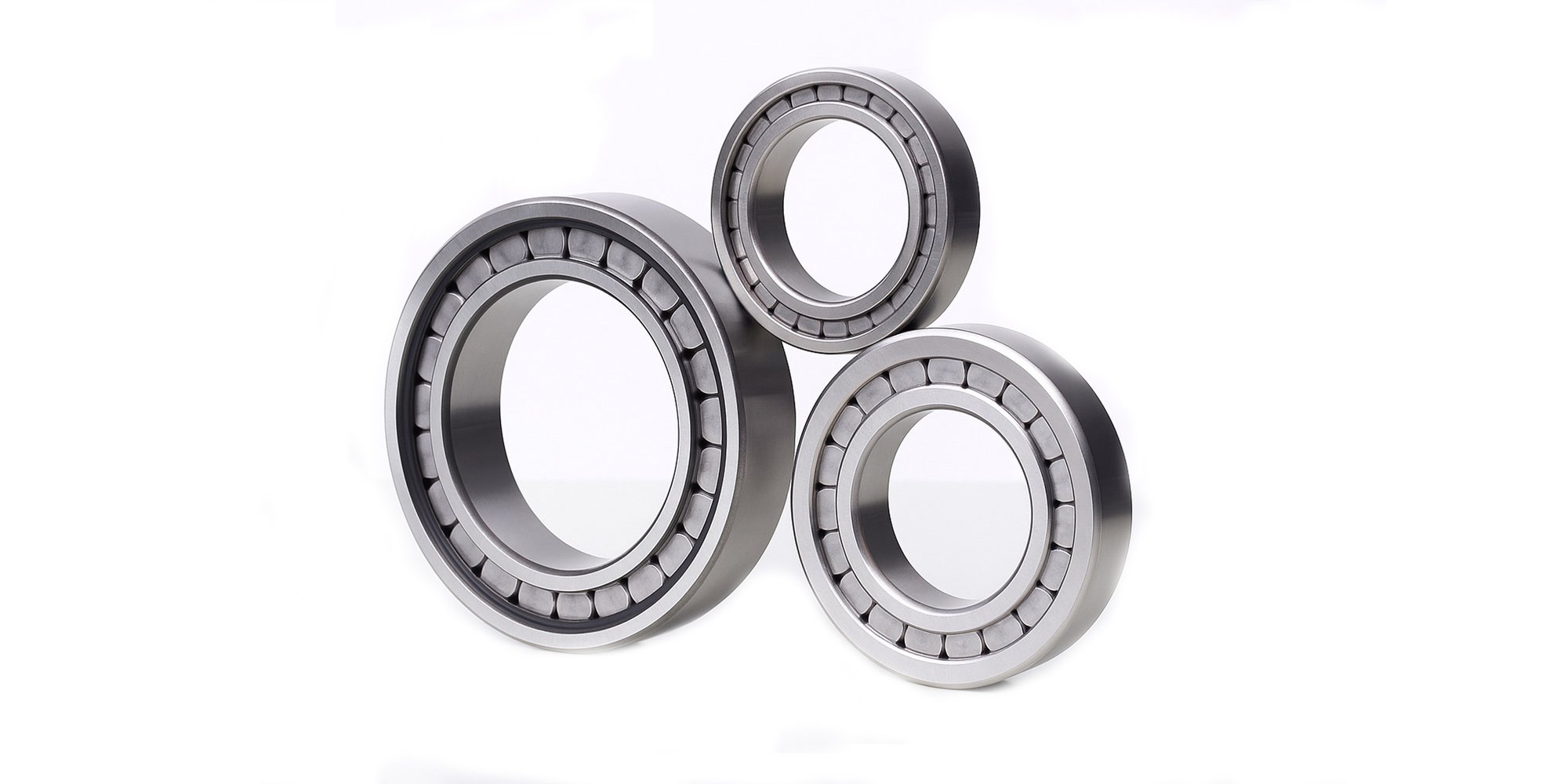
The Advantages And Disadvantages Of Full Complement Bearings

The Advantages And Disadvantages Of Full Complement Bearings

Full complement bearings are often overlooked in the assembly of bearings. Unlike rubber seal, steel seal, open type, and UG bearings that we are...
Read More
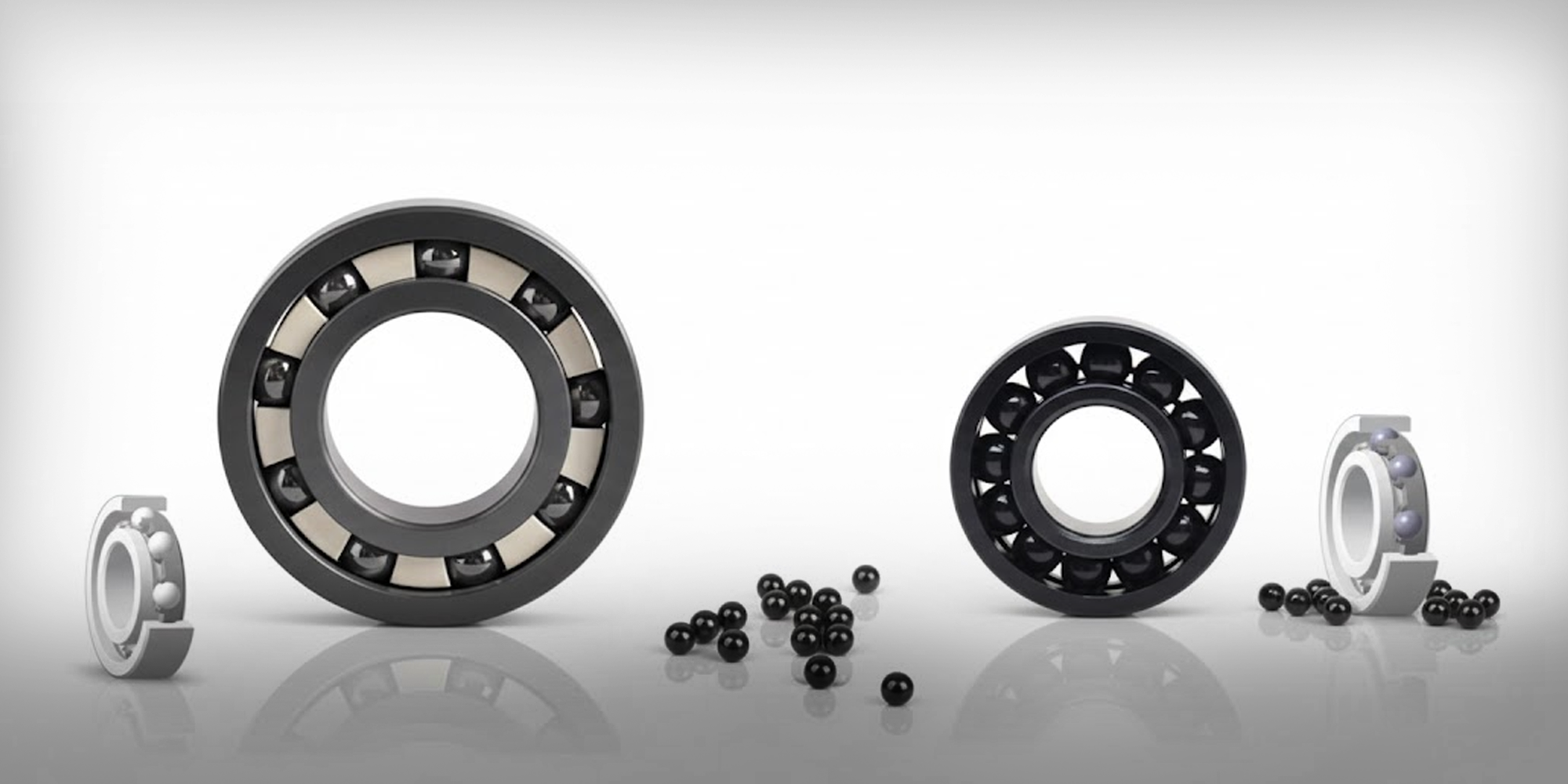
What Are Full Ceramic Bearings?

What Are Full Ceramic Bearings?

Full ceramic bearings offer superior corrosion resistance. They provide excellent thermal stability and low friction. This makes them ideal for...

Read More
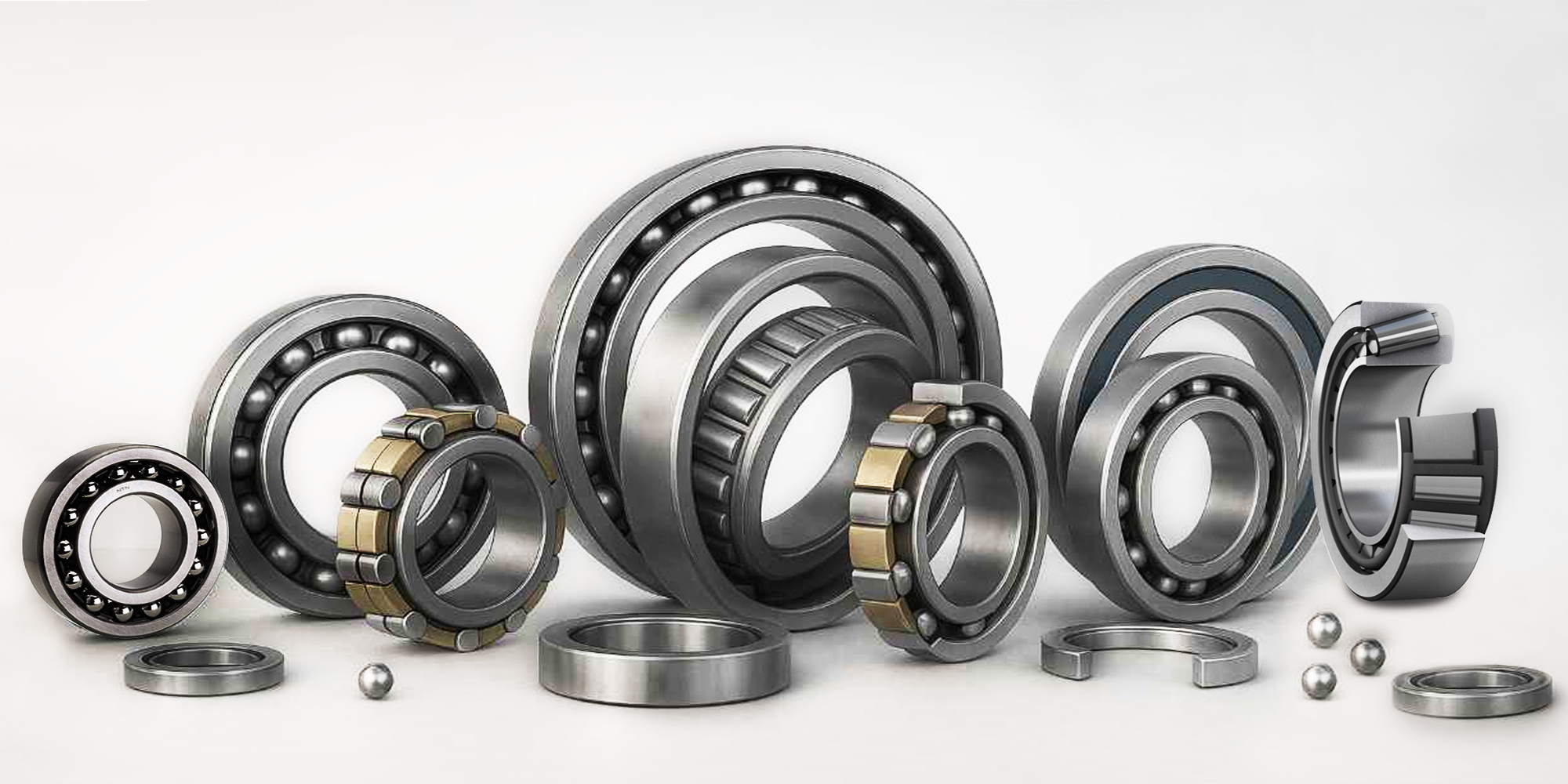
Best Bearing Manufacturers in 2025

Best Bearing Manufacturers in 2025

Bearings are the silent heroes of modern industry. From the turbines powering entire cities to the motors inside your electric vehicle,...

Read More