



Do You Know What Are The Standard Skateboard Bearings Dimensions
Skateboarding is an activity loved by many worldwide. As skateboarding continues to evolve, so does the technology used to make skateboard bearings. ...
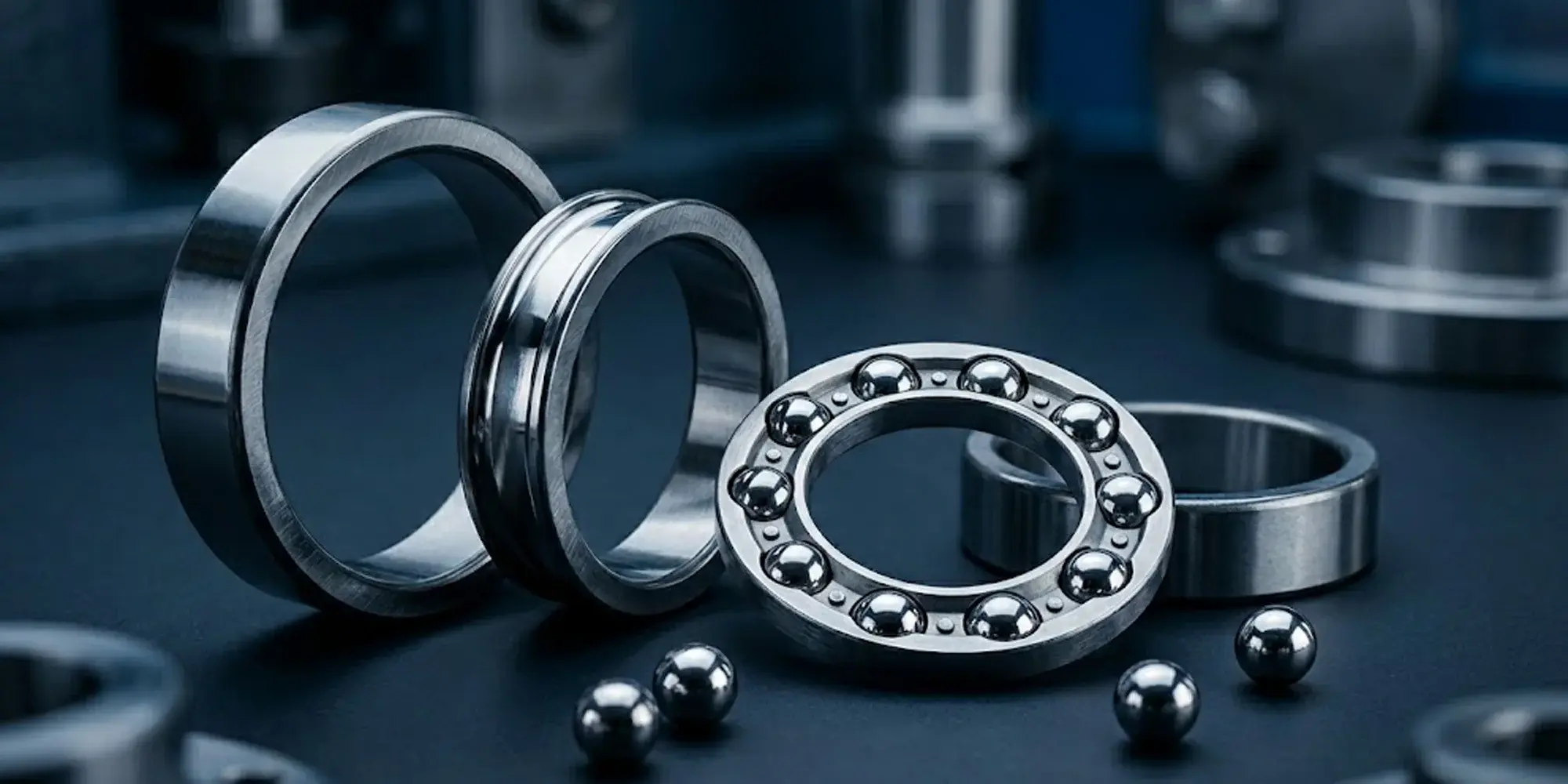
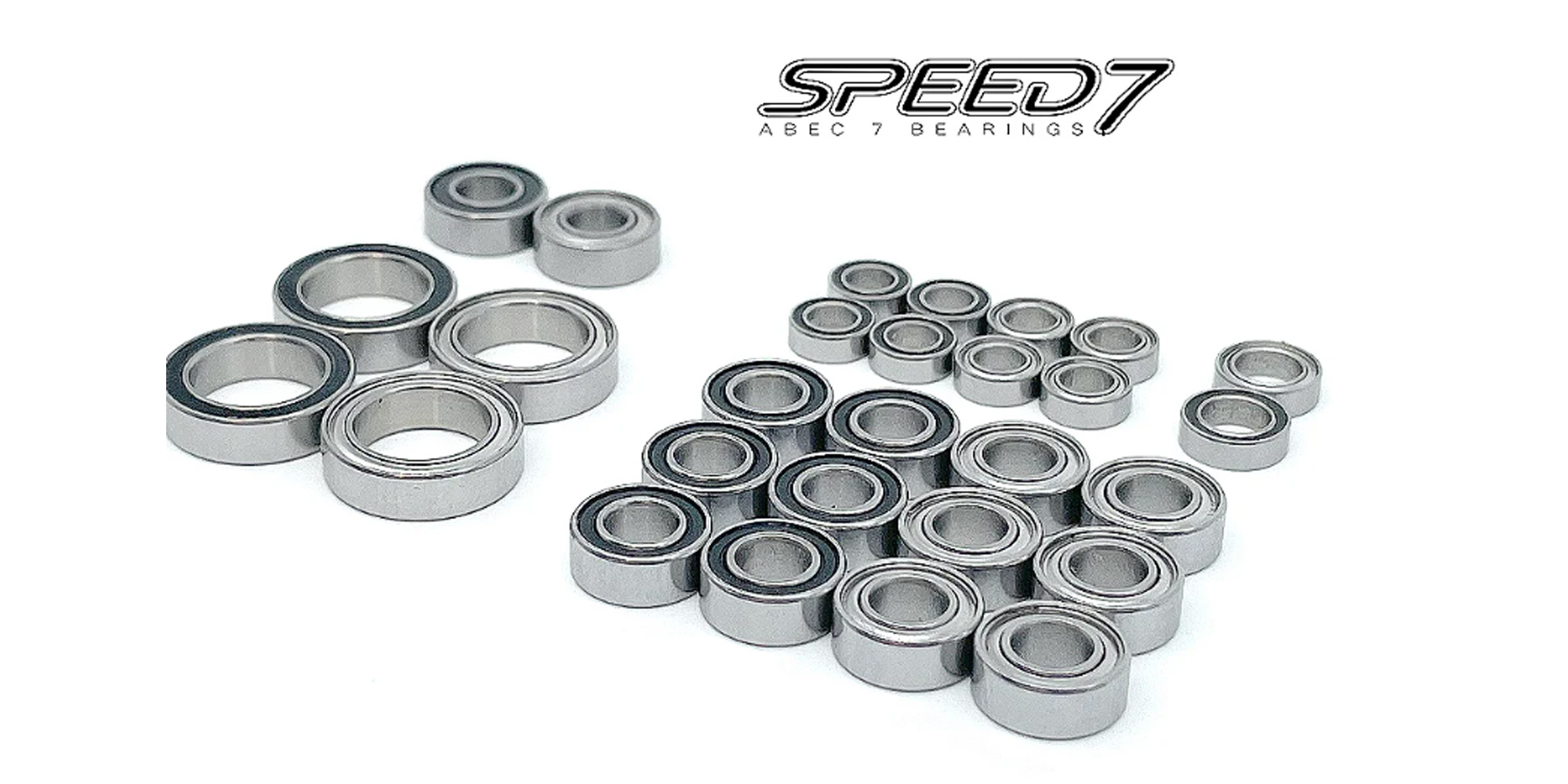
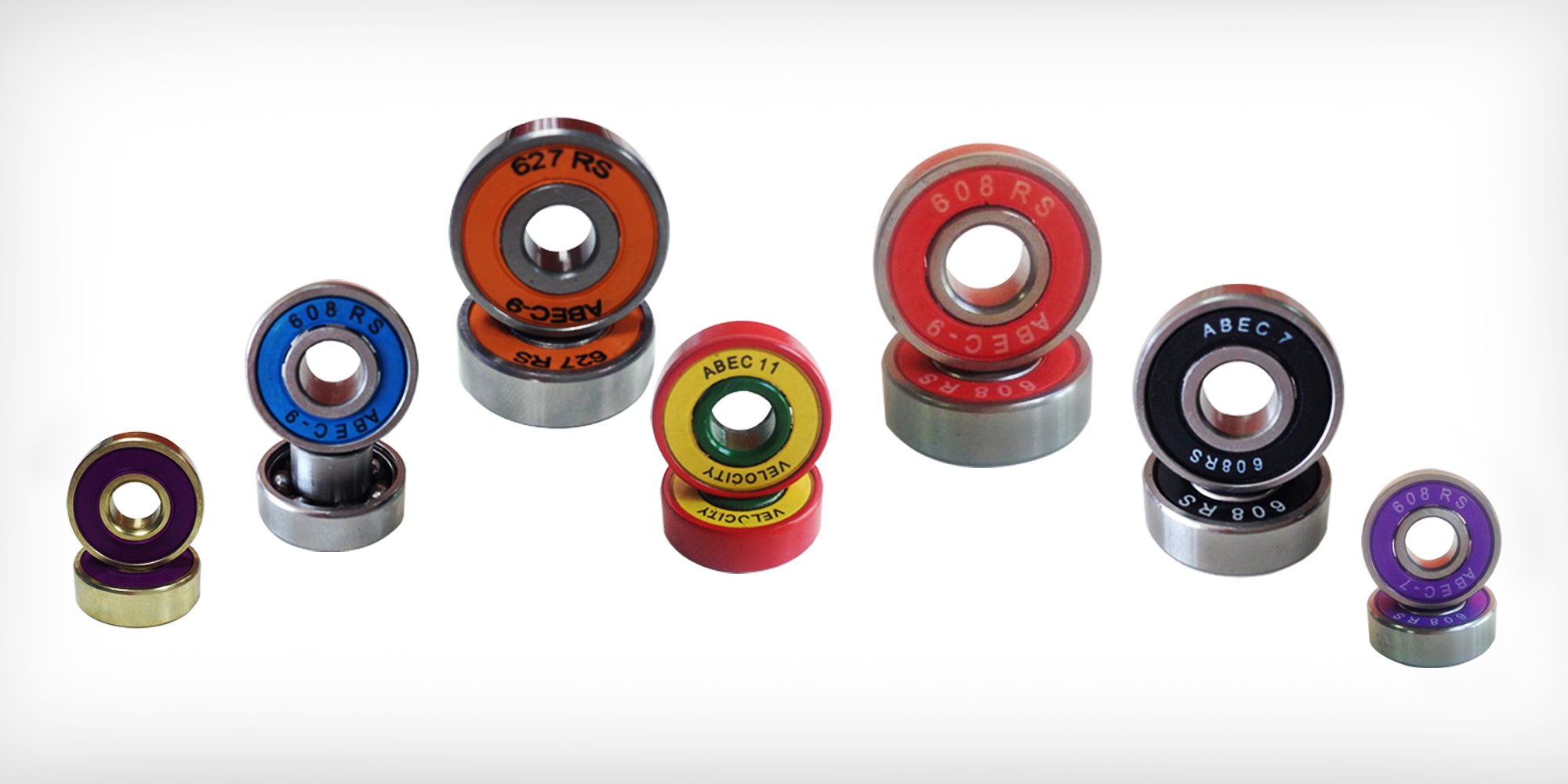
ABEC 7 bearings are high-precision bearings designed to provide superior performance in applications requiring tight tolerances and high-speed operation.
The ABEC (Annular Bearing Engineers' Committee) scale rates bearings based on their accuracy, with higher numbers indicating more precise tolerances.
The goal of this blog is to explain what "ABEC 7" means and show how it applies in real-life situations.
|
2.5 µm Max Radial Runout |
±5 µm Bore Tolerance (20mm) |
4× Speed vs ABEC 1 |
ISO P4 International Equivalent |
The Annular Bearing Engineers' Committee (ABEC ) established a standardized precision grading system for rolling element bearings in the United States.
Administered by the American Bearing Manufacturers Association (ABMA), the ABEC scale defines how tightly a bearing must conform to dimensional and geometric tolerances — essentially measuring how precisely the bearing is manufactured.
The ABEC rating system progresses through five precision levels: ABEC 1, 3, 5, 7, and 9. A higher ABEC number indicates tighter tolerances, closer dimensional accuracy, and better performance at high rotational speeds.
ABEC 1 is standard commercial grade; ABEC 9 is ultra-precision reserved for the most demanding scientific and aerospace applications.
|
Key Insight ABEC ratings govern tolerances on bore diameter, outer diameter, width, running accuracy (radial runout), and inner/outer ring runout. They do NOT specify material grade, lubrication type, noise level, or load capacity — factors equally important in bearing selection. |
The ABEC system maps closely to the ISO 492 standard, which uses a parallel 'P-class' nomenclature widely adopted internationally.
Understanding this equivalence is critical when sourcing bearings from European or Asian manufacturers.
|
ABEC Grade |
ISO P-Class |
DIN Class |
Precision Level |
Typical Application |
|
ABEC 1 |
P0 / Normal |
PN |
Standard |
General machinery, electric motors |
|
ABEC 3 |
P6 |
P6 |
Above Normal |
Precision gearboxes, pumps |
|
ABEC 5 |
P5 |
P5 |
Precision |
Machine tool spindles, instruments |
|
ABEC 7 ★ |
P4 |
P4 |
High Precision |
Aerospace, medical, CNC spindles |
|
ABEC 9 |
P2 |
P2 |
Ultra Precision |
Gyroscopes, optical instruments |
ABEC 7 (ISO P4) defines some of the tightest commercially available bearing tolerances. For a typical 20mm bore deep groove ball bearing, the specification is dramatically tighter than ABEC 1, reducing dimensional variation by approximately 75–80%.
|
Parameter |
ABEC 7 Specification |
|
Bore Diameter Tolerance |
−0 / +0.005 mm (±5 µm) |
|
Outer Diameter Tolerance |
−0.006 / +0 mm |
|
Inner Ring Radial Runout |
≤ 2.5 µm |
|
Outer Ring Radial Runout |
≤ 4 µm |
|
Width Variation (VBs) |
≤ 1.5 µm |
|
ISO Equivalent |
P4 Class |
|
Max Speed vs. ABEC 1 |
≈ 3–4× higher DN capability |
ABEC 7 bearings are manufactured with highly precise components, resulting in minimal size variation. This helps the bearing move smoothly with less friction and wobble.
The tight tolerances are crucial for high-speed use because ABEC 7 bearings allow the bearing to spin faster and more efficiently.
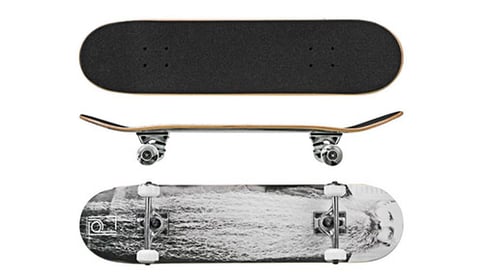
This helps to minimize heat and vibrations. Because of this, ABEC 7 bearings are ideal for applications that require smooth, reliable, and fast performance. These include skateboarding, robotics, and aerospace.
Controlled runout means the bearing's parts, like the balls and races, are perfectly round and aligned. This reduces wobbling or uneven movement when the ABEC 7 bearing spins.
As a result, it can run smoothly at high speeds without causing vibrations or wear. Less runout means less stress on the parts, which helps the bearing last longer.
Minimal play refers to the small amount of movement between the parts of the bearing.
With ABEC 7 bearings, the play is kept to a minimum, ensuring that the parts stay in proper alignment during use.
This reduces unnecessary friction and wear, leading to a longer lifespan and better performance, even under high-speed conditions.
Here’s a table comparing Chrome Steel Bearings and Ceramic Bearings:
|
Feature |
Chrome Steel Bearings |
Ceramic Bearings |
|
Material |
High-carbon steel with chromium content |
Silicon Nitride (Si3N4) or Zirconia (ZrO2) |
|
Advantages |
Durable, cost-effective, widely used |
Low friction, high speed, corrosion-resistant, high-temperature resistant, wear-resistant |
|
Applications |
Automotive, industrial machinery, household appliances |
Aerospace, medical devices, robotics, high-end sports equipment (e.g., bicycles, skateboards) |
|
Friction |
Higher friction, suitable for medium to high-speed applications |
Lower friction, ideal for high-speed and precision applications |
|
Durability |
Durable, but prone to rust and corrosion in extreme conditions |
Corrosion-resistant, wear-resistant, suitable for harsh conditions and long-term use |
|
Weight |
Heavier than ceramic bearings |
Lighter, ideal for weight-sensitive applications |
|
Cost |
More affordable |
More expensive, suitable for high-performance applications |
|
Disadvantages |
Can generate more heat and friction at high speeds |
Expensive, can be brittle under heavy shock loads |
ABEC 7 skateboard bearings offer high precision, which ensures smooth and fast rides, even at higher speeds.
Their tight tolerances reduce friction and heat buildup, enhancing durability and longevity.
These bearings are ideal for skaters looking for reliable performance and speed, especially in competitive or high-performance settings.


|
Industry |
Typical Use Cases |
Key Requirement |
|
Aerospace |
Gyroscopes, attitude sensors, flight control actuators, navigation systems |
Thermal stability, traceability |
|
Medical Devices |
Dental handpieces (300k+ RPM), surgical robots, MRI equipment |
Low noise, corrosion resistance |
|
CNC Machine Tools |
High-speed spindles, milling heads, turning centers, grinding machines |
Runout < 3 µm, high DN |
|
Scientific Instruments |
Spectroscopy, centrifuges, electron microscopes, measurement devices |
Ultra-low vibration |
|
Motorsport |
F1 gearboxes, wheel hub assemblies, turbocharger shafts |
High temp, high speed |
|
High-Speed Printing |
Offset presses, digital print heads, precision registration rollers |
Consistent positioning |
|
Turbomachinery |
Turbochargers, centrifugal compressors, industrial blowers |
High DN, low heat gen. |
|
Dental Handpiece Example Turbine-driven dental drills operate at 300,000–400,000 RPM in a wet, contaminated environment. ABEC 7 bearings are essential for smooth cutting, reduced vibration transmitted to the patient, and extended tool life. |
ABEC 7 bearings are designed for high precision and high-speed applications.
However, they do not provide information about the bearing's load-bearing capacity.
Load capacity depends on factors like the bearing's size, materials, and design, which are separate from the ABEC rating.
When selecting a bearing, it’s important to consider the ABEC rating for precision and speed.
Additionally, you should also consider the bearing's load rating to ensure it meets the specific needs of the application.
Many people mistakenly believe that ABEC 7 or ABEC 9 bearings are always the best option. Higher ABEC ratings, such as ABEC 7 or ABEC 9, indicate high precision.
These bearings are suitable for high-speed applications. However, they may not always be the best choice for every situation. However, they are not always the best choice for every situation.
For high-speed, low-load applications like skateboarding or fishing reels, ABEC 7 or ABEC 9 bearings may be ideal. They provide smooth and precise performance at high speeds.
For heavy-duty or high-load applications, bearings with a lower ABEC rating are often a better choice.
Bearings such as ABEC 1 or ABEC 3 can handle higher loads and tougher conditions.
These bearings are designed to endure more stress, even though they may not be as precise or fast as ABEC 7 or ABEC 9.
They are more suitable for situations where precision is less critical than durability and strength.
|
ABEC |
ISO 492 |
DIN 620 |
JIS B1514 |
|
ABEC 1 |
normal |
P0 |
Class 0 |
|
ABEC 3 |
class 6 |
P6 |
Class 6 |
|
ABEC 5 |
class 5 |
P5 |
Class 5 |
|
ABEC 7 |
class 4 |
P4 |
Class 4 |
|
ABEC 9 |
class 2 |
P2 |
Class 2 |
ISO, DIN, and JIS are global standards that cover a wider range of bearing quality, performance, and tolerances.
These standards are used around the world and ensure consistent, high-quality bearings for many industries.
While ABEC is best for specific uses, the global standards make sure bearings meet the right needs in different markets.
| Criteria | Questions | ABEC 7 Suitable? |
| Speed Requirements | Does the application necessitate high-speed operation? | Yes (Good for high-speed) No (Consider lower ABEC ratings for slower applications) |
| Precision Needs | Is high precision crucial (e.g., medical devices, aerospace)? | Yes (Tight tolerances) No (Consider lower ABEC ratings for less precise tasks) |
| Load Requirements | Does the application require high load-bearing capabilities (e.g., industrial machinery)? | Yes (ABEC 7 is suited for moderate loads) No (Consider bearings designed for heavy load) |
| Environmental Conditions | Will the bearings be exposed to moisture, dirt, or chemicals? | Yes (ABEC 7 works well in controlled environments) No (Consider corrosion-resistant materials like ceramic or stainless steel) |
| Budget Consideration | Do you need to balance performance with cost? | Yes (ABEC 7 may be more expensive) No (High precision justifies the cost) |
| Application Type | Is your application highly sensitive to precision (e.g., robotics, aerospace, medical instruments)? | Yes (ABEC 7 ideal for precise applications) No (Other ABEC ratings like ABEC 5 or 3 may suffice) |
|
Criteria |
Ceramic Bearings |
Chrome Steel Bearings |
|
Durability & Wear Resistance |
Highly durable, wear-resistant, ideal for harsh environments |
Durable but less wear-resistant, especially in high-speed or high-load applications |
|
Corrosion Resistance |
Superior corrosion resistance, ideal for wet or chemical environments |
Less corrosion-resistant, unless treated with special coatings |
|
Weight |
Lighter, reduces system weight |
Heavier, affects overall system weight |
|
Speed & Friction |
Lower friction, ideal for high-speed operation |
Higher friction, limits speed and efficiency |
|
Heat Resistance |
Higher heat resistance, maintains performance at high temperatures |
Sensitive to heat, may deform at high temperatures |
|
Cost |
More expensive because of manufacturing complexity |
More affordable and cost-effective for general applications |
|
Applications |
High-speed, high-precision, harsh environments (e.g., aerospace, medical devices) |
General-purpose, low to medium speed, industrial machines |
Knowing ABEC ratings helps you pick the right bearings for your needs, as they show how precise and fast the bearings can perform.
If you're unsure which ABEC 7 bearings are right for you, don't hesitate to reach out to LILY BEARING for expert advice.
Skateboarding is an activity loved by many worldwide. As skateboarding continues to evolve, so does the technology used to make skateboard bearings. ...
If you've ordered bearings more than once, you've run into the ABEC number. Sometimes it's on the box. Sometimes buried in a spec sheet. And...
For the sake of environmental protection, the electric vehicle industry has been growing rapidly in recent years. The electric vehicles in China...