Worms and Worm Gears
833 Products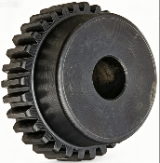
Plastic Worm Gears
Plastic worm gears are designed to mesh with worm screws to transmit motion between non-intersecting shafts, providing a cost-effective solution with quieter operation and lighter weight compared to metal counterparts.
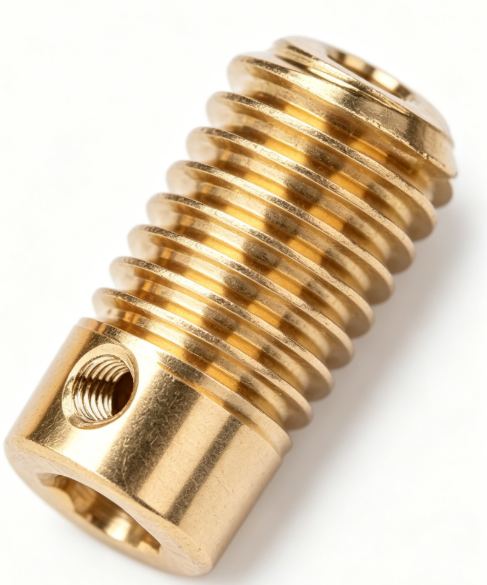
Metal Worms and Worm Gears
They are used in gear mechanisms to convert rotational motion between non-intersecting shafts at a right angle.
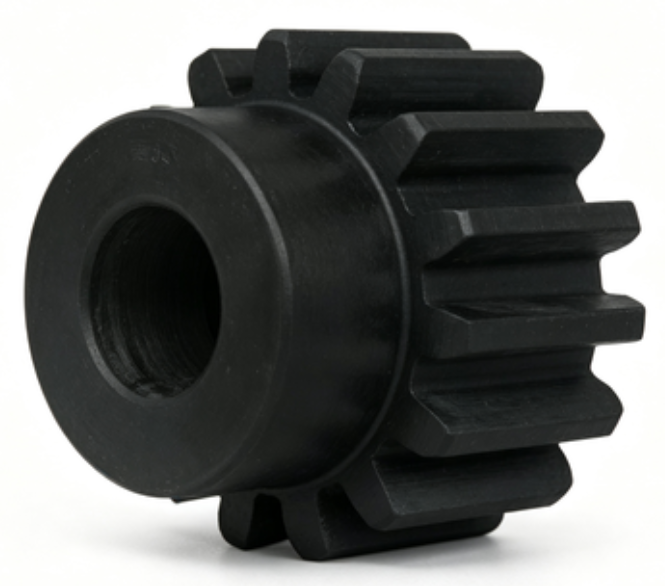
Standard Worms and Worm Gears
These gears are used to transmit motion between non-intersecting shafts at a right angle, with the worm providing smooth, rotational movement and the worm gear engaging with it to achieve high torque and precise control.
Worms and worm gears are specialized gear systems that transmit motion between shafts that are non-parallel and non-intersecting, usually at a 90° angle. They are ideal for applications requiring compact design, high speed reduction, precise torque control, and smooth operation.
What Are Worms and Worm Gears?
A worm is a screw-shaped gear that engages a worm wheel to form a worm gear set. Unlike conventional gears, power is transmitted through sliding contact, enabling large speed reductions in a single stage while maintaining a compact design.
Types of Worm Gears
- Cylindrical Worm Gears – Standard cylindrical worm paired with a worm wheel; commonly used in industrial machinery.
- Hourglass / Throated Worm Gears – Drum-shaped worms that increase tooth contact for higher load capacity.
- Dual-Lead (Duplex) Worm Gears – Feature variable lead on left and right tooth surfaces, allowing axial adjustment to fine-tune backlash and compensate for wear.
Key Features and Advantages
- High Reduction Ratios – Achieve significant speed reduction or torque increase in compact spaces.
- Non-Reversible Motion – Certain configurations resist back-driving, providing a self-locking tendency, useful for safety and reversing-prevention systems.
- Low Noise and Vibration – Sliding contact ensures quiet, smooth operation.
- Compact Design – Ideal for machinery where space is limited.
Materials and Durability
Material selection affects performance, wear resistance, and service life:
- Worms: Hardened steel, stainless steel, or alloy steel for high strength and corrosion resistance.
- Worm Wheels: Phosphor bronze, aluminum bronze, cast iron, or engineering plastics such as MC nylon. Softer wheels act as sacrificial surfaces, reducing wear on the worm.
- Hardened and Ground Worms: Improve precision, strength, and longevity for high-performance applications.
Design Considerations
Lead Angle and Threads
- The lead angle and number of threads (starts) control speed reduction, efficiency, and self-locking.
- Single-start worms provide higher reduction ratios and stronger self-locking tendencies.
- Multi-start worms reduce the gear ratio per rotation and improve efficiency, though self-locking is reduced.
Efficiency and Lubrication
- Sliding contact produces heat, lowering efficiency (typically 30–60% for standard cylindrical worms).
- Proper lubrication is critical: use high-viscosity oils with compatible additives to reduce wear and maintain service life.
Backlash Adjustment
- Dual-lead worm gears allow precise backlash control by moving the worm axially.
- Maintaining a small amount of backlash is necessary to preserve the lubricant film; too little increases wear, too much reduces precision.
Common Applications
Worm gears are used where compact, high-reduction, and precise power transmission is required:
- Speed reducers and gearboxes
- Elevators and lifts
- Machine tools
- Automotive power steering
- Chain blocks and hoists
- Robotics, semiconductor equipment, and medical devices
Safety and Material Considerations
- Some bronze worm wheels may contain lead; follow safety regulations and proper handling procedures.
- Material choice influences efficiency, wear, self-locking, and lubrication needs.
- Proper design and maintenance ensure long-term reliability.