Miter Gears and Bevel Gears
617 Products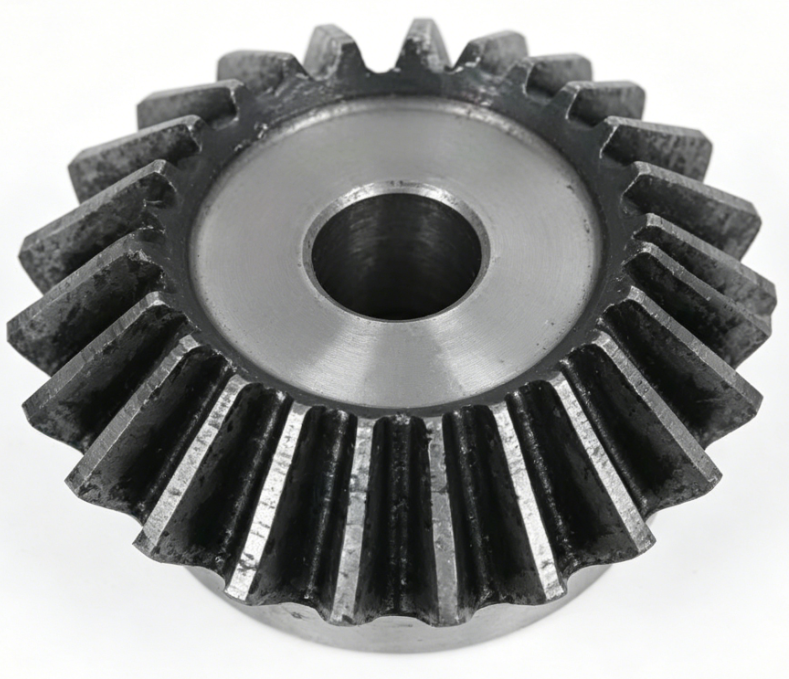
What Are Miter Gears and Bevel Gears?
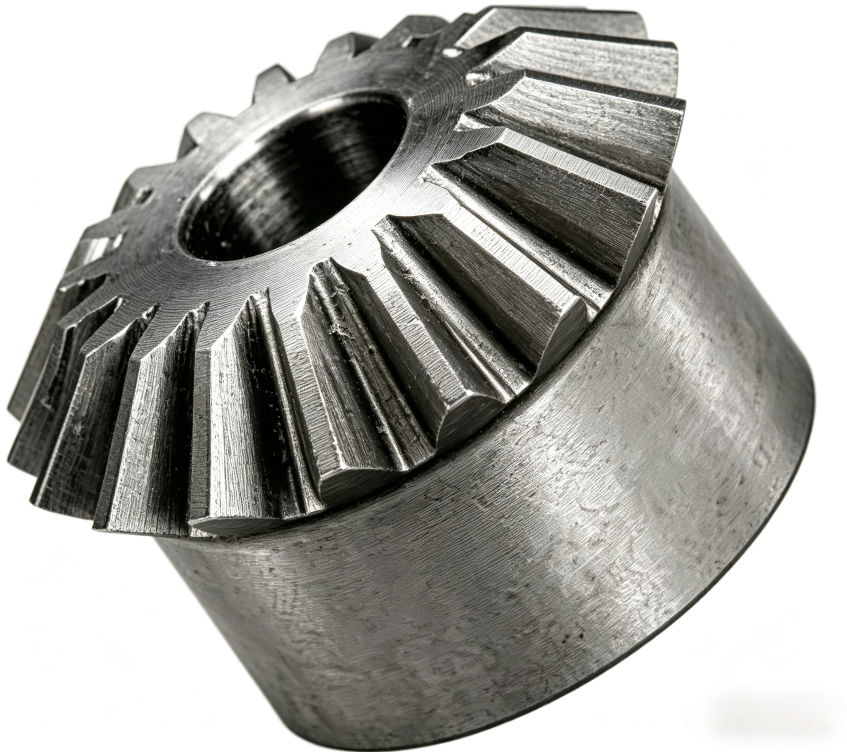
Miter gears and bevel gears are cone-shaped gears designed to transmit motion and power between intersecting shafts, most commonly at a 90-degree angle. Their conical tooth geometry allows torque to change direction smoothly and efficiently, making them essential components in right-angle drives, differentials, hand tools, printing presses, and countless mechanical systems where shaft direction needs to change without the need for belts or additional gearing stages.
What Are Miter Gears and Bevel Gears Used For?
They're used to transmit rotational motion and power between shafts that intersect, most commonly at a 90-degree angle. Typical applications include right-angle gearboxes, differentials, hand drills and power tools, printing and packaging machinery, marine propulsion systems, and any equipment requiring a change in drive direction.
What Is the Difference Between Miter Gears and Bevel Gears?
Bevel gears is the general term for cone-shaped gears used on intersecting shafts, and they can be manufactured with different gear ratios (i.e., different numbers of teeth on the mating gears). Miter gears are a specific type of bevel gear where both mating gears have the same number of teeth, producing a fixed 1:1 speed ratio — used purely to change direction without altering speed or torque.
What Is the Difference Between Straight and Spiral Tooth Designs?
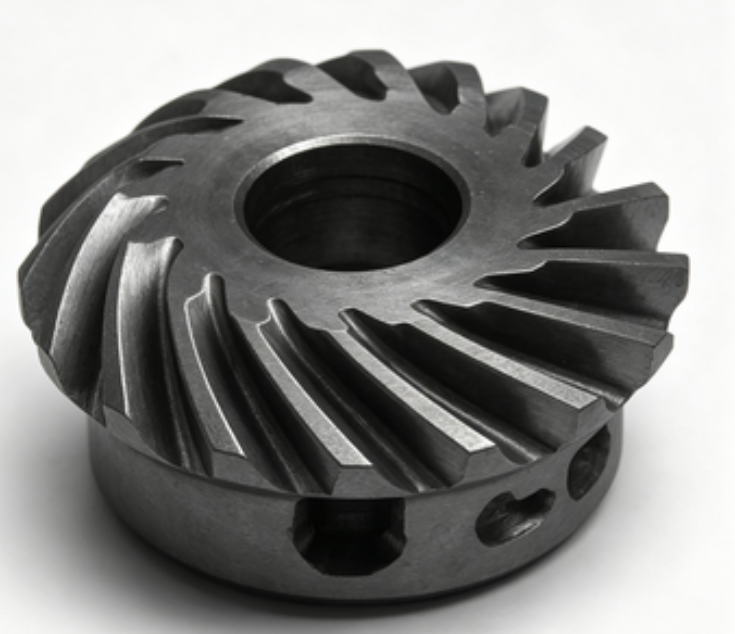
Straight-tooth bevel/miter gears engage teeth all at once along their full length, which is simpler to manufacture but can generate more noise and vibration, especially at higher speeds. Spiral-tooth versions have curved teeth that engage gradually, providing smoother, quieter operation, greater load capacity, and better performance in high-speed or high-torque applications, though typically at a higher cost.
How Do I Choose Between These Gear Types?
Selection depends on:
- Shaft angle — most bevel/miter gears are designed for 90-degree intersecting shafts, though bevel gears can also be made for other angles
- Speed ratio needs — miter gears for a fixed 1:1 ratio; standard bevel gears when a speed change is also required
- Noise and load requirements — spiral versions for quieter, higher-load, higher-speed applications; straight versions for simpler, lower-speed applications
- Space and cost constraints — straight bevel/miter gears are generally more economical and easier to source
What Materials Are Miter Gears and Bevel Gears Made From?
These gears are commonly manufactured from alloy steel, carbon steel, or stainless steel for strength and durability, with some lighter-duty or corrosion-sensitive applications using non-metallic materials. Material selection depends on the load, speed, and operating environment involved.
Are Miter Gears and Bevel Gears Interchangeable With Other Brands?
Many standard-dimension miter and bevel gears are designed to be interchangeable with common industry brands (such as Boston Gear and Martin Sprocket), based on matching bore size, pitch diameter, number of teeth, and pressure angle — cross-reference to the equivalent part number is recommended to confirm exact compatibility.
Can Miter Gears and Bevel Gears Be Customized?
Yes. Custom options typically include bore diameter, keyway configuration, number of teeth/gear ratio, tooth form (straight or spiral), material, and hub design to fit specific shaft and housing requirements.
What Information Is Needed to Order a Custom Gear?
To place a custom order, typically provide:
- Shaft angle and gear ratio required
- Number of teeth and pitch/module
- Bore diameter and keyway specifications
- Tooth form (straight or spiral bevel)
- Material preference
- Expected load, speed, and operating environment