ROLLIX Bearings
226 ProductsSlewing Bearing

Company Background
Rollix is a French manufacturer that has specialized in slewing rings since 1969, and today operates as a division of the Defontaine Group, with three production sites in France, China, and Tunisia. Rollix has produced and sold more than one million slewing rings worldwide, and exports roughly 95% of its output to more than 65 countries across five continents.
The brand designs and manufactures slewing rings and special bearings ranging from 100 mm to 6,200 mm in diameter, available with internal gear, external gear, or no gear, and made from a range of materials from C45 steel up to more specialized alloys such as titanium. Rollix's standard range (100mm–4,000mm) is generally available from stock or on short lead times, and its manufacturing process — raceway finish grinding and systematic ring pairing — is aimed at delivering consistent precision and preload accuracy across the product's service life.
Rollix bearings are widely used across construction and material handling, port and marine cranes, medical imaging equipment (X-ray tables, robots), subway and tramway systems, forestry and agricultural machinery, machine tools, and packaging equipment. The brand is particularly known as a long-standing leader in wind turbine blade and nacelle bearings, having pioneered the first wind turbine blade rings and now holding roughly 21% of the global market share in that segment.
Based on your catalog screenshot, Lily Bearing currently lists two ROLLIX product categories:
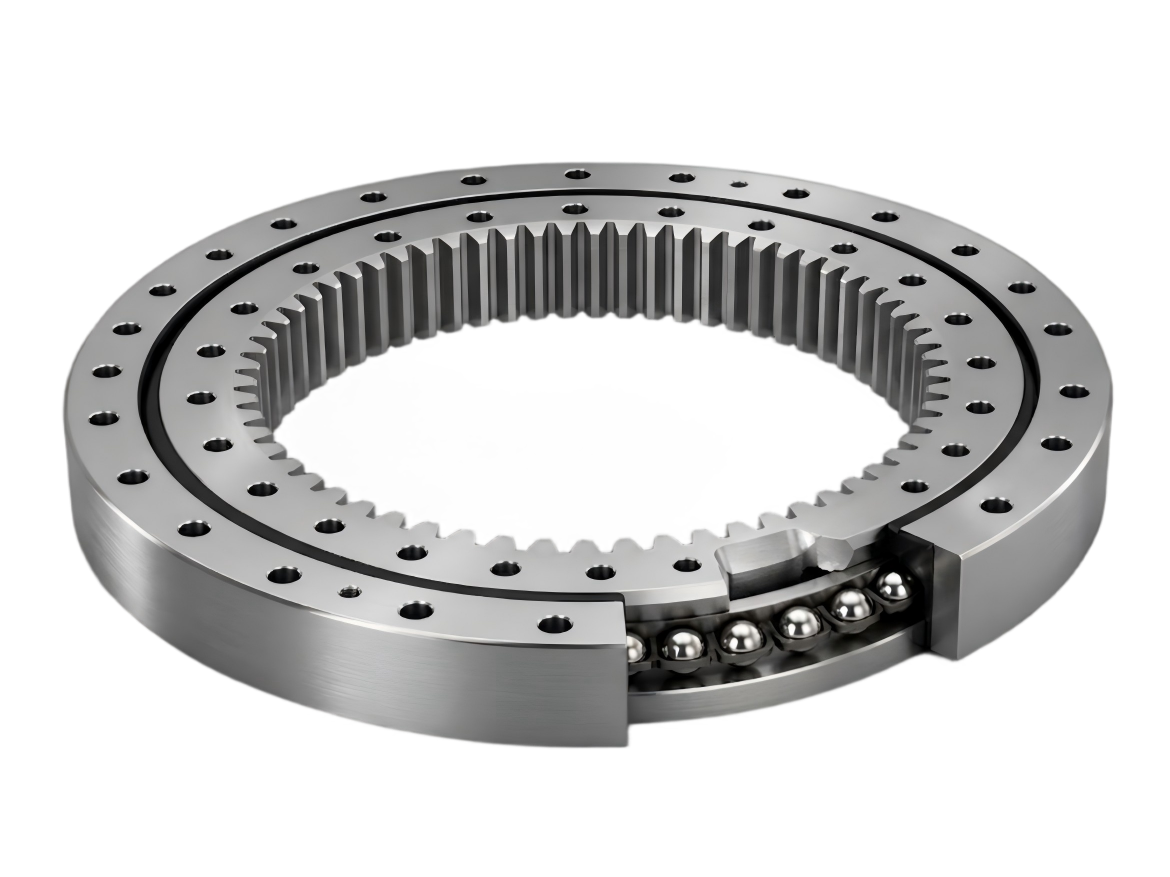
- Four Point Contact Ball Slewing Ring Bearing – Single-row ball bearings, available in flanged and non-flanged designs, offered with internal gear, external gear, or no-gear configurations.
- Cross Roller Slewing Ring Bearing – Single-row roller bearings using crossed cylindrical rollers, offered with internal gear, external gear, or no-gear configurations, ideal for high rigidity in a compact cross-section.
What Is a ROLLIX Slewing Ring Bearing?
A slewing ring bearing (also called a slewing ring or turntable bearing) is a large-diameter bearing that simultaneously supports axial loads, radial loads, and tilting moments in a single rotating assembly — often with an integrated gear for drive engagement.
Where Are ROLLIX Bearings Manufactured?
Rollix's standard bearing range is manufactured at its French factory in La Bruffière, with additional Defontaine Group production sites in China and Tunisia supporting global supply.
What Size Range Does ROLLIX Offer?
Rollix produces slewing rings from 100 mm up to 6,200 mm in diameter, covering everything from compact precision bearings to very large wind turbine and crane bearings.
What's The Difference Between Four-point Contact Ball and Cross Roller Slewing Rings?
Four-point ball slewing rings use a single row of balls contacting the raceway at four points, offering good load and moment capacity in a cost-effective package. Cross roller slewing rings use cylindrical rollers arranged perpendicular to each other, offering higher rigidity and load capacity in a more compact cross-section — better suited to heavier or high-precision applications.
Are ROLLIX Bearings Available With or Without Gearing?
Yes. Both product families are available in internal gear, external gear, or gearless (no-gear) configurations, depending on the drive mechanism required.
What Industries Use ROLLIX Bearings?
Common applications include cranes, excavators, wind turbines (blade and nacelle bearings), medical and pharmaceutical equipment, subway/tramway systems, forestry and agricultural machinery, marine equipment, and packaging/indexing machinery.
What Materials Are ROLLIX Slewing Rings Made From?
Standard production uses steels such as C45, with higher-performance grades like 42CrMo4 and specialty alloys (including titanium) available for demanding applications.
What Lead Times Are Typical For ROLLIX Bearings?
Rollix's standard 100mm–4,000mm range is generally available from stock or on short lead time; larger or custom-engineered rings typically require longer production lead times due to design and grinding processes.