



Linear Guides vs. Linear Bushings vs. Dovetail Slides
Introduction: Why Linear Motion Choice Matters Every machine that moves in a straight line relies on a linear motion system — from the most delicate...
7 min read
Robert
:
Nov 27, 2025 10:04:45 PM
For purchasing engineers or equipment manufacturers, the cost of linear motion guides is a key consideration when selecting products. However, the pricing of these guides is more intricate than it might seem.
In addition to factors like model and size, various technical and market elements also play a role in determining the final cost.
This blog will explore the primary factors that influence pricing and offer purchasing tips to help you find the most cost-effective solution within your budget.
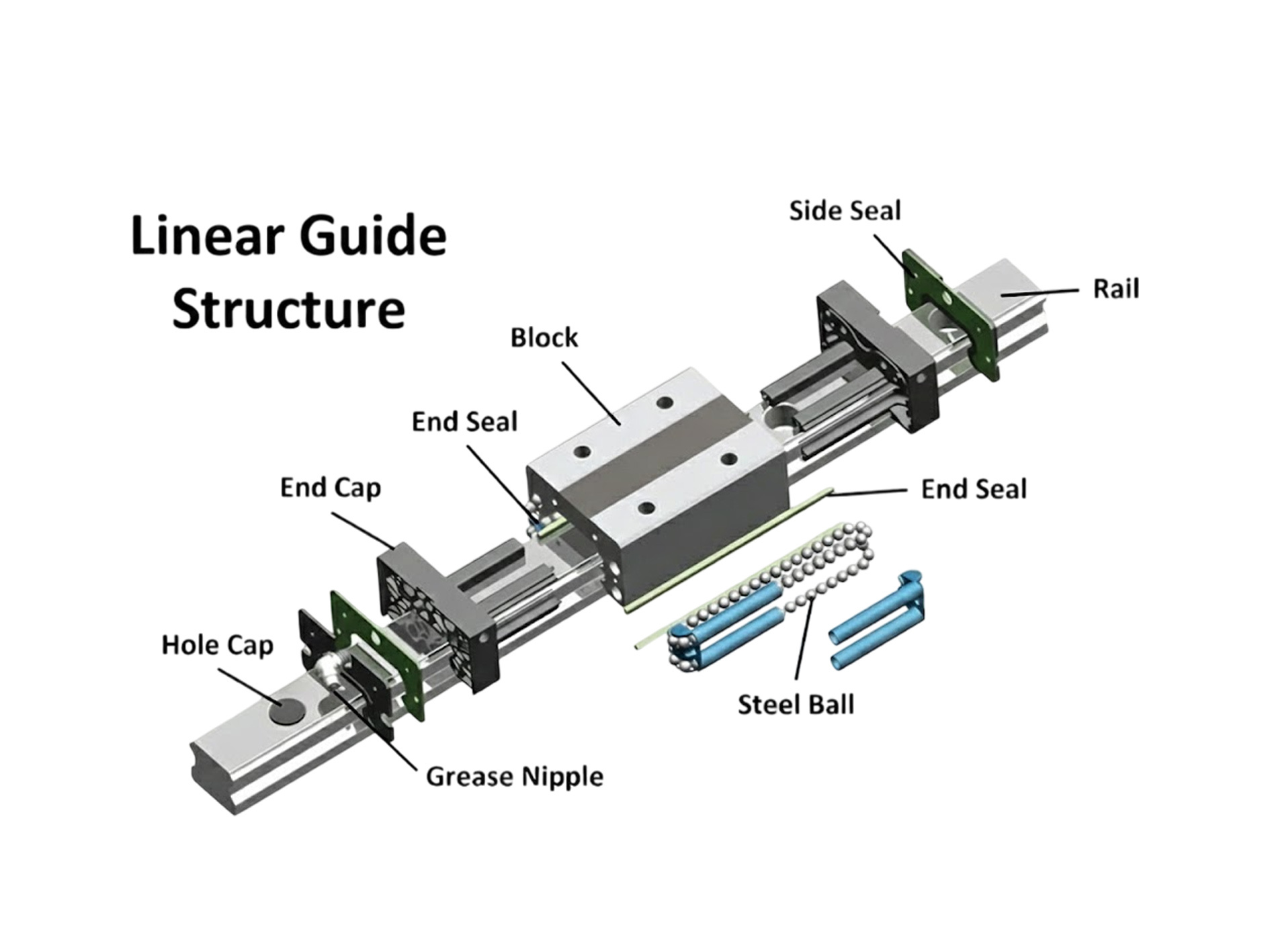
Linear guides consist of three main components: rails, bearings, and carriages. The rails provide the track for the carriage to move along, ensuring smooth motion.
The bearings are the rolling elements that reduce friction between the rail and the carriage, allowing for precise movement. The carriage holds the bearings and moves along the rail, carrying the load.
These components work together to enable accurate and efficient linear motion in various machines and applications.
Linear guide rails are essential components in precision transmission systems. They act as the "joints" in advanced manufacturing applications like CNC machine tools, semiconductor equipment, and industrial robots.
The precision and stability of these rails directly influence the performance capabilities of the equipment they serve.

The material used in a linear guide is a key factor influencing its cost. Different materials offer distinct performance characteristics and come with varying manufacturing expenses.
Linear guides are commonly made from aluminum alloys, steel, and similar materials. Aluminum alloy guides are lightweight and corrosion-resistant, making them suitable for high-speed, light-load applications, whereas steel guides provide greater strength and higher load capacity.
As a result, material choice and quality have a direct impact on the overall price of linear guides.
Precision grades, such as ABEC and ISO tolerance, indicate the accuracy and quality of bearings or linear guides. They measure factors like dimensions, roundness, and smoothness of operation. Increased accuracy inevitably means increased manufacturing and testing costs.
Standard-grade linear guides are mainly used for general positioning tasks. Higher-precision grades, on the other hand, are designed for applications that require greater accuracy, such as CNC machines or testing equipment.
With each step up in accuracy grade, the cost of the guide typically increases by 10% to 25%.
The trade-off between higher precision and cost comes down to balancing performance needs with budget constraints. Higher-precision linear guides, such as those with ABEC 7 or ISO P2 ratings, provide smoother operation and reduced friction.
They enable more accurate movement, making them ideal for high-performance applications like CNC machines or testing equipment.
However, these benefits come at a higher cost, typically 10% to 25% more than standard-grade guides.
While standard-grade guides are sufficient for general positioning tasks, they may lack accuracy and durability under demanding conditions.
Therefore, the decision to choose higher precision depends on the specific needs of the application.
It comes down to whether the added accuracy justifies the increased cost or if standard precision can meet the requirements without compromising performance.

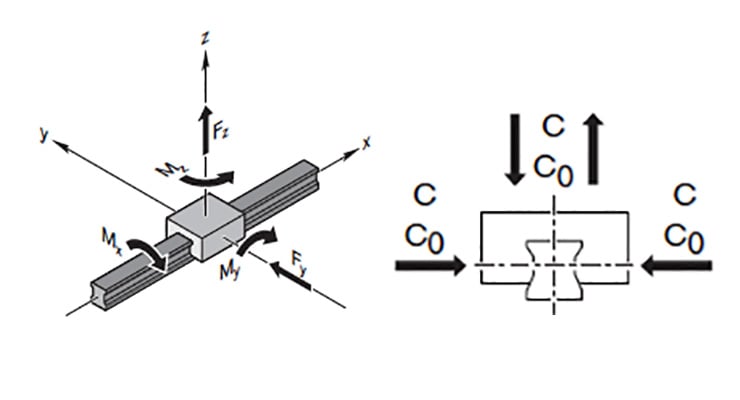
The load capacity of linear guides plays a significant role in determining their price. This includes both dynamic and static load ratings.
Dynamic Load Rating refers to the bearing's ability to handle loads while in motion. Higher dynamic load ratings mean the guide can support greater forces without premature wear. This makes it suitable for high-speed or heavy-duty applications.
Guides with higher dynamic load ratings tend to cost more because their enhanced materials, design, and engineering.
Static Load Rating refers to the maximum load a bearing can withstand without permanent deformation when stationary. Higher static load ratings are needed for applications where the guide will support heavy loads without movement.
Guides designed for higher static load capacity are more expensive. This is because they require stronger materials and construction to prevent damage under pressure.
Linear guides with higher dynamic and static load ratings are more costly. They are built with stronger materials and more precise engineering to handle greater forces and ensure a longer lifespan under heavy loads.
Conversely, guides with lower load ratings are more affordable. However, they are limited in performance and durability under heavy or dynamic loads.

The size of the rail—specifically its length, width, and height—directly impacts the price of linear guides. Larger sizes require more materials, greater manufacturing complexity, and higher load capacity.
In general, larger rails with increased length, width, or height offer higher load capacity and durability. This makes them suitable for heavy-duty applications. However, these benefits come at a higher cost.
Producing larger rails requires more material and advanced manufacturing processes. Conversely, smaller rails are more affordable but are limited to lighter-duty applications.
Standard-sized linear guides are generally more affordable because they are mass-produced and widely available. They work well for common applications and offer good value when the requirements are typical. Since they’re made in large quantities, they cost less and are easy to get quickly.
Custom-sized linear guides, on the other hand, are more expensive because they are made to order. However, they provide better value in situations where the application has specific needs that standard sizes can’t meet. This includes cases with unique load capacities or space limitations.
While they cost more upfront, custom sizes can improve performance and durability. Over time, this can save money by reducing maintenance and extending the lifespan of equipment.
In terms of value, standard sizes are better for most applications because their lower cost and availability. However, custom sizes are more valuable in scenarios where standard options cannot meet the required performance or space constraints. They ultimately provide a more efficient and durable solution for specific needs.


_1.jpg?width=507&height=338&name=SKF-2408-600x400%20(1)_1.jpg)


Choosing reliable manufacturers can lead to long-term savings because their products are more durable and require less maintenance. High-quality linear guides last longer, reducing the need for frequent replacements.
They also perform better, which can improve the efficiency of your equipment and reduce downtime.
Reliable manufacturers often provide better customer support and warranties, which can save money on repairs or issues.
While their products may cost more initially, they offer added value and a longer lifespan. Over time, this results in fewer problems, making them a smarter investment.
Durability greatly affects long-term costs. More durable linear guides, such as those with good wear and corrosion resistance, last longer and require less maintenance.
Guides that resist wear stay smooth and functional for a longer period, reducing the need for replacements. Corrosion-resistant guides are less likely to break down in harsh environments, saving money on repairs.
While durable guides may cost more initially, they provide long-term savings. This is achieved by reducing the frequency of replacements and maintenance.
Maintenance requirements play a key role in the total cost of ownership of linear guides. Guides that require frequent maintenance, such as regular lubrication or part replacements, can increase ongoing costs.
On the other hand, high-quality or durable guides that need less maintenance reduce these costs over time. Less frequent servicing means less downtime and lower labor costs, leading to overall savings.
While more durable guides may have a higher upfront price, their lower maintenance needs often make them more cost-effective in the long run.
For reliable, high-quality linear guides tailored to your needs, contact LILY Bearing today. Our team can help you select the right motion guide and provide personalized quotes.
We also offer expert consultation to ensure optimal performance and long-term value for your equipment. Reach out now to discuss your requirements and find the perfect solution.
Introduction: Why Linear Motion Choice Matters Every machine that moves in a straight line relies on a linear motion system — from the most delicate...
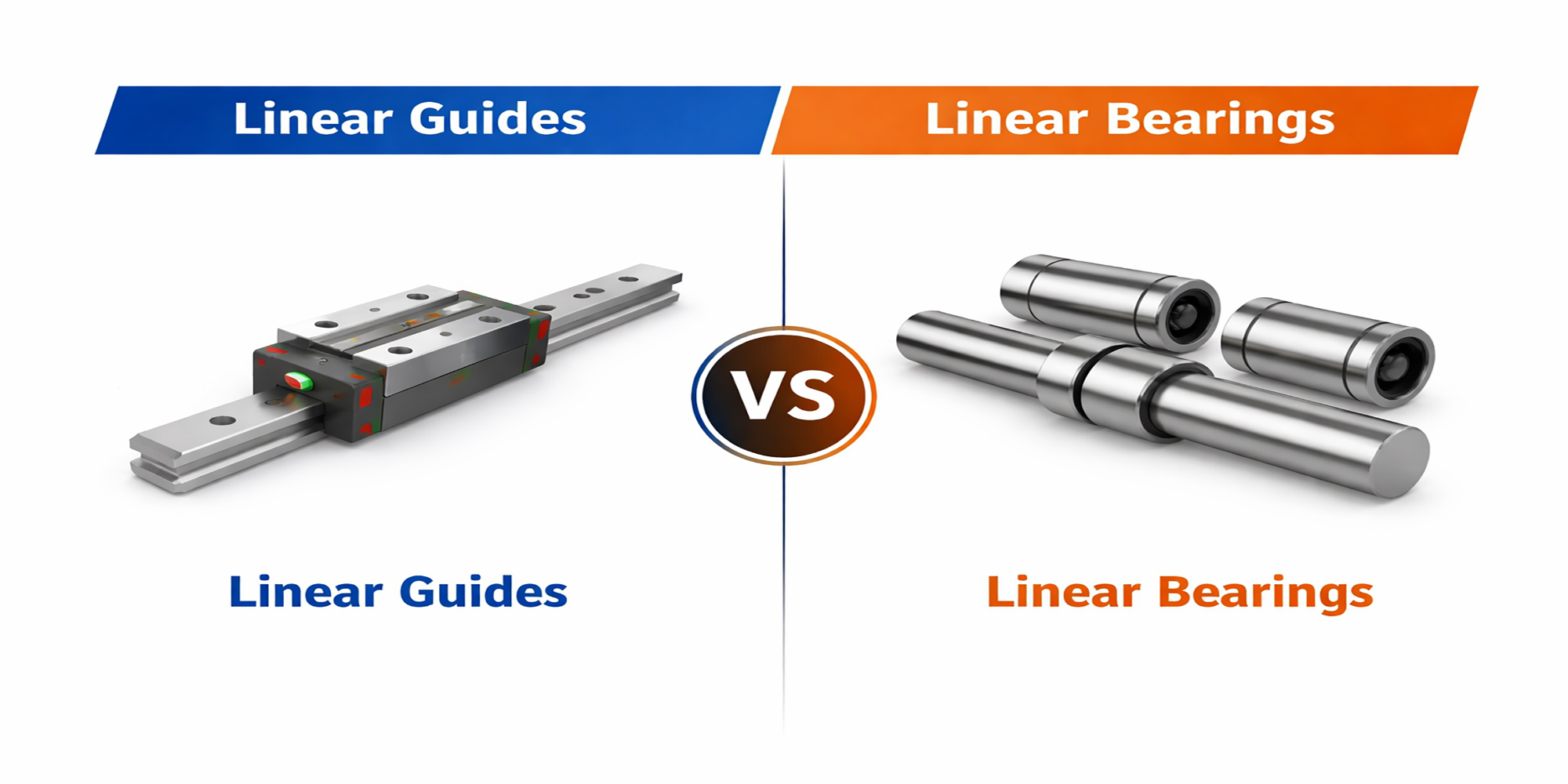
Both move things in a straight line — but choosing the wrong one can cost you precision, payload capacity, or thousands in unplanned downtime. Here’s...
Linear guides are the backbone of precision motion in modern manufacturing, automation, and CNC machinery. When these critical components fail,...