

Home/
Blog/
How Much Grease to Put in Bearings: SKF Formula & Fill Chart

5 min read

How Much Grease to Put in Bearings: SKF Formula & Fill Guide

How Much Grease to Put in Bearings: SKF Formula & Fill Guide
How Much Grease to Put in Bearings: SKF Formula & Fill Chart
9:06

Getting bearing lubrication right comes down to one thing: using the right amount of grease—not too much, not too little. Too little and the bearing runs dry; too much and you're generating heat and wasting money on repairs.

Quick reference — how much grease?
25–35% Deep groove ball bearings
~20% Angular contact ball bearings
40–50% Harsh / outdoor environments

For an exact figure, use the SKF formula: Gq = 0.114 × D × B (D = outside diameter in inches, B = bearing width in inches, Gq = quantity in ounces). Full details below.

Engineers regularly design custom bearings for extreme longevity, and below we share that experience so you can keep your equipment running smoothly and lasting longer.


The Role of Grease in Bearing Performance


Grease plays a pivotal role in protecting bearings, acting as a barrier against contaminants while reducing friction and wear. It essentially seals out dirt and moisture, which can damage the bearing surfaces, and helps dissipate heat generated during operation.

What grease actually does inside a bearing
Reduces friction
Prevents metal-to-metal contact on races
Seals contaminants
Keeps dirt & moisture away from surfaces
Dissipates heat
Carries heat away from bearing races
Prevents corrosion
Protective film on all bearing surfaces


Factors Influencing Grease Quantity in Bearings

  • Bearing size and type: Bigger bearings and those under heavier loads require more grease. Ball bearings require less frequent relubrication than other rolling-element bearings. See our ball bearing lubrication guide for more detail.
  • Speed of operation: Bearings that spin quickly need less grease to prevent excessive drag and heat buildup.
  • Temperature: Higher temperatures break down base oils faster. Lubricate more often when you expect sustained high operating temperatures.
  • Operation time: Continuous operation or frequent starts and stops wear out grease faster. More use means more frequent regreasing.
  • Vibration: Higher vibration means more shock impact. Fresh grease is needed more often to maintain a protective film.
  • Viscosity factor: Additives and grease thickness both affect longevity. Lithium-based grease is the most common choice for its versatility.
  • Placement: Vertical bearings don't retain grease as well as horizontal ones—grease them more frequently.
  • Load: Heavier loads mean more stress and a greater need for adequate lubrication.
  • Environment: Bearings in dusty or outdoor settings need enough grease to block contaminants without overfilling.


Standard Greasing Guidelines for Different Bearing Types

The amount of grease needed varies significantly between different types of bearings. Here's a practical look at the recommended fill levels for the two most common types.

Grease fill level by bearing type
25–35% fill level
Deep groove ball bearing
Standard / general use
~20% fill level
Angular contact bearing
High-speed spindles
40–50% fill level
Harsh environments
Outdoor / dusty / wet

Deep groove ball bearings

  • Recommended grease volume: For deep groove ball bearings, the ideal fill is 25–35% of the bearing's internal space.
  • Why this range: It provides enough lubrication to reduce friction and wear, while avoiding the resistance and heat that excess grease causes.

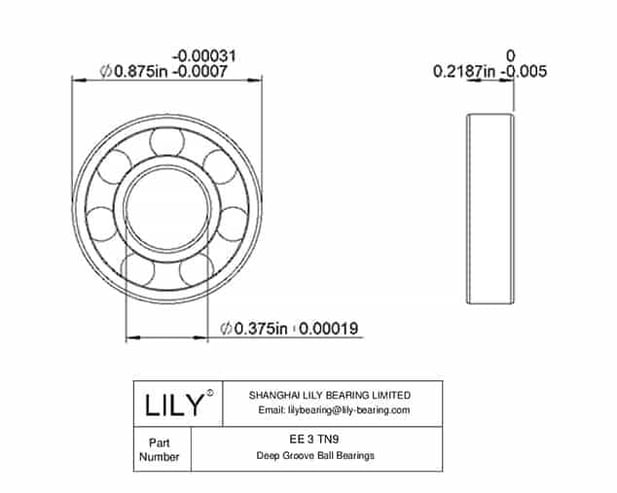
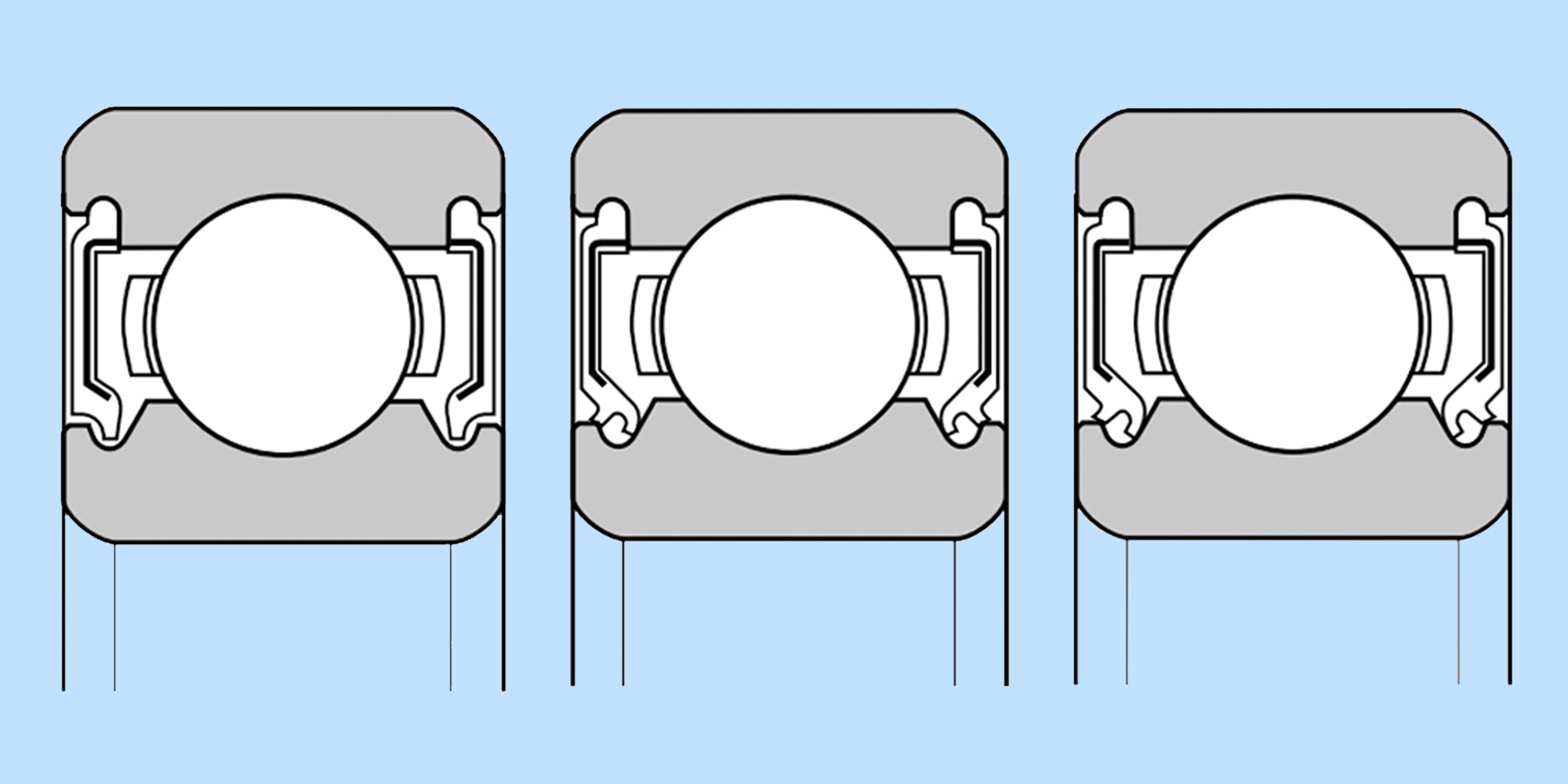
Deep Groove Ball Bearing Structure


Angular contact ball bearings

  • Recommended grease volume: High-speed angular contact ball bearings typically need around 20%.
  • Why less grease: Less grease reduces drag and heat at high RPM, preventing the lubricant from breaking down during fast rotations—while still providing adequate protection.

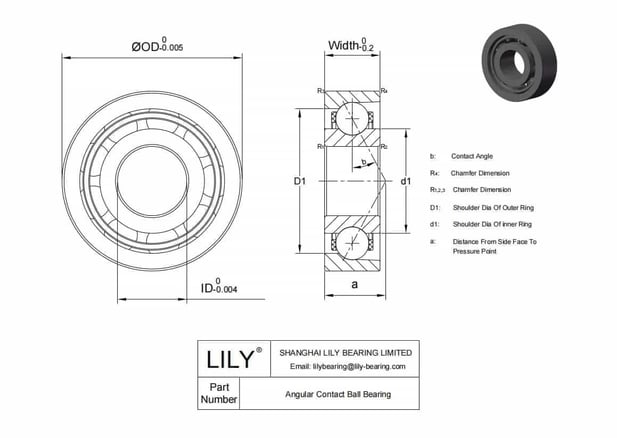
Angular Contact Ball Bearing Structure


For both bearing types, always use the correct grease—one with the right additives and base oil. The right grease at the right volume extends bearing life and keeps machinery running efficiently.


Industry-Standard Greasing Methods


SKF formula

The most widely accepted method for calculating exact grease volume:

Primary formula (by bearing dimensions) Gq = 0.114 × D × B
Gq = Quantity of grease (ounces)
D = Bearing outside diameter (inches)
B = Bearing width — or height for thrust bearings (inches)

A simplified version used for shaft-based calculations:

Simplified formula (by shaft diameter) G = D × B / 10
D = Shaft diameter (inches)
B = Bearing width (inches)
G = Grease quantity (ounces)
Example: A sealed bearing on a 3-inch diameter shaft that is 1 inch wide → G = 3 × 1 / 10 = 0.3 ounces of grease.

1 stroke per inch of shaft diameter

A quick field method: use one grease gun stroke per inch of shaft diameter. Since output varies between guns, 2–3 grams per inch tends to be more consistent in practice. To verify your gun's output, weigh 10 strokes on a scale and divide.

Sensing lubrication

You can also gauge proper fill by listening and feeling. Noise drops with the first grease addition and stabilizes—then rises again when the bearing is full. Increased resistance in the grease gun handle is another reliable cue. When you notice both, stop greasing.


How Much Grease to Put in Bearings: Special Cases


High-speed applications

In high-speed machinery, the goal is to use as little grease as possible while maintaining adequate lubrication. Too much creates drag and heat that degrades performance or causes failure.

  • Reduced grease amounts: Limit fill to avoid unnecessary friction and overheating.
  • Old grease management: Regularly remove old grease to prevent buildup that impairs fresh applications.
  • Oil-free bearings: In scenarios requiring ultra-low starting torques, oil-free bearings operate without traditional grease and offer minimal starting resistance.

Harsh environmental conditions

Outdoor installations, dusty factories, and high-moisture settings all demand more grease than standard conditions.

  • Increased volume (40–50%): The extra grease acts as a stronger barrier against contaminants and environmental exposure.
  • Reduced contamination risk: More grease leaves less room for dust, dirt, and water to infiltrate.
  • Corrosion protection: Extra volume guards against corrosive elements and temperature swings, extending equipment lifespan considerably.
Application type Recommended fill Primary reason
Deep groove ball bearing (standard) 25–35% Balances lubrication with heat control
Angular contact / high-speed spindle ~20% Minimises drag and heat at high RPM
Harsh / outdoor / contaminated environment 40–50% Extra barrier against contaminants
Under-lubricated (any type) Too low Causes 80%+ of all bearing failures


The Impact of Grease Volume on Bearing Performance

The grease sweet spot — what happens on either side
Too little grease
▸ Metal-to-metal contact on races
▸ Accelerated surface wear
▸ Overheating and possible seizure
▸ Complete bearing failure
Responsible for 80%+ of bearing failures
Too much grease
▸ Increased drag and internal heat
▸ Higher energy consumption
▸ Seal damage and grease leakage
▸ Shortened bearing service life
Exception: harsh environments may need extra

Effects of overgreasing

More grease isn't always better. Overgreasing increases resistance inside the bearing, forcing machinery to work harder and run hotter. Over time, that extra heat shortens bearing life and raises energy costs.

Note: In extremely harsh environments, a slightly higher grease volume can help protect against contamination—but this is the exception, not the rule.

Effects of undergreasing

Inadequate lubrication is responsible for over 80% of bearing failures. When grease can no longer provide sufficient protection, deterioration happens quickly.

  • Increased friction and wear: Without enough grease, metal-to-metal contact accelerates wear on bearing surfaces.
  • Risk of seizure: Severely under-lubricated bearings can overheat and seize entirely, leading to noisy operation, reduced efficiency, or a complete equipment shutdown.


Frequently Asked Questions


How often should bearings be regreased?

It depends on operating conditions. Bearings running at high temperatures, under heavy loads, or in contaminated environments need more frequent attention. As a general starting point, many industrial bearings are regreased every 1,000–2,000 operating hours—but always follow the manufacturer's recommendation for your specific application.

What happens if you put too much grease in a bearing?

Overgreasing causes the bearing to churn through excess lubricant, generating heat and increasing power consumption. In severe cases it can damage seals, cause grease leakage, and accelerate bearing wear—the opposite of what you're trying to achieve.

What type of grease is best for bearings?

Lithium-based grease is the most widely used option due to its versatility across temperature ranges and load conditions. For high-temperature applications, a polyurea or calcium sulfonate grease may be more appropriate. Always match the grease type to your operating conditions, and check compatibility before switching from one grease to another.


Conclusion

Getting bearing lubrication right doesn't have to be complicated. Start with the standard guidelines—25–35% for deep groove ball bearings, around 20% for angular contact types—and use the SKF formula when you need a precise figure. Factor in your operating speed, environment, and load, and you'll be in good shape.

For more guidance on bearing maintenance, check out our other resources or learn about bearing wear and how to prevent it.


Bearing Seal Types & How to Select the Best

Bearing Seal Types & How to Select the Best

Whether you’re working with roller bearings, stainless steel ball bearings, or spherical roller bearings, bearing seals play an essential role in...
Read More
How Ball Bearings Improve Machinery Performance

How Ball Bearings Improve Machinery Performance

Ball bearings are bearings that use spherical balls to keep the inner and outer races apart. They reduce friction between moving parts, enabling...

Read More
Best Bearing Manufacturers in 2025

Best Bearing Manufacturers in 2025

Bearings are the silent heroes of modern industry. From the turbines powering entire cities to the motors inside your electric vehicle,...

Read More